King Christmas Beetle

King Christmas Beetle

Anoplognathus viridiaeneus

Daily sighting probability ~10% · With luck
at Blue Mountains National Park

In 3 days ~10% in a week ~30%

8 Verified sightings at Blue Mountains National Park From 2019 to 2026
16 In all 2 parks
December Best month
🌅 Crepuscular When it's spotted

About the King Christmas Beetle

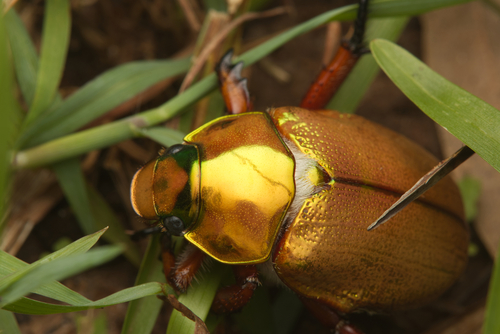
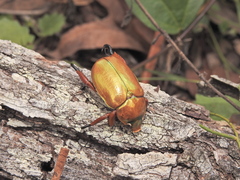
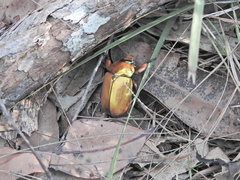
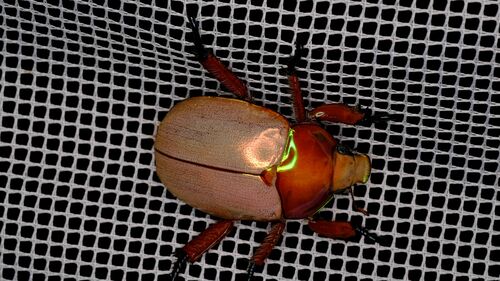
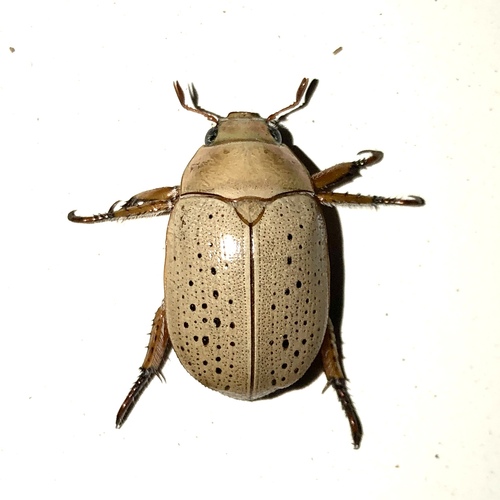
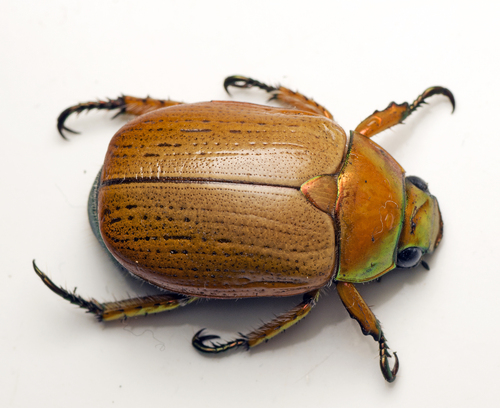
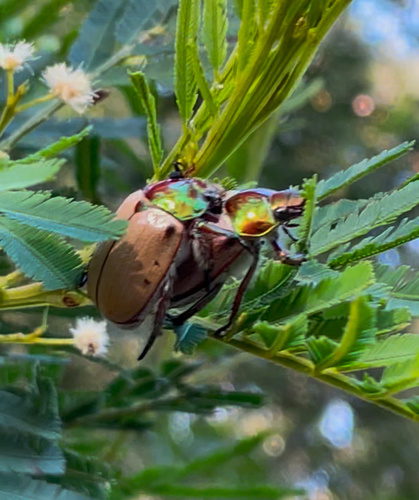
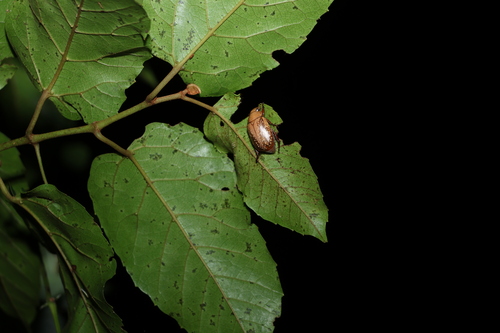
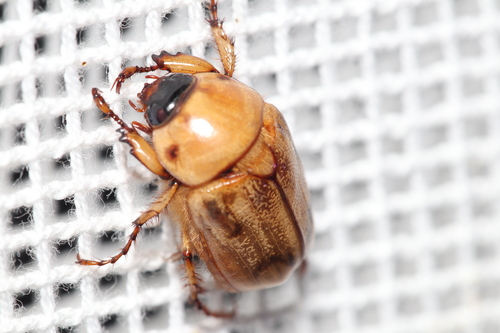
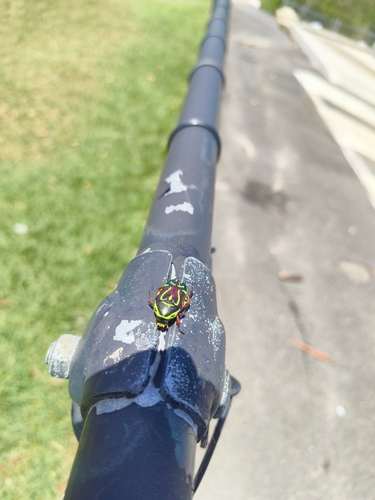
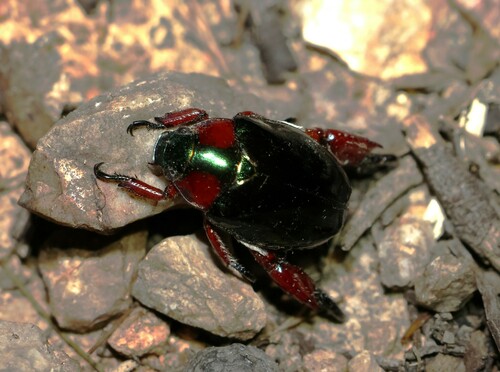
Anoplognathus viridiaeneus, commonly known as the king Christmas beetle, is a beetle of the family Scarabaeidae native to eastern Australia. The largest Christmas beetle, it can be over 3 centimetres (1.2 in) long. Edward Donovan described the King Christmas beetle in 1805 as Melolontha viridi-ænea, writing, "Nature seems to have devoted abundant attention to the embellishment of this common insect: its glow of colouring is peculiar and inimitable. The prevailing hues do not strictly please us by their harmony as their contrast, which is indeed striking, or rather glaring, but upon the whole produce a rich effect", describing it as "testaceous" (red-brown) overlain with translucent green and a brassy-gold sheen in light. Its specific epithet is derived from the Latin words viridis "green" and aeneus "copper/bronze".

The King Christmas beetle was described in 1817 as Rutela caesarea by Gustaf Johan Billberg and R. latreillei by Leonard Gyllenhaal. When Leach erected the genus Anoplognathus in 1815, he did not assign a type species. Phil Carne designated A. viridiaeneus as the type in 1957.

The largest Christmas beetle, the adult male is 30–32 mm long... Wikipedia →

Global Distribution

Parks Where Found

# Park Country Daily sighting probability
1 Royal National Park 🇦🇺 Australia
~10%
2 Blue Mountains National Park 🇦🇺 Australia
~10%

Closest Relatives at Blue Mountains National Park

Before you go

What are the chances of seeing a King Christmas Beetle in Blue Mountains National Park?

With luck

About 10% of wildlife watchers report a King Christmas Beetle sighting in Blue Mountains National Park on a given day, based on 8 verified sightings from GBIF citizen-science data from 2019 to 2026. It is the 456th most-seen of the 789 insects we can rate there. Over three days the chance rises to about 10%, and over a week to about 30%, if each day is a fresh chance.

When is the best time to see a King Christmas Beetle in Blue Mountains National Park?

December to March

In those months about 10% of wildlife watchers report a King Christmas Beetle in Blue Mountains National Park on a given day, against under 5% in April to November, the lowest months. Those are among Blue Mountains National Park's wettest months, with about 130 mm of rain a month against 40 mm in May.

What time of day is best to see a King Christmas Beetle?

Between 7 and 10 am

Across all the parks we cover, that three-hour window holds the most King Christmas Beetle sightings with a recorded time, and about 7 in 10 of them come between 6 am and 6 pm: it is most active around dawn and dusk.

Is Blue Mountains National Park the best place to see a King Christmas Beetle?

Among the best

Of the 2 parks where we can rate King Christmas Beetle sightings, Blue Mountains National Park ranks 2nd at about 10%, level with the leaders once rounded. The best odds are in Royal National Park (Australia, about 10%).

Which relatives of the King Christmas Beetle live in Blue Mountains National Park?

Same genus: Anoplognathus

The closest relatives of the King Christmas Beetle that you can see in Blue Mountains National Park (genus Anoplognathus, Christmas Beetles) are Anoplognathus viriditarsis (about 10%), Washerwoman (about 10%) and Emerald Tip Beetle (about 10%), with each one's daily chance of a sighting.

Where does the King Christmas Beetle sighting chance come from?

GBIF citizen-science records

It is estimated from how often the King Christmas Beetle is recorded against all the insects logged in Blue Mountains National Park (8 verified sightings from 2019 to 2026), calibrated against known sighting rates. Figures are rounded to the nearest 10% because citizen-science data supports honest approximations, not decimals, and months with records from fewer than five people show "—". How it works.

← Back to Blue Mountains National Park