Orange Threadtail

Orange Threadtail

Nososticta solida

Endemic
Daily sighting probability <5% · Rare
at Blue Mountains National Park

In 3 days ~10% in a week ~20%

5 Verified sightings at Blue Mountains National Park From 2019 to 2026
94 In all 3 parks
December Best month
☀️ Diurnal When it's spotted

About the Orange Threadtail

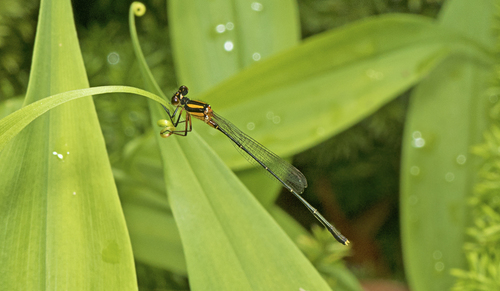
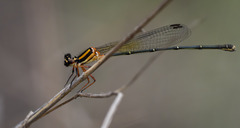
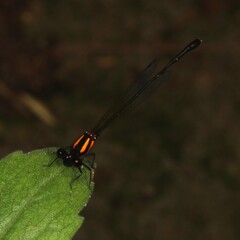
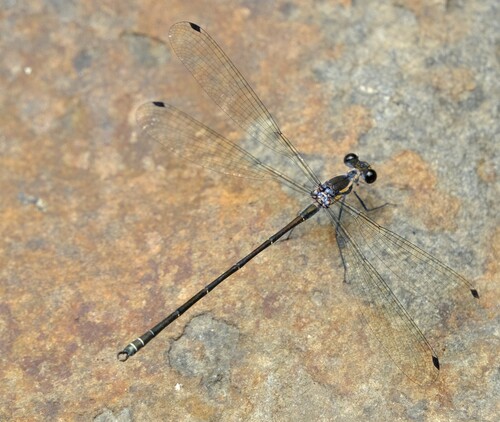
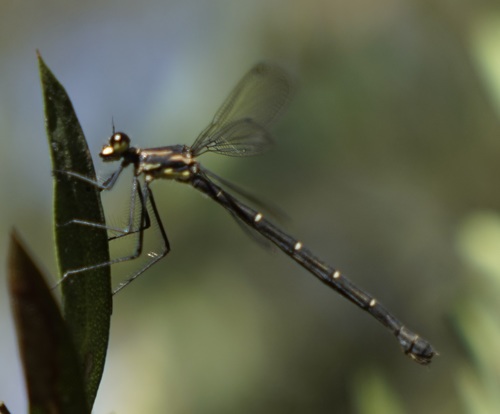
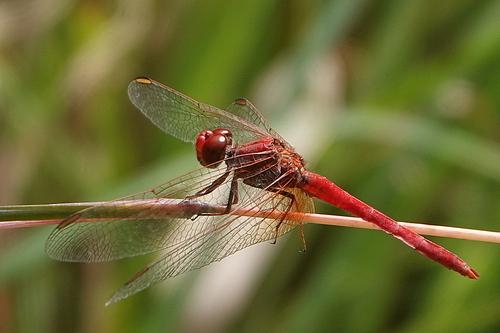
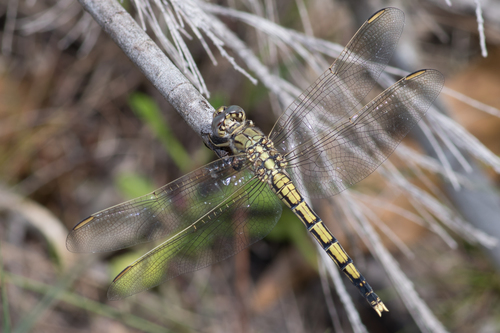
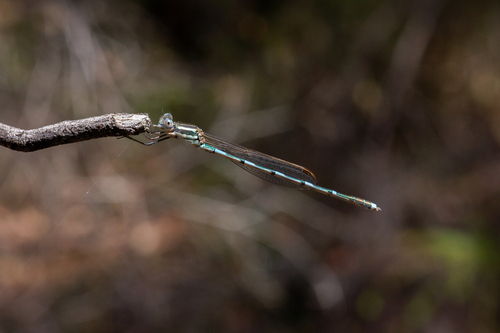
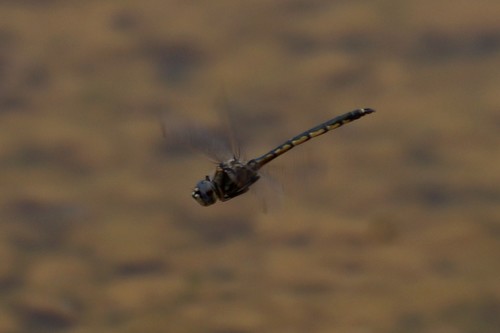
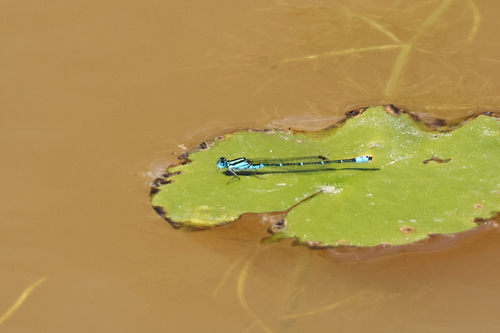
The orange threadtail or ochre threadtail (Nososticta solida) is an Australian damselfly in the family Platycnemididae. They are medium-sized with a length of around 35mm. Orange threadtails can be found near semi-shaded running water, and usually rest on plants at the water's edge. Orange threadtails may be seen all year round. In Victoria they occur at lower altitudes during summer, though further north they can be seen in spring and autumn. When at rest, Nososticta damselflies hold their wings closely folded up vertically over their thorax. The male threadtails have an orange-yellow thorax with black patterns. Their abdomen is narrow, black in colour with yellow strips. There is a brown yellow colour at the base of their wings. Females are the same size as the males. They are pale brown in colour and have the same black patterns as the males.

Orange threadtails are found in eastern Australian States: Queensland, New South Wales, Australian Capital Territory and Victoria. The genus name Nososticta combines the Greek νόσος (nosos, "disease") with στικτός (stiktos, "spotted" or "marked"). The suffix -sticta is commonly used in names of taxa related... Wikipedia →

Global Distribution

Parks Where Found

# Park Country Daily sighting probability
1 Lamington National Park 🇦🇺 Australia
~30%
2 Springbrook National Park 🇦🇺 Australia
~10%
3 Blue Mountains National Park 🇦🇺 Australia
<5%

Cities Where Found

# City Country Daily sighting probability
1 Melbourne 🇦🇺 Australia
~10%
2 Brisbane 🇦🇺 Australia
<5%
3 Sydney 🇦🇺 Australia
<5%

Before you go

What are the chances of seeing an Orange Threadtail in Blue Mountains National Park?

Rare

Under 5% of wildlife watchers report an Orange Threadtail sighting in Blue Mountains National Park on a given day, based on 5 verified sightings from GBIF citizen-science data from 2019 to 2026. It is the 681st most-seen of the 789 insects we can rate there. Over three days the chance rises to about 10%, and over a week to about 20%, if each day is a fresh chance.

When is the best time to see an Orange Threadtail in Blue Mountains National Park?

December

In that month about 10% of wildlife watchers report an Orange Threadtail in Blue Mountains National Park on a given day, against under 5% in January to November, the lowest months.

What time of day is best to see an Orange Threadtail?

Between 9 am and noon

Across all the parks we cover, that three-hour window holds the most Orange Threadtail sightings with a recorded time, and about 9 in 10 of them come between 6 am and 6 pm: it is a daytime animal.

Is Blue Mountains National Park the best place to see an Orange Threadtail?

3rd of 3

Of the 3 parks where we can rate Orange Threadtail sightings, Blue Mountains National Park ranks 3rd at under 5%. The best odds are in Lamington National Park (Australia, about 30%) and Springbrook National Park (Australia, about 10%).

Which relatives of the Orange Threadtail live in Blue Mountains National Park?

Same order: Odonata

The closest relatives of the Orange Threadtail that you can see in Blue Mountains National Park (order Odonata, Dragonflies and Damselflies) are Sydney Mountain Darner (about 20%), Common Flatwing (about 20%) and Eastern Evening Darner (about 10%), with each one's daily chance of a sighting.

Where does the Orange Threadtail sighting chance come from?

GBIF citizen-science records

It is estimated from how often the Orange Threadtail is recorded against all the insects logged in Blue Mountains National Park (5 verified sightings from 2019 to 2026), calibrated against known sighting rates. Figures are rounded to the nearest 10% because citizen-science data supports honest approximations, not decimals, and months with records from fewer than five people show "—". How it works.

← Back to Blue Mountains National Park