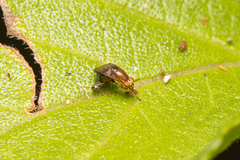
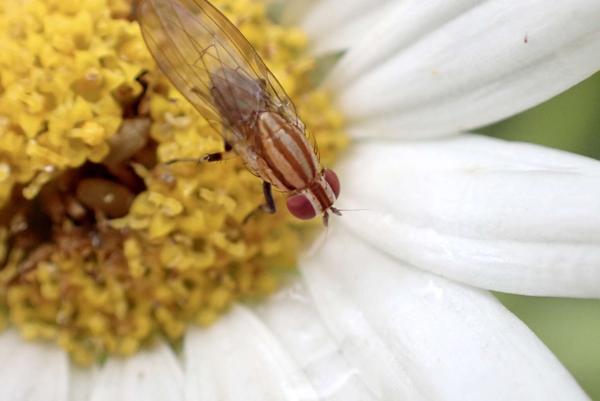
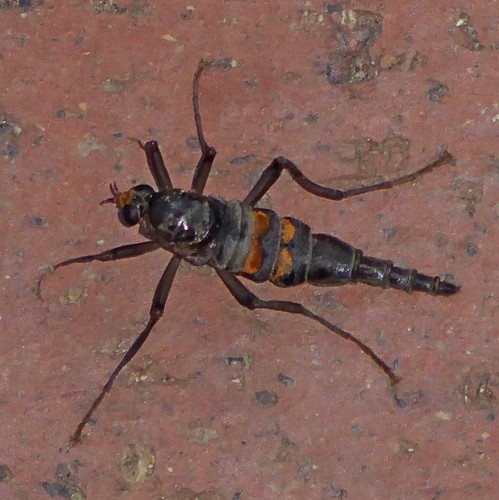

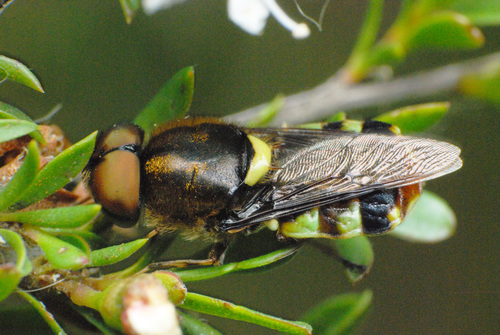
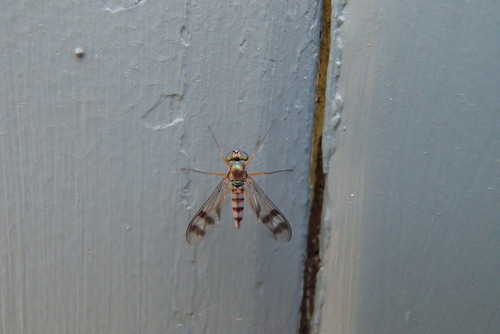
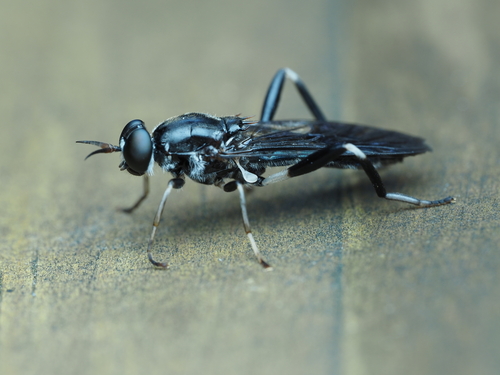
Steganopsis melanogaster

Steganopsis melanogaster

Steganopsis melanogaster

Daily sighting probability <5% · Rare
at Blue Mountains National Park

In 3 days ~10% in a week ~20%

5 Verified sightings at Blue Mountains National Park From 2019 to 2026
5 In 1 park
April Best month
☀️🌙 Day & Night When it's spotted

About the Steganopsis melanogaster

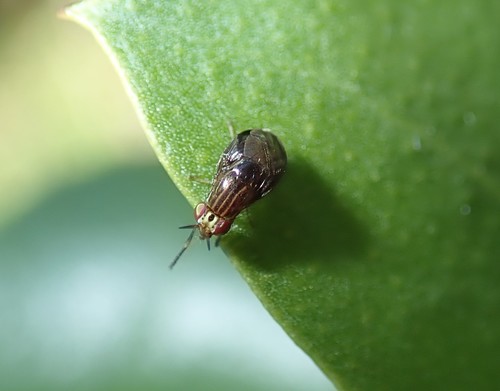
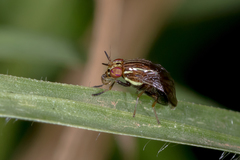
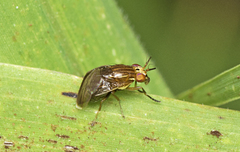
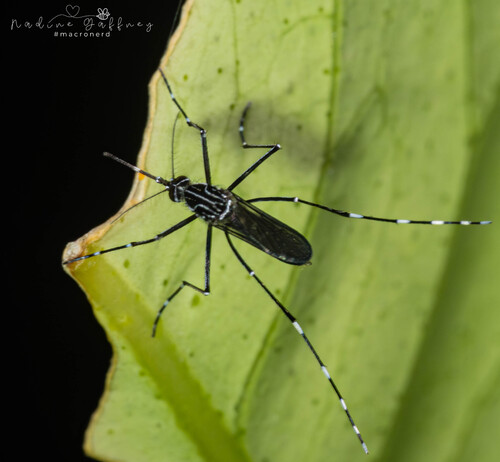
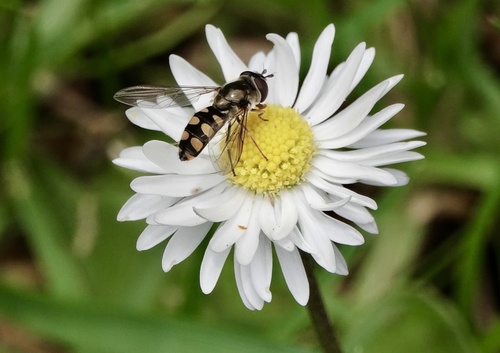
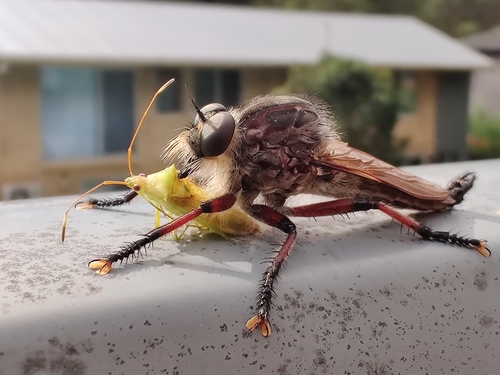
Steganopsis melanogaster is a species of fly in the family Lauxaniidae. It is known from Australia and Norfolk Island. As part of family Lauxaniidae, S. melanogaster has a head with convergent postocellar bristles and without vibrissae, the thorax has an anepisternal bristle on each side, and vein C of the wing is unbroken.

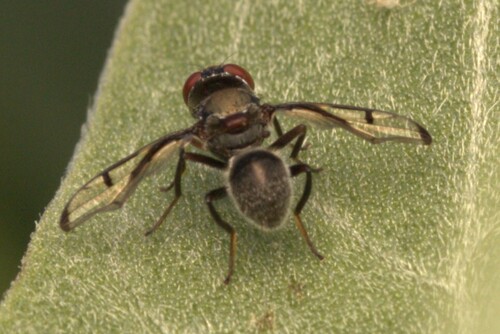
For features specific to this species, S. melanogaster is about 3 mm long with an abdomen that is mostly glossy black and wings that are brown except for the transparent white tips. The frons of the head is dull yellow with a large velvety black ocellar mark and brownish marks at the bases of the orbital bristles. The face has a large violet-black spot on each side. The middle of the fore tibia and the base of the hind femur are darkened. The second vein of the wing is close to the costa. The structure of the male hypogium helps distinguish this species from the related and similar-looking S. convergens.

In life, the wings are bent over the end of the abdomen. This may cause the fly to be mistaken for a small beetle. Adults are known to visit flowers of Alphitonia excelsa (Rhamnaceae) and Guioa semiglauca (Sapindaceae). Larvae may... Wikipedia →

Global Distribution

Parks Where Found

# Park Country Daily sighting probability
1 Blue Mountains National Park 🇦🇺 Australia
<5%

More parks will be added in future updates.

Cities Where Found

# City Country Daily sighting probability
1 Sydney 🇦🇺 Australia
<5%
2 Perth 🇦🇺 Australia
<5%
3 Brisbane 🇦🇺 Australia
<5%
4 Melbourne 🇦🇺 Australia
<5%

Before you go

What are the chances of seeing a Steganopsis melanogaster in Blue Mountains National Park?

Rare

Under 5% of wildlife watchers report a Steganopsis melanogaster sighting in Blue Mountains National Park on a given day, based on 5 verified sightings from GBIF citizen-science data from 2019 to 2026. It is the 681st most-seen of the 789 insects we can rate there. Over three days the chance rises to about 10%, and over a week to about 20%, if each day is a fresh chance.

When is the best time to see a Steganopsis melanogaster in Blue Mountains National Park?

February, April and October

In those months about 10% of wildlife watchers report a Steganopsis melanogaster in Blue Mountains National Park on a given day, against under 5% in March, May–September and November–January, the lowest months.

What time of day is best to see a Steganopsis melanogaster?

Between 2 and 5 pm

Across all the parks we cover, that three-hour window holds the most Steganopsis melanogaster sightings with a recorded time, and about 6 in 10 of them come between 6 am and 6 pm: it is seen both by day and at night.

Where else can you see a Steganopsis melanogaster?

Only Blue Mountains National Park, in our data

Blue Mountains National Park is the only park on Wallace's Line with enough records to rate Steganopsis melanogaster sightings: under 5% of wildlife watchers there report one on a given day.

Where does the Steganopsis melanogaster sighting chance come from?

GBIF citizen-science records

It is estimated from how often the Steganopsis melanogaster is recorded against all the insects logged in Blue Mountains National Park (5 verified sightings from 2019 to 2026), calibrated against known sighting rates. Figures are rounded to the nearest 10% because citizen-science data supports honest approximations, not decimals, and months with records from fewer than five people show "—". How it works.

← Back to Blue Mountains National Park