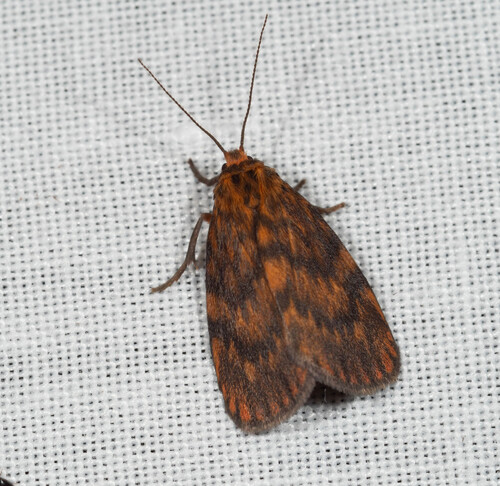
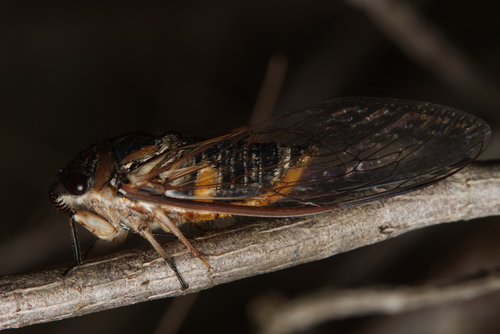
Golden-Green Carpenter Bee

Golden-Green Carpenter Bee

Xylocopa aeratus

Daily sighting probability ~20% · Possible
at Booderee National Park

In 3 days ~40% in a week ~70%

10 Verified sightings at Booderee National Park From 2019 to 2026
47 In all 3 parks
August Best month
☀️ Diurnal When it's spotted

About the Golden-Green Carpenter Bee

Xylocopa aerata, the golden-green carpenter bee or green carpenter bee, is one of two species of carpenter bee found only in the conservation areas around Sydney, and in the Great Dividing Range in New South Wales in Australia. Its only other habitat as of 2020 is on Kangaroo Island in South Australia. The species is especially vulnerable to fire, and much of its habitat was burnt during the 2019–20 Australian bushfire season.

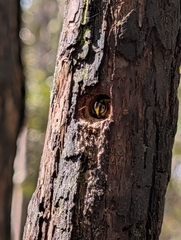
The bee gets its common name by its habit of burrowing into wood. It is not a social species and does not produce honey, but it is an important pollinator for several species of Australian native plants. It was originally described by F. Smith in 1851 as Lestis aeratus. Its specific epithet is the Latin adjective aerata, meaning "bronzed".

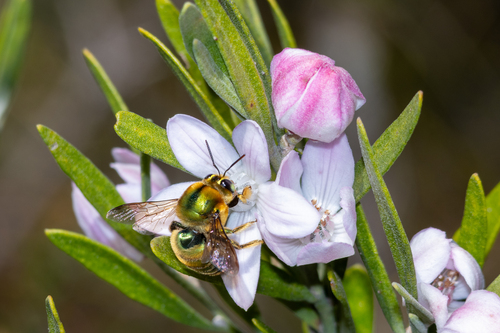
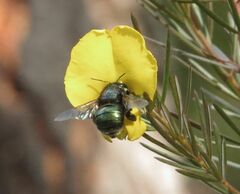
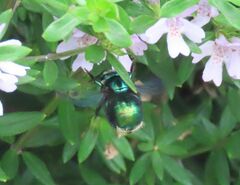
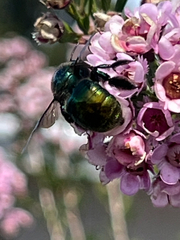
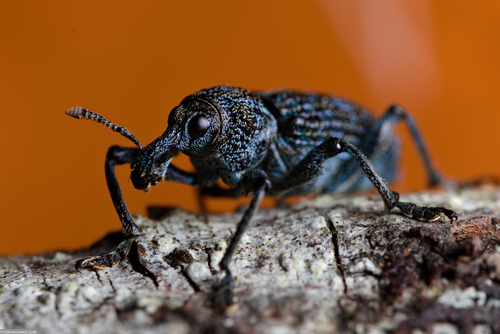
As its name implies, the golden-green carpenter bee is a metallic green in colour, although it may appear purplish or bluish from some angles. A large stocky bee (at nearly 2 cm (0.79 in), one of the largest native bees in southern Australia), it is often heard by its loud low-pitched buzzing while flying between flowers. The male has yellow face markings. The bee does have a sting which is potentially painful... Wikipedia →

Global Distribution

Parks Where Found

# Park Country Daily sighting probability
1 Booderee National Park 🇦🇺 Australia
~20%
2 Royal National Park 🇦🇺 Australia
~10%
3 Blue Mountains National Park 🇦🇺 Australia
~10%

Cities Where Found

# City Country Daily sighting probability
1 Sydney 🇦🇺 Australia
<5%

Before you go

What are the chances of seeing a Golden-Green Carpenter Bee in Booderee National Park?

Possible

About 20% of wildlife watchers report a Golden-Green Carpenter Bee sighting in Booderee National Park on a given day, based on 10 verified sightings from GBIF citizen-science data from 2019 to 2026. It is the 13th most-seen of the 59 insects we can rate there. Over three days the chance rises to about 40%, and over a week to about 70%, if each day is a fresh chance.

When is the best time to see a Golden-Green Carpenter Bee in Booderee National Park?

August

In that month about 40% of wildlife watchers report a Golden-Green Carpenter Bee in Booderee National Park on a given day, against under 5% in January, March, May–June and September–October, the lowest months.

What time of day is best to see a Golden-Green Carpenter Bee?

Between noon and 3 pm

Across all the parks we cover, that three-hour window holds the most Golden-Green Carpenter Bee sightings with a recorded time, and nearly all of them come between 6 am and 6 pm: it is a daytime animal.

Is Booderee National Park the best place to see a Golden-Green Carpenter Bee?

Yes

Of the 3 parks where we can rate Golden-Green Carpenter Bee sightings, Booderee National Park has the highest daily chance: about 20%. Next come Royal National Park (Australia, about 10%) and Blue Mountains National Park (Australia, about 10%).

Which relatives of the Golden-Green Carpenter Bee live in Booderee National Park?

Same order: Hymenoptera

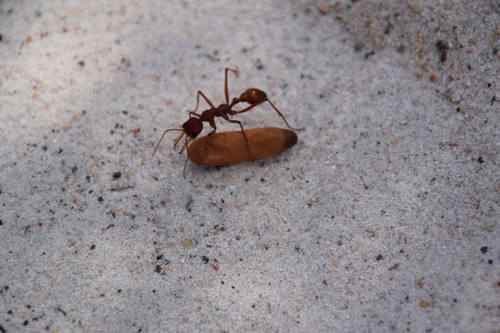
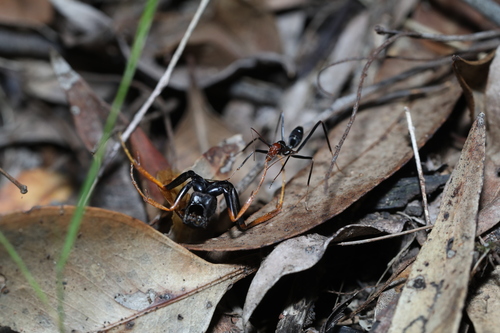
The closest relatives of the Golden-Green Carpenter Bee that you can see in Booderee National Park (order Hymenoptera, Ants, Bees, Wasps, and Sawflies) are Red Bull Ant (about 40%) and Red-Headed Spider Ant (about 20%), with each one's daily chance of a sighting.

Where does the Golden-Green Carpenter Bee sighting chance come from?

GBIF citizen-science records

It is estimated from how often the Golden-Green Carpenter Bee is recorded against all the insects logged in Booderee National Park (10 verified sightings from 2019 to 2026), calibrated against known sighting rates. Figures are rounded to the nearest 10% because citizen-science data supports honest approximations, not decimals, and months with records from fewer than five people show "—". How it works.

← Back to Booderee National Park