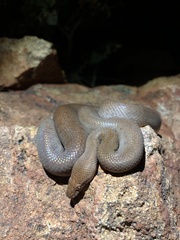
Pygmy Python

Pygmy Python

Antaresia perthensis

Silhouette: SeismicShrimp · PhyloPic

LCLeast ConcernNTVUENCR Endemic
Daily sighting probability ~20% · Possible
at Cape Range

In 3 days ~50% in a week ~80%

6 Verified sightings at Cape Range From 2019 to 2026
6 In 1 park
April Best month
☀️🌙 Day & Night When it's spotted

About the Pygmy Python

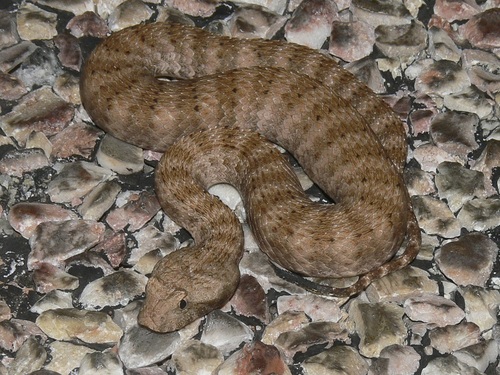
The pygmy python (Antaresia perthensis), also known as the anthill python, is a species of snake found in Western Australia. Their common names are due to their being the smallest member of the family Pythonidae and often being found in termite mounds. No subspecies are currently recognised.

The specific epithet is derived from the Western Australian state capital, Perth—a city which is not, ironically, within the range of the species. The global biodiversity database iNaturalist has documented a number of different visual sightings of the pygmy python within the state of Western Australia, with the nearest physical sighting to Perth having occurred near Reedy, some 680 km (422.53 mi) north and slightly further inland of the capital.

Adults grow to about 50 cm (19.5 in) in length and have a weight near 210 grams. Neonates are about 8 inches (20 cm) in length and about 4 grams in weight. After a year they average about 25 grams in weight. This makes them smaller than both the Children's python, A. childreni, and the spotted python, A. maculosa. A. perthensis usually has a redder background ground color than these other species and their spots fade, or become less distinct... Wikipedia →

Global Distribution

Parks Where Found

# Park Country Daily sighting probability
1 Cape Range 🇦🇺 Australia
~20%

More parks will be added in future updates.

Zoos & Centres Where Found

# Zoo / Centre Country
1 Taronga Zoo 🇦🇺 Australia In captivity

Before you go

What are the chances of seeing a Pygmy Python in Cape Range?

Possible

About 20% of wildlife watchers report a Pygmy Python sighting in Cape Range on a given day, based on 6 verified sightings from GBIF citizen-science data from 2019 to 2026. It is the 16th most-seen of the 22 reptiles we can rate there. Over three days the chance rises to about 50%, and over a week to about 80%, if each day is a fresh chance.

When is the best time to see a Pygmy Python in Cape Range?

March–May and October

In those months about 40% of wildlife watchers report a Pygmy Python in Cape Range on a given day, against under 5% in January–February, June–September and November, the lowest months.

What time of day is best to see a Pygmy Python?

Between 7 and 10 pm

Across all the parks we cover, that three-hour window holds the most Pygmy Python sightings with a recorded time, and about 7 in 10 of them come between 6 pm and 6 am: it is seen both by day and at night.

Where else can you see a Pygmy Python?

Only Cape Range, in our data

Cape Range is the only park on Wallace's Line with enough records to rate Pygmy Python sightings: about 20% of wildlife watchers there report one on a given day.

Where does the Pygmy Python sighting chance come from?

GBIF citizen-science records

It is estimated from how often the Pygmy Python is recorded against all the reptiles logged in Cape Range (6 verified sightings from 2019 to 2026), calibrated against known sighting rates. Figures are rounded to the nearest 10% because citizen-science data supports honest approximations, not decimals, and months with records from fewer than five people show "—". How it works.

← Back to Cape Range