
Yucatan Gnatcatcher

Yucatan Gnatcatcher

Polioptila albiventris

Silhouette: Sheatherius · PhyloPic

Endemic
Daily sighting probability ~40% · Likely
at Celestún Biosphere Reserve

In 3 days ~80% in a week >90%

785 Verified sightings at Celestún Biosphere Reserve From 2019 to 2026
785 In 1 park
May Best month
☀️ Diurnal When it's spotted

About the Yucatan Gnatcatcher

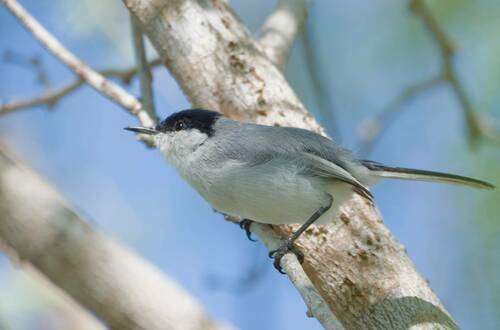
The Yucatan gnatcatcher (Polioptila albiventris) is a species of bird in the family Polioptilidae. It is endemic to the Yucatán Peninsula in Mexico. The Yucatan gnatcatcher is monotypic. "The continually changing species to which albiventris has been allied gives testament to the general confusion that has afflicted the classification of most Central American Polioptila taxa." It was originally described as a full species. It was later variously considered a subspecies of tropical gnatcatcher (P. plumbea), black-capped gnatcatcher (P. nigriceps), and "white-browed" gnatcatcher (P. plumbea bilieata) during its time as a separate species. It was most recently considered a subspecies of the white-lored gnatcatcher (P. albiloris) until a 2018 molecular study showed significant differences from all other gnatcatchers.

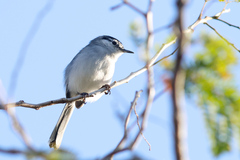
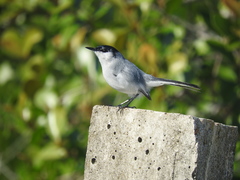
The Yucatan gnatcatcher is 10 to 12 cm (3.9 to 4.7 in) long. Six males weighed 5.4 to 6.2 g (0.19 to 0.22 oz) and three females 5.0 to 5.7 g (0.18 to 0.20 oz). The female's upperparts are plumbeous gray from the crown to the rump. Its underparts are white with sometimes a pale grayish wash on the flanks. The tail's central feathers... Wikipedia →

Sounds

Recording0:20

Mexico · 2026

© sadric_a · iNaturalist · CC BY-NC 4.0

Recording0:31

Mexico · 2024

© Daniel Correia · iNaturalist · CC BY-NC 4.0

Global Distribution

Parks Where Found

# Park Country Daily sighting probability
1 Celestún Biosphere Reserve 🇲🇽 Mexico
~40%

More parks will be added in future updates.

Before you go

What are the chances of seeing a Yucatan Gnatcatcher in Celestún Biosphere Reserve?

Likely

About 40% of wildlife watchers report a Yucatan Gnatcatcher sighting in Celestún Biosphere Reserve on a given day, based on 785 verified sightings from GBIF citizen-science data from 2019 to 2026. It is the 29th most-seen of the 297 birds we can rate there. Over three days the chance rises to about 80%, and over a week to over 90%, if each day is a fresh chance.

When is the best time to see a Yucatan Gnatcatcher in Celestún Biosphere Reserve?

April–June and November

In those months about 50% of wildlife watchers report a Yucatan Gnatcatcher in Celestún Biosphere Reserve on a given day, against about 30% in February, the lowest month.

What time of day is best to see a Yucatan Gnatcatcher?

Between 7 and 10 am

Across all the parks we cover, that three-hour window holds the most Yucatan Gnatcatcher sightings with a recorded time, and nearly all of them come between 6 am and 6 pm: it is a daytime animal.

Where else can you see a Yucatan Gnatcatcher?

Only Celestún Biosphere Reserve, in our data

Celestún Biosphere Reserve is the only park on Wallace's Line with enough records to rate Yucatan Gnatcatcher sightings: about 40% of wildlife watchers there report one on a given day.

Where does the Yucatan Gnatcatcher sighting chance come from?

GBIF citizen-science records

It is estimated from how often the Yucatan Gnatcatcher is recorded against all the birds logged in Celestún Biosphere Reserve (785 verified sightings from 2019 to 2026), calibrated against known sighting rates. Figures are rounded to the nearest 10% because citizen-science data supports honest approximations, not decimals, and months with records from fewer than five people show "—". How it works.

← Back to Celestún Biosphere Reserve