

Completed

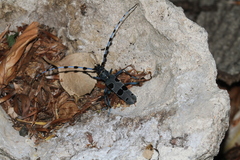
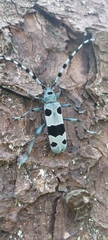
Alpine Longhorn Rosalia
Rosalia alpina
- KingdomAnimalia (Animals)
- PhylumArthropoda (Arthropods)
- ClassInsecta (Insects)
- OrderColeoptera (Beetles)
- FamilyCerambycidae (Longhorn Beetles)
- GenusRosalia
- SpeciesRosalia alpina (Alpine Longhorn Rosalia)
In 3 days ~20% in a week ~40%
47 Verified sightings at Cévennes National Park From 2019 to 2026
212 In all 5 parks
June Best month
☀️ Diurnal When it's spotted
About the Alpine Longhorn Rosalia
The rosalia longicorn (Rosalia alpina) or alpine longhorn beetle is a large longicorn (family Cerambycidae) that is distinguished by its distinctive markings. The beetle lives in beech forests with sun exposure and clearings. It is a captivating and endangered species that graces the Euro-Caucasian region with its presence and lay eggs on stacked timber especially often in beech wood storage.
The species was first described as Cerambyx alpinus by Carl Linnaeus in his 1758 work Fauna Svecica. The description was written based on a specimen collected more than fifty years earlier by another scientist in the Swiss Alps. Linnaeus wrote that it was found in Scania and Blekinge.
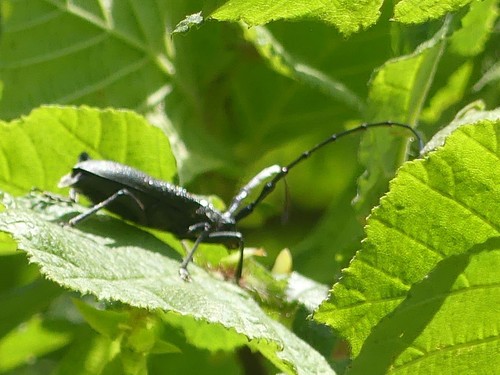
The rosalia longicorn is 15 to 38 mm (0.59 to 1.50 in) long. The antennae can be up to twice as long as the rest of the body in males, and the same length in females. The elytra are flat, blue-gray, with variable black spots, including a prominent one on the thorax, a silky one in front, and a small one in back. Both the antennae and the legs have the same coloration as the body. The coloration serves as good camouflage with their preferred habitat, the European beech.
They... Wikipedia →
Recent sightings of Alpine Longhorn Rosalia in Cévennes National Park
LIVEiNaturalistGlobal Distribution
Parks Where Found
| # | Park | Country | Daily sighting probability |
|---|---|---|---|
| 1 | Triglav National Park | 🇸🇮 Slovenia | |
| 2 | Pyrénées National Park | 🇫🇷 France | |
| 3 | Picos de Europa National Park | 🇪🇸 Spain | |
| 4 | Cévennes National Park | 🇫🇷 France | |
| 5 | Aigüestortes National Park | 🇪🇸 Spain |
Cities Where Found
| # | City | Country | Daily sighting probability |
|---|---|---|---|
| 1 | Vienna | 🇦🇹 Austria |
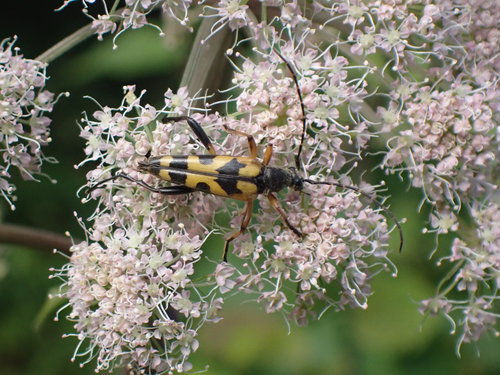
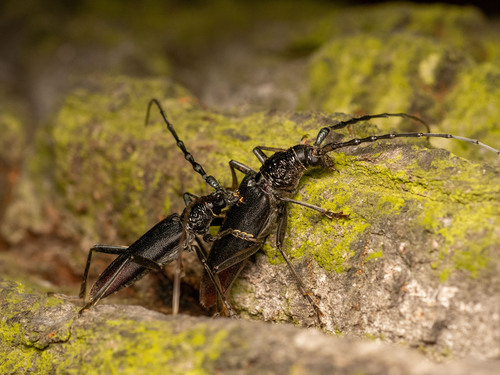
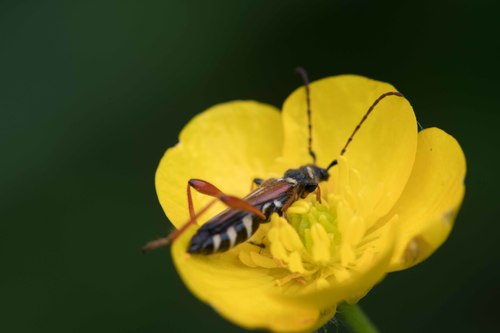
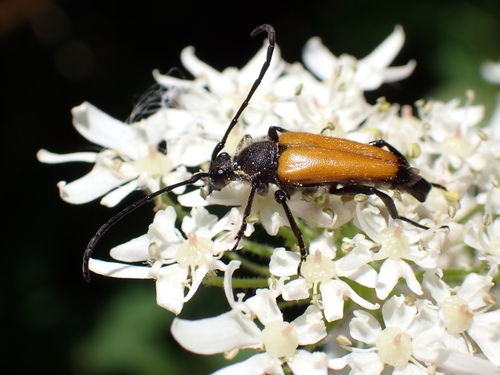
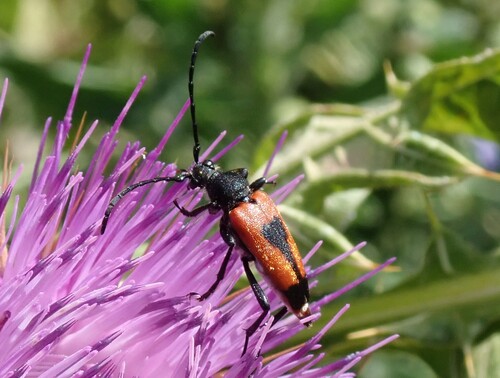
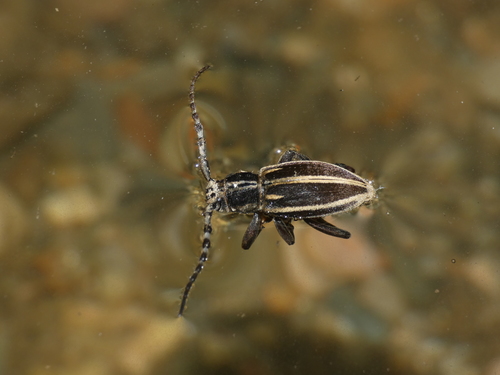
Closest Relatives at Cévennes National Park

Before you go
What are the chances of seeing an Alpine Longhorn Rosalia in Cévennes National Park?
With luck
About 10% of wildlife watchers report an Alpine Longhorn Rosalia sighting in Cévennes National Park on a given day, based on 47 verified sightings from GBIF citizen-science data from 2019 to 2026. It is the 436th most-seen of the 996 insects we can rate there. Over three days the chance rises to about 20%, and over a week to about 40%, if each day is a fresh chance.
When is the best time to see an Alpine Longhorn Rosalia in Cévennes National Park?
June to August
In those months about 10% of wildlife watchers report an Alpine Longhorn Rosalia in Cévennes National Park on a given day, against under 5% in September to May, the lowest months. Those are among Cévennes National Park's driest months, with about 60 mm of rain a month against 260 mm in October.
What time of day is best to see an Alpine Longhorn Rosalia?
Between noon and 3 pm
Across all the parks we cover, that three-hour window holds the most Alpine Longhorn Rosalia sightings with a recorded time, and about 8 in 10 of them come between 6 am and 6 pm: it is a daytime animal.
Is Cévennes National Park the best place to see an Alpine Longhorn Rosalia?
4th of 5
Of the 5 parks where we can rate Alpine Longhorn Rosalia sightings, Cévennes National Park ranks 4th at about 10%. The best odds are in Triglav National Park (Slovenia, about 20%), Pyrénées National Park (France, about 10%) and Picos de Europa National Park (Spain, about 10%).
Which relatives of the Alpine Longhorn Rosalia live in Cévennes National Park?
Same family: Cerambycidae
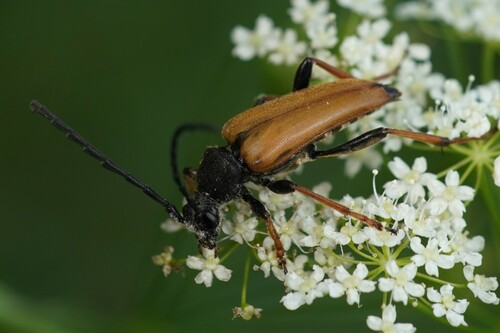
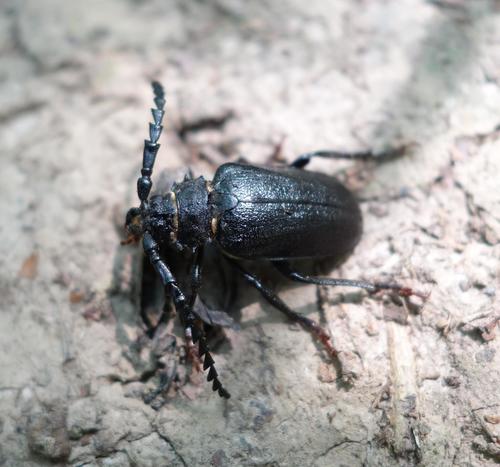
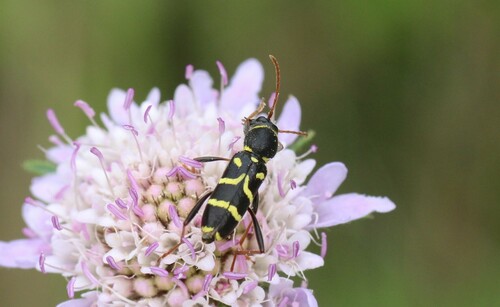
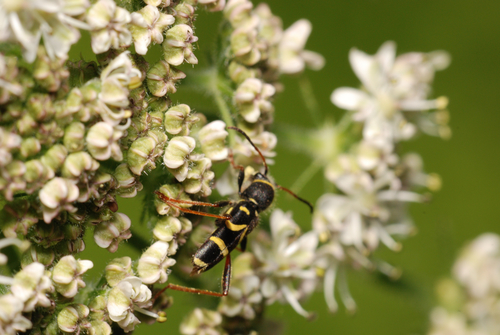
The closest relatives of the Alpine Longhorn Rosalia that you can see in Cévennes National Park (family Cerambycidae, Longhorn Beetles) are Spotted Longhorn Beetle (about 20%), Great Capricorn Beetle (about 20%) and Stenopterus rufus (about 10%), with each one's daily chance of a sighting.
Where does the Alpine Longhorn Rosalia sighting chance come from?
GBIF citizen-science records
It is estimated from how often the Alpine Longhorn Rosalia is recorded against all the insects logged in Cévennes National Park (47 verified sightings from 2019 to 2026), calibrated against known sighting rates. Figures are rounded to the nearest 10% because citizen-science data supports honest approximations, not decimals, and months with records from fewer than five people show "—". How it works.
