





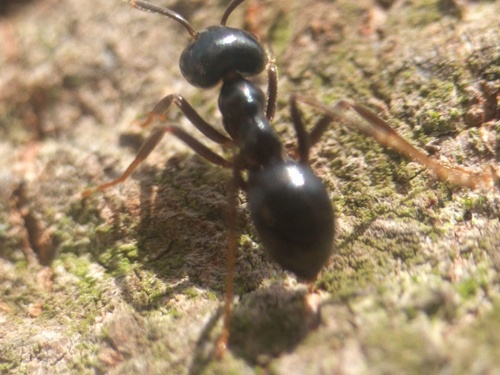

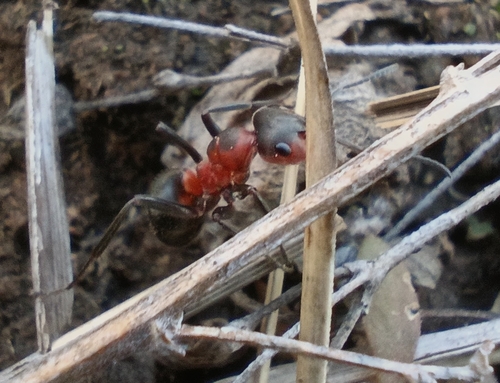
European Amazon Ant

European Amazon Ant

Polyergus rufescens

Daily sighting probability <5% · Rare
at Cévennes National Park

In 3 days ~10% in a week ~30%

7 Verified sightings at Cévennes National Park From 2019 to 2026
7 In 1 park
July Best month
🌙 Nocturnal When it's spotted

About the European Amazon Ant

Polyergus rufescens is a species of slave-making ant native to southern Europe and parts of Asia, commonly referred to as the European Amazon ant or as the slave-making ant. It is an obligatory social parasite, unable to feed itself or look after the colony and reliant on ants of another species to undertake these tasks. To replenish these servant ants, it raids nearby ant colonies and carries home pupae and larvae, and these are reared to provide future workers for the colony. A newly mated female P. rufescens needs to make its way into one of these "host" nests, kill the host queen, and be accepted by the host workers in her place.

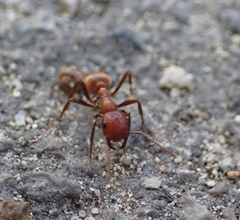
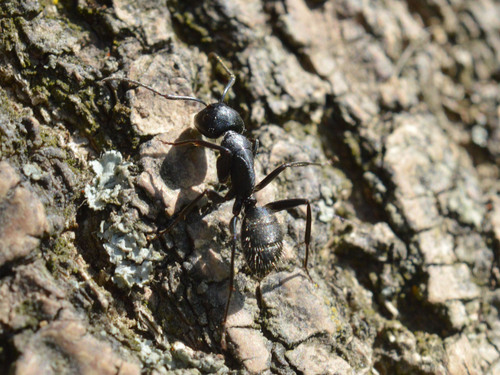
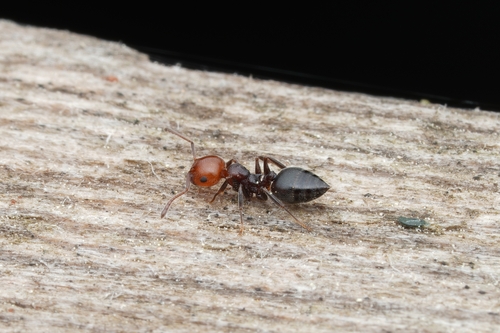
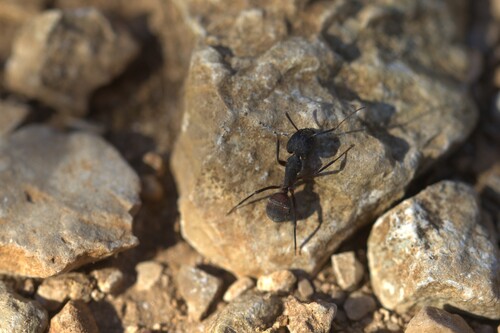
P. rufescens workers in western and southwestern Europe are dark red, while eastern specimens are more orange-red. Darker ants often have a purplish or brownish tinge to their gasters and appendages. Morphologically, ants of this species are similar to the Mexican Polyergus topoffi, but have narrower heads and petioles and the first tergites of their gasters are more hairy. The total length of this ant is 4.7 to 7 mm (0.19 to 0.28 in).

P. rufescens is native to parts of Europe including Spain, France, the Netherlands... Wikipedia →

Global Distribution

Parks Where Found

# Park Country Daily sighting probability
1 Cévennes National Park 🇫🇷 France
<5%

More parks will be added in future updates.

Cities Where Found

# City Country Daily sighting probability
1 Kyiv 🇺🇦 Ukraine
<5%
2 Bucharest 🇷🇴 Romania
<5%
3 Vienna 🇦🇹 Austria
<5%
4 Prague 🇨🇿 Czechia
<5%

Before you go

What are the chances of seeing a European Amazon Ant in Cévennes National Park?

Rare

Under 5% of wildlife watchers report a European Amazon Ant sighting in Cévennes National Park on a given day, based on 7 verified sightings from GBIF citizen-science data from 2019 to 2026. It is the 730th most-seen of the 996 insects we can rate there. Over three days the chance rises to about 10%, and over a week to about 30%, if each day is a fresh chance.

When is the best time to see a European Amazon Ant in Cévennes National Park?

July–August and October

In those months about 10% of wildlife watchers report a European Amazon Ant in Cévennes National Park on a given day, against under 5% in September and November–June, the lowest months.

What time of day is best to see a European Amazon Ant?

Between 6 and 9 pm

Across all the parks we cover, that three-hour window holds the most European Amazon Ant sightings with a recorded time, and about 9 in 10 of them come between 6 pm and 6 am: it is mostly seen at night.

Where else can you see a European Amazon Ant?

Only Cévennes National Park, in our data

Cévennes National Park is the only park on Wallace's Line with enough records to rate European Amazon Ant sightings: under 5% of wildlife watchers there report one on a given day.

Where does the European Amazon Ant sighting chance come from?

GBIF citizen-science records

It is estimated from how often the European Amazon Ant is recorded against all the insects logged in Cévennes National Park (7 verified sightings from 2019 to 2026), calibrated against known sighting rates. Figures are rounded to the nearest 10% because citizen-science data supports honest approximations, not decimals, and months with records from fewer than five people show "—". How it works.

← Back to Cévennes National Park