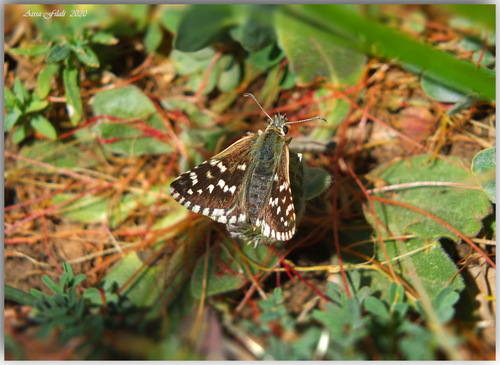
Lulworth Skipper

Lulworth Skipper

Thymelicus acteon

Daily sighting probability ~10% · With luck
at Cévennes National Park

In 3 days ~20% in a week ~40%

15 Verified sightings at Cévennes National Park From 2019 to 2026
53 In all 4 parks
July Best month
☀️ Diurnal When it's spotted

About the Lulworth Skipper

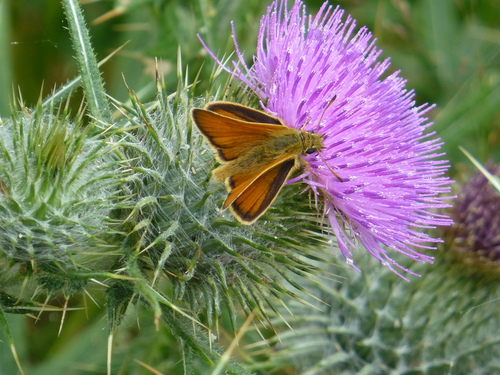
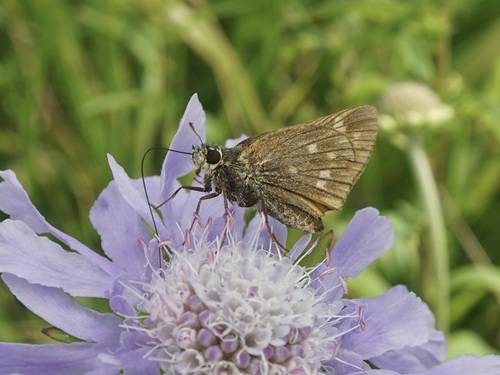
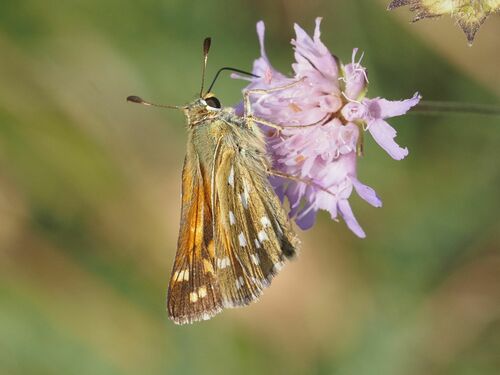
The Lulworth skipper (Thymelicus acteon) is a butterfly of the family Hesperiidae. Its name is derived from Lulworth Cove in the county of Dorset, England, where the first specimens in Great Britain were collected in 1832 by English naturalist James Charles Dale.

The species occurs locally across Central Europe, Asia Minor and North Africa, where its population is considered stable. Its numbers have declined in Northern Europe, leading to its European status of "vulnerable". Its range in Britain is restricted to the south coast of Dorset, however it is locally abundant and its numbers currently are perhaps at their greatest since its discovery there.

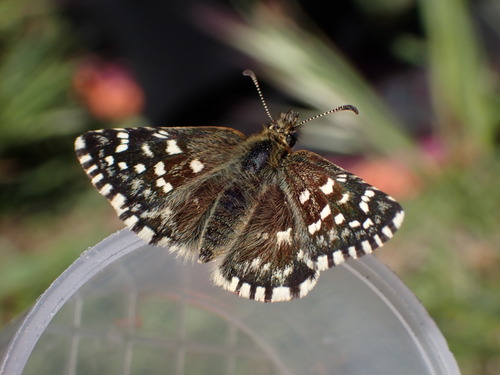
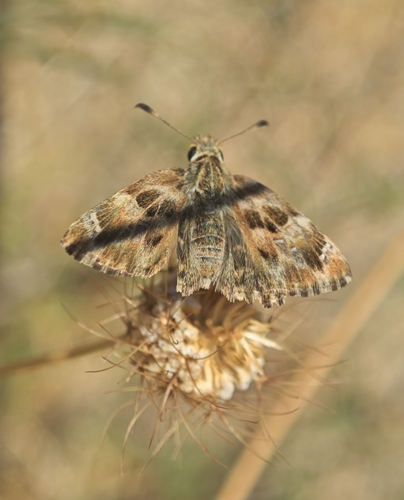
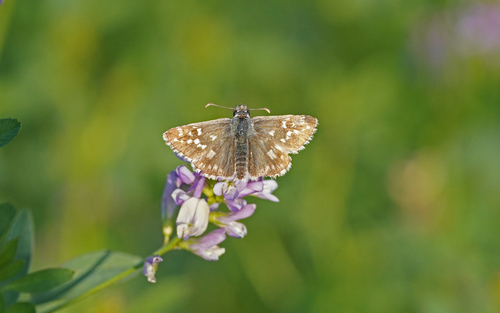
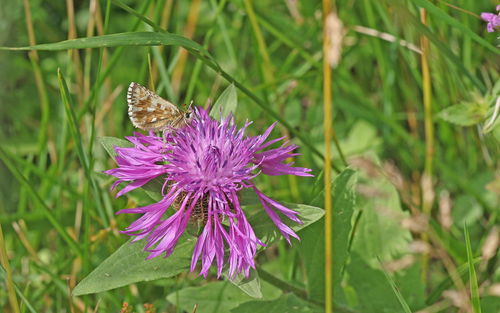
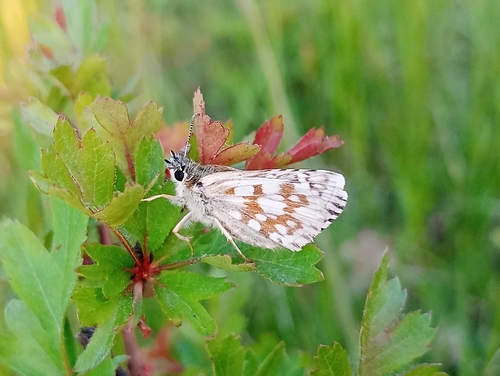
With a wingspan of 24 to 28 millimetres, females being larger than males, the Lulworth skipper is a small butterfly, the smallest member of the genus Thymelicus in Europe and among the smallest butterflies in Britain. Aside from the size difference, the sexes are distinguished by females having a distinct circle of golden marks on each forewing. Due to their likeness to the rays around the eye of a peacock's feather, these are often known as "sun-ray" markings, and they can faintly appear on males.

The Lulworth skipper was... Wikipedia →
Global Distribution

Parks Where Found

# Park Country Daily sighting probability
1 Picos de Europa National Park 🇪🇸 Spain
~20%
2 Aigüestortes National Park 🇪🇸 Spain
~10%
3 Cévennes National Park 🇫🇷 France
~10%
4 Pyrénées National Park 🇫🇷 France
<5%

Cities Where Found

# City Country Daily sighting probability
1 Athens 🇬🇷 Greece
~10%
2 Barcelona 🇪🇸 Spain
~10%
3 Istanbul 🇹🇷 Turkey
~10%
4 Madrid 🇪🇸 Spain
<5%
5 Lisbon 🇵🇹 Portugal
<5%

Before you go

What are the chances of seeing a Lulworth Skipper in Cévennes National Park?

With luck

About 10% of wildlife watchers report a Lulworth Skipper sighting in Cévennes National Park on a given day, based on 15 verified sightings from GBIF citizen-science data from 2019 to 2026. It is the 493rd most-seen of the 996 insects we can rate there. Over three days the chance rises to about 20%, and over a week to about 40%, if each day is a fresh chance.

When is the best time to see a Lulworth Skipper in Cévennes National Park?

June and July

In those months about 10% of wildlife watchers report a Lulworth Skipper in Cévennes National Park on a given day, against under 5% in August to May, the lowest months. Those are among Cévennes National Park's driest months, with about 60 mm of rain a month against 260 mm in October.

What time of day is best to see a Lulworth Skipper?

Between noon and 3 pm

Across all the parks we cover, that three-hour window holds the most Lulworth Skipper sightings with a recorded time, and about 9 in 10 of them come between 6 am and 6 pm: it is a daytime animal.

Is Cévennes National Park the best place to see a Lulworth Skipper?

3rd of 4

Of the 4 parks where we can rate Lulworth Skipper sightings, Cévennes National Park ranks 3rd at about 10%. The best odds are in Picos de Europa National Park (Spain, about 20%) and Aigüestortes National Park (Spain, about 10%).

Which relatives of the Lulworth Skipper live in Cévennes National Park?

Same genus: Thymelicus

The closest relatives of the Lulworth Skipper that you can see in Cévennes National Park (genus Thymelicus) are Essex Skipper (about 10%) and Small Skipper (about 10%), with each one's daily chance of a sighting.

Where does the Lulworth Skipper sighting chance come from?

GBIF citizen-science records

It is estimated from how often the Lulworth Skipper is recorded against all the insects logged in Cévennes National Park (15 verified sightings from 2019 to 2026), calibrated against known sighting rates. Figures are rounded to the nearest 10% because citizen-science data supports honest approximations, not decimals, and months with records from fewer than five people show "—". How it works.

← Back to Cévennes National Park