

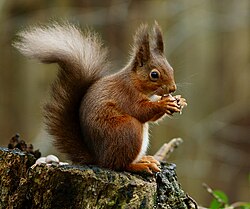


Completed


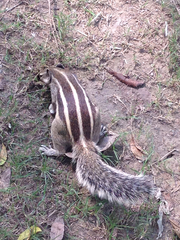
Northern Palm Squirrel
Funambulus pennantii
Silhouette: Andy Wilson · PhyloPic
- KingdomAnimalia (Animals)
- PhylumChordata (Chordates)
- ClassMammalia (Mammals)
- OrderRodentia (Rodents)
- FamilySciuridae (Squirrels)
- GenusFunambulus (Palm Squirrels)
- SpeciesFunambulus pennantii (Northern Palm Squirrel)
In 3 days ~50% in a week ~80%
10 Verified sightings at Chitwan National Park From 2019 to 2026
139 In all 4 parks
November Best month
🌅 Crepuscular When it's spotted
About the Northern Palm Squirrel
The northern palm squirrel (Funambulus pennantii), also called the five-striped palm squirrel, is a species of rodent in the family Sciuridae. It is a semi-arboreal species found in tropical and subtropical dry deciduous forests and many other rural and urban habitats. It is a common species with a wide range and the International Union for Conservation of Nature has rated its conservation status as being of "least concern".
It is found in the Andaman Islands, Nicobar Islands (where it was introduced), India, Nepal, Bangladesh, Pakistan and Iran. In India, it is fairly common in urban areas, even in large cities such as Delhi and Kolkata. Two subspecies, Funambulus pennantii argentescens and Funambulus pennantii lutescens, were suggested by Wroughton in addition to the nominate race; however, more recent workers do not make this distinction. Wikipedia →
Sounds
Alarm call1:22
India · 1989
© Jelle Scharringa · XC1025104 · CC BY-NC-SA 4.0
Uncertain0:12
India · 2025
© Nick Talbot · XC1063033 · CC BY-NC-SA 4.0
Recording0:35
Pakistan · 2023
© Jawad Hasan · iNaturalist · CC BY-NC 4.0
Recent sightings of Northern Palm Squirrel in Chitwan National Park
LIVEiNaturalistGlobal Distribution
Parks Where Found
| # | Park | Country | Daily sighting probability |
|---|---|---|---|
| 1 | Keoladeo National Park | 🇮🇳 India | |
| 2 | Ranthambore National Park | 🇮🇳 India | |
| 3 | Bandhavgarh National Park | 🇮🇳 India | |
| 4 | Chitwan National Park | 🇳🇵 Nepal |
Zoos & Centres Where Found
| # | Zoo / Centre | Country | |
|---|---|---|---|
| 1 | Jerusalem Biblical Zoo | 🇮🇱 Israel | |
| 2 | Jijamata Udyaan | 🇮🇳 India |
Closest Relatives at Chitwan National Park
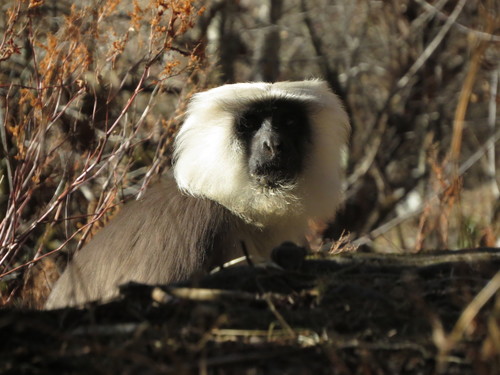
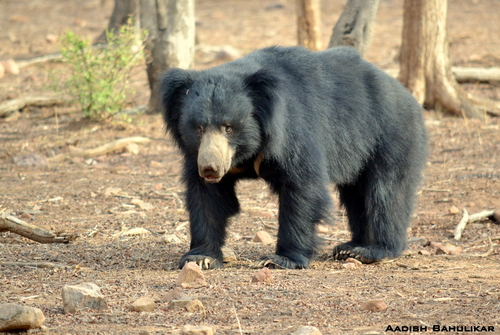
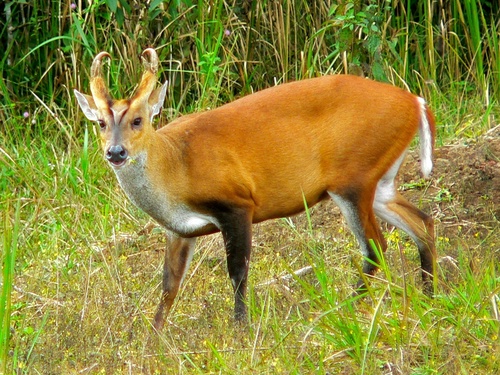
No species of the same family or order lives in Chitwan National Park, so these are its closest relatives here: other mammals.








Before you go
What are the chances of seeing a Northern Palm Squirrel in Chitwan National Park?
Possible
About 20% of wildlife watchers report a Northern Palm Squirrel sighting in Chitwan National Park on a given day, based on 10 verified sightings from GBIF citizen-science data from 2019 to 2026. It is the 15th most-seen of the 16 mammals we can rate there. Over three days the chance rises to about 50%, and over a week to about 80%, if each day is a fresh chance.
When is the best time to see a Northern Palm Squirrel in Chitwan National Park?
November and December
In those months about 40% of wildlife watchers report a Northern Palm Squirrel in Chitwan National Park on a given day, against under 5% in February–March, May and September, the lowest months. Those are among Chitwan National Park's driest months, with about 5 mm of rain a month against 660 mm in July.
What time of day is best to see a Northern Palm Squirrel?
Between 5 and 8 am
Across all the parks we cover, that three-hour window holds the most Northern Palm Squirrel sightings with a recorded time, and about 7 in 10 of them come between 6 am and 6 pm: it is most active around dawn and dusk.
Is Chitwan National Park the best place to see a Northern Palm Squirrel?
4th of 4
Of the 4 parks where we can rate Northern Palm Squirrel sightings, Chitwan National Park ranks 4th at about 20%. The best odds are in Keoladeo National Park (India, about 60%), Ranthambore National Park (India, about 50%) and Bandhavgarh National Park (India, about 30%). All parks ranked.
Where does the Northern Palm Squirrel sighting chance come from?
GBIF citizen-science records
It is estimated from how often the Northern Palm Squirrel is recorded against all the mammals logged in Chitwan National Park (10 verified sightings from 2019 to 2026), calibrated against known sighting rates. Figures are rounded to the nearest 10% because citizen-science data supports honest approximations, not decimals, and months with records from fewer than five people show "—". How it works.
