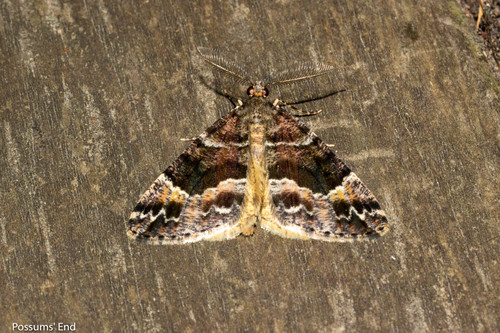
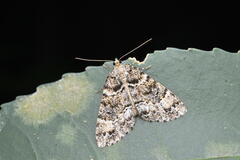
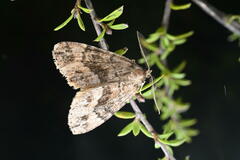
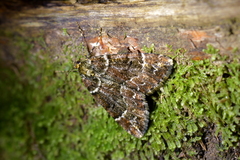
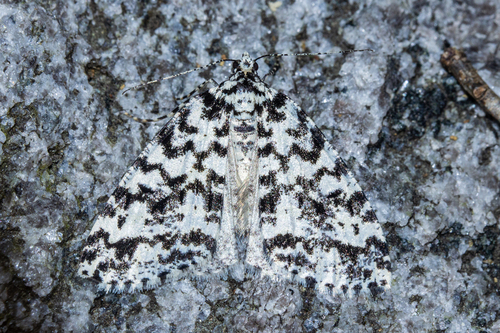
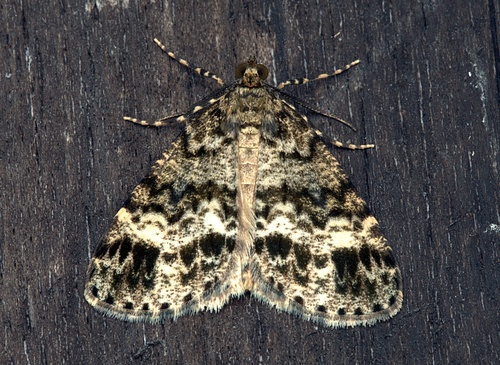
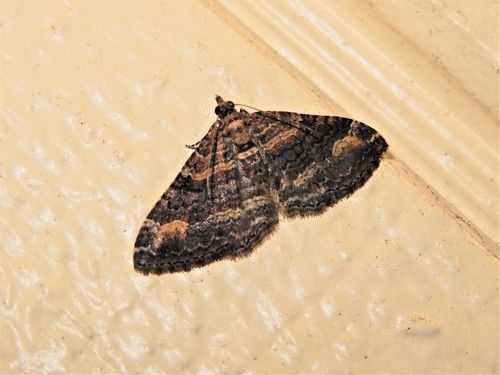
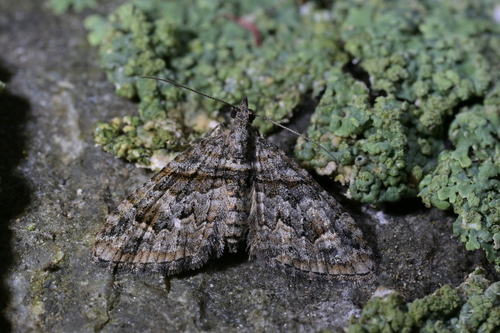
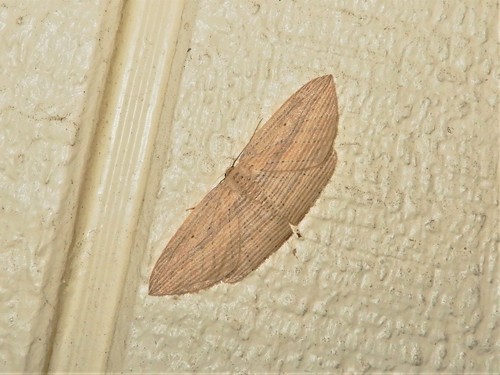
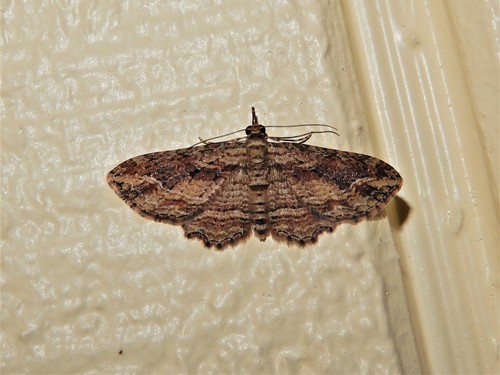
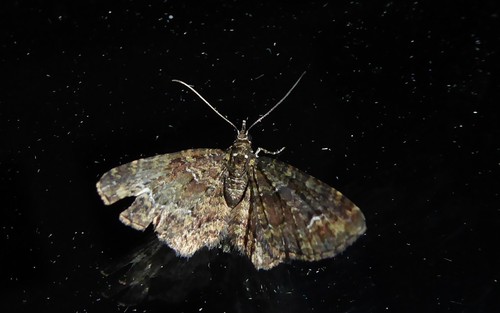
Brown Forest Flash

Brown Forest Flash

Pseudocoremia productata

Endemic
Daily sighting probability ~10% · With luck
at Auckland

In 3 days ~20% in a week ~30%

26 Verified sightings at Auckland
74 In all 4 parks From 2019 to 2026
December Best month
☀️🌙 Day & Night When it's spotted

About the Brown Forest Flash

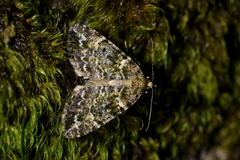
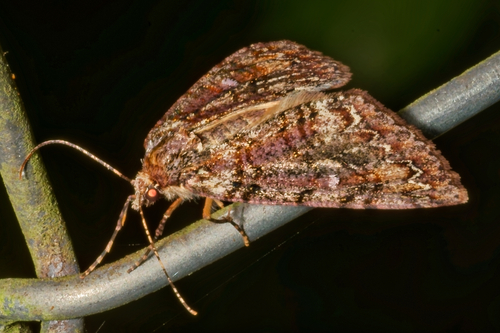
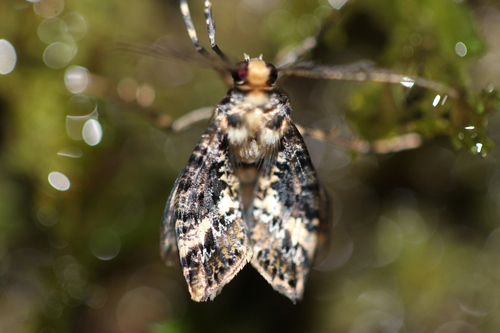
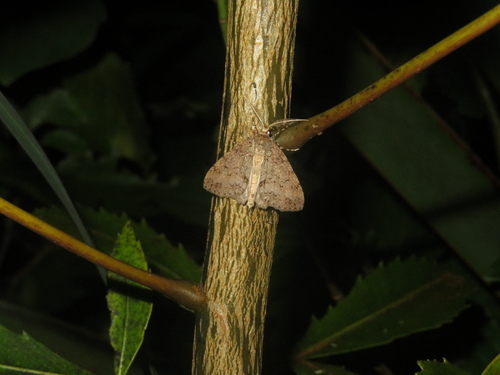
Pseudocoremia productata was first described by Walker as Larentia productata. The species has previously been referred to as "The Rata Moth" or the "Brown Forest Moth". It is now commonly known as the "Brown Forest Flash". The genus would later be categorised as Selidosema before Walker redescribed the species as Pseudocoremia productata in 1862. This species of endemic moth belongs to the family Geometridae, commonly known as geometer mothsor inchworms. Many species within this family are well camouflaged to resemble twigs, dead leaves, or tree bark.

Adult Pseudocoremia productata are sexually dimorphic and are identifiable by their wings, antennae, and external genitalic characteristics. Its name "Brown Forest Flash" is associated with the flashing of its pale hind wings when flying and the ability to conceal itself on forest tree trunks. This characteristic is known as "Protective Resemblance". It is a term that describes colour or forms that allow a species to closely resemble its surroundings to escape the notice of its natural enemies.

Females have pectinate antennae, which are comb-like filiform structures. In contrast, males have bipectinate antennae where... Wikipedia →

Global Distribution

Parks Where Found

# Park Country Daily sighting probability
1 Fiordland National Park 🇳🇿 New Zealand
~20%
2 Rakiura National Park 🇳🇿 New Zealand
~10%
3 Arthur's Pass National Park 🇳🇿 New Zealand
~10%
4 Egmont National Park 🇳🇿 New Zealand
~10%

Cities Where Found

# City Country Daily sighting probability
1 Auckland 🇳🇿 New Zealand
~10%

Before you go

What are the chances of seeing a Brown Forest Flash in Auckland?

With luck

About 10% of wildlife watchers report a Brown Forest Flash sighting in Auckland on a given day, based on 26 verified sightings from GBIF citizen-science data. It is the 257th most-seen of the 689 insects we can rate there. Over three days the chance rises to about 20%, and over a week to about 30%, if each day is a fresh chance.

When is the best time to see a Brown Forest Flash in Auckland?

June and October–January

In those months about 10% of wildlife watchers report a Brown Forest Flash in Auckland on a given day, against under 5% in February–May and July–September, the lowest months.

What time of day is best to see a Brown Forest Flash?

Between 9 pm and midnight

Across all the parks we cover, that three-hour window holds the most Brown Forest Flash sightings with a recorded time, and about 6 in 10 of them come between 6 pm and 6 am: it is seen both by day and at night.

Where else can you see a Brown Forest Flash?

Only Auckland, in our data

Auckland is the only city on Wallace's Line with enough records to rate Brown Forest Flash sightings: about 10% of wildlife watchers there report one on a given day.

Where does the Brown Forest Flash sighting chance come from?

GBIF citizen-science records

It is estimated from how often the Brown Forest Flash is recorded against all the insects logged in Auckland (26 verified sightings), calibrated against known sighting rates. Figures are rounded to the nearest 10% because citizen-science data supports honest approximations, not decimals, and months with records from fewer than five people show "—". How it works.

← Back to Auckland