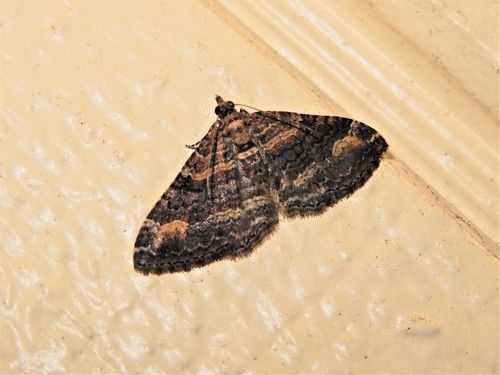
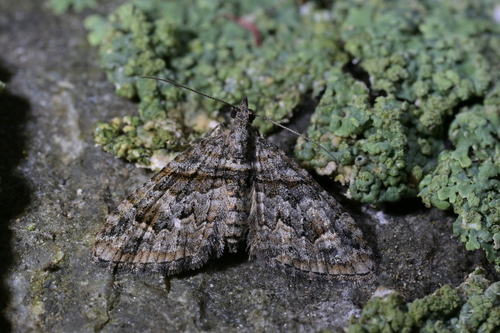
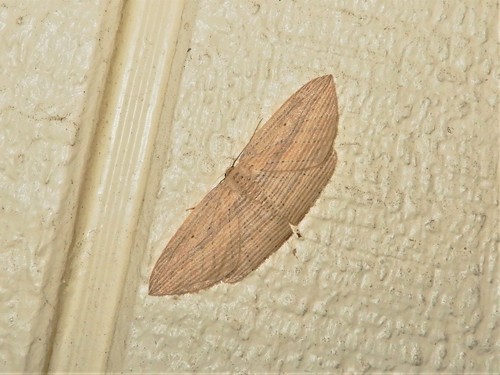
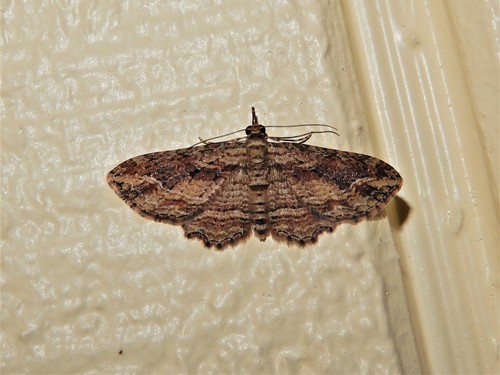
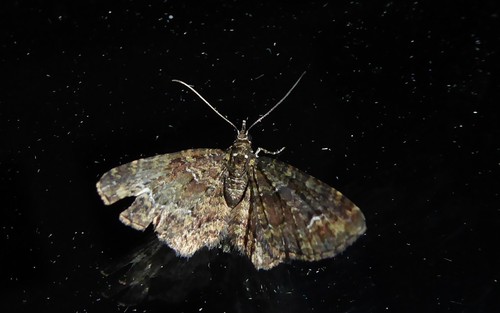
Forest Looper

Forest Looper

Pseudocoremia leucelaea

Endemic
Daily sighting probability ~10% · With luck
at Auckland

In 3 days ~20% in a week ~50%

52 Verified sightings at Auckland
15 In all 2 parks From 2019 to 2026
July Best month
☀️🌙 Day & Night When it's spotted

About the Forest Looper

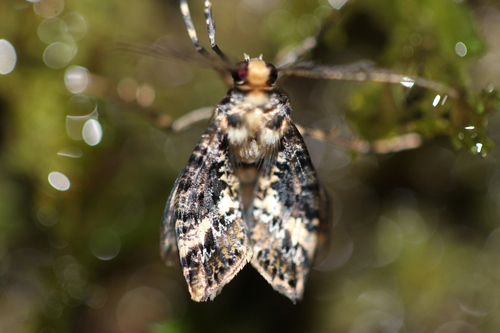
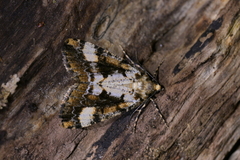
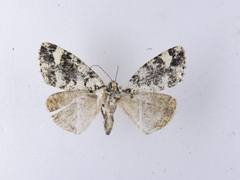
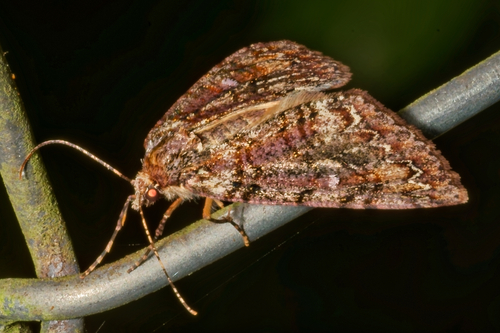
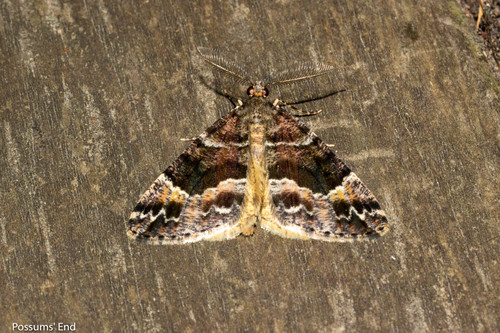
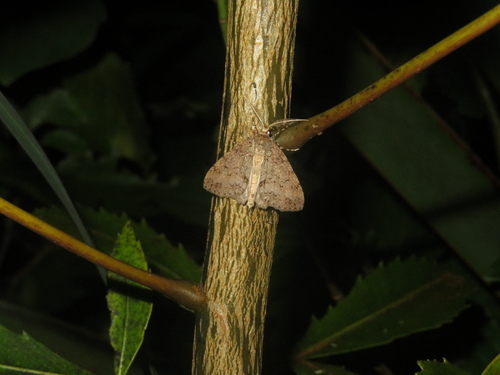
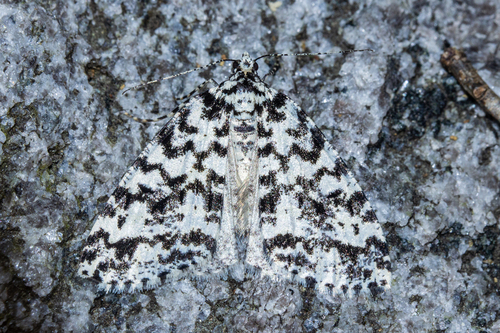
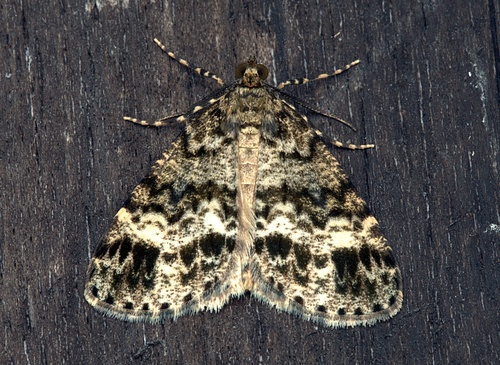
Pseudocoremia leucelaea, also known as the forest looper, conifer flash or the white-marked brown, is a species of moth in the family Geometridae. The species was first described by Edward Meyrick in 1909. It only occurs in New Zealand, where it is found in the North, South and Stewart Islands. This species inhabits both native and non-native conifer forests. The larvae feed on the leaves of a variety of conifers. Larvae are nocturnal; during the day they cling to twigs with their prolegs holding their bodies rigidly extended. This posture, as well as the colouration of the larva, helps it avoid detection. The larvae have been shown to be parasitised by a parasitic wasp in the genus Glyptapanteles. This species pupates in soil or leaf litter underneath host plants. Adults are variable in appearance and are on the wing throughout the year. They are nocturnal and are attracted to light. A longitudinal study indicated this moth suffered a population decline in the study area in Lower Hutt the mid-1980s, from which the population did not recover. It has been hypothesised that this decline was caused by the arrival of the wasp species Vespula vulgaris in New Zealand.

This... Wikipedia →

Global Distribution

Parks Where Found

# Park Country Daily sighting probability
1 Rakiura National Park 🇳🇿 New Zealand
~10%
2 Fiordland National Park 🇳🇿 New Zealand
~10%

Cities Where Found

# City Country Daily sighting probability
1 Auckland 🇳🇿 New Zealand
~10%

Before you go

What are the chances of seeing a Forest Looper in Auckland?

With luck

About 10% of wildlife watchers report a Forest Looper sighting in Auckland on a given day, based on 52 verified sightings from GBIF citizen-science data. It is the 122nd most-seen of the 689 insects we can rate there. Over three days the chance rises to about 20%, and over a week to about 50%, if each day is a fresh chance.

When is the best time to see a Forest Looper in Auckland?

July

In that month about 20% of wildlife watchers report a Forest Looper in Auckland on a given day, against under 5% in March to May, the lowest months.

What time of day is best to see a Forest Looper?

Between 10 pm and 1 am

Across all the parks we cover, that three-hour window holds the most Forest Looper sightings with a recorded time, and about 6 in 10 of them come between 6 pm and 6 am: it is seen both by day and at night.

Where else can you see a Forest Looper?

Only Auckland, in our data

Auckland is the only city on Wallace's Line with enough records to rate Forest Looper sightings: about 10% of wildlife watchers there report one on a given day.

Where does the Forest Looper sighting chance come from?

GBIF citizen-science records

It is estimated from how often the Forest Looper is recorded against all the insects logged in Auckland (52 verified sightings), calibrated against known sighting rates. Figures are rounded to the nearest 10% because citizen-science data supports honest approximations, not decimals, and months with records from fewer than five people show "—". How it works.

← Back to Auckland