
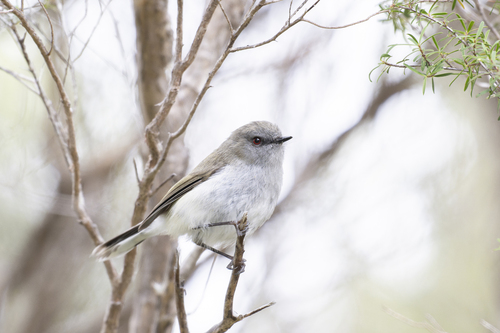
New Zealand Pipit

New Zealand Pipit

Anthus novaeseelandiae

Silhouette: Susan Murphy (original photograph), T. Michael Keesey (vectorization) · PhyloPic

LCLeast ConcernNTVUENCR
Daily sighting probability <5% · Rare
at Auckland

In 3 days <5%

15 Verified sightings at Auckland
717 In all 6 parks From 2019 to 2026
November Best month
☀️ Diurnal When it's spotted

About the New Zealand Pipit

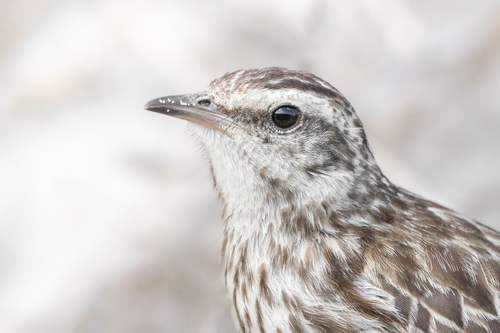
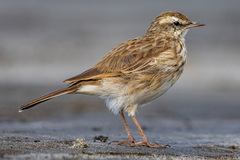
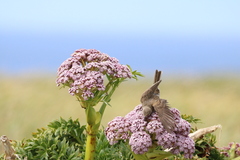
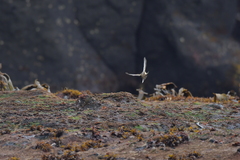
The New Zealand pipit (Anthus novaeseelandiae) is a fairly small passerine bird of open country in New Zealand and outlying islands. It belongs to the pipit genus Anthus in the family Motacillidae. It was formerly lumped together with the Richard's, African, Mountain and Paddyfield pipits in a single species: Richard's pipit, Anthus novaeseelandiae. Many authors split the Australasian pipit further into two species: Australian pipit (Anthus australis) in Australia and New Guinea and New Zealand pipit (Anthus novaeseelandiae), also called pīhoihoi, in New Zealand.

The New Zealand pipit was formally described in 1789 by the German naturalist Johann Friedrich Gmelin in his revised and expanded edition of Carl Linnaeus's Systema Naturae. He placed it with the larks in the genus Alauda and coined the binomial name Alauda novaeseelandiae. Gmelin based his account on the "New Zealand lark" that had been described and illustrated in 1783 by the English ornithologist John Latham in his multi-volume work A General Synopsis of Birds. The naturalist Joseph Banks had provided Latham with a painting of the bird by Georg Forster who had accompanied James Cook on his second voyage to... Wikipedia →

Sounds

Flight call0:06

New Zealand · 2025

© David Boyle · XC1002392 · CC BY-NC-SA 4.0

Call0:19

New Zealand · 2019

© Matt Slaymaker · XC537877 · CC BY-NC-SA 4.0

Song0:35

New Zealand · 2016

© Dan Lane · XC343597 · CC BY-NC-SA 4.0

Global Distribution

Parks Where Found

# Park Country Daily sighting probability
1 Arthur's Pass National Park 🇳🇿 New Zealand
~20%
2 Aoraki Mount Cook National Park 🇳🇿 New Zealand
~20%
3 Fiordland National Park 🇳🇿 New Zealand
~10%
4 Egmont National Park 🇳🇿 New Zealand
~10%
5 Rakiura National Park 🇳🇿 New Zealand
<5%
6 Abel Tasman National Park 🇳🇿 New Zealand
<5%

Cities Where Found

# City Country Daily sighting probability
1 Auckland 🇳🇿 New Zealand
<5%

Before you go

What are the chances of seeing a New Zealand Pipit in Auckland?

Rare

Under 5% of wildlife watchers report a New Zealand Pipit sighting in Auckland on a given day, based on 15 verified sightings from GBIF citizen-science data. It is the 82nd most-seen of the 93 birds we can rate there. Over three days the chance rises to under 5%, if each day is a fresh chance.

When is the best time to see a New Zealand Pipit in Auckland?

Any time of year

In every month with enough records, under 5% of wildlife watchers report a New Zealand Pipit in Auckland on a given day, so our monthly data shows no clear season.

What time of day is best to see a New Zealand Pipit?

Between noon and 3 pm

Across all the parks we cover, that three-hour window holds the most New Zealand Pipit sightings with a recorded time, and about 9 in 10 of them come between 6 am and 6 pm: it is a daytime animal.

Where else can you see a New Zealand Pipit?

Only Auckland, in our data

Auckland is the only city on Wallace's Line with enough records to rate New Zealand Pipit sightings: under 5% of wildlife watchers there report one on a given day.

Which relatives of the New Zealand Pipit live in Auckland?

Same order: Passeriformes

The closest relatives of the New Zealand Pipit that you can see in Auckland (order Passeriformes, Perching Birds) are House Sparrow (about 90%), Eurasian Blackbird (about 90%) and Tūī (about 70%), with each one's daily chance of a sighting.

Where does the New Zealand Pipit sighting chance come from?

GBIF citizen-science records

It is estimated from how often the New Zealand Pipit is recorded against all the birds logged in Auckland (15 verified sightings), calibrated against known sighting rates. Figures are rounded to the nearest 10% because citizen-science data supports honest approximations, not decimals, and months with records from fewer than five people show "—". How it works.

← Back to Auckland