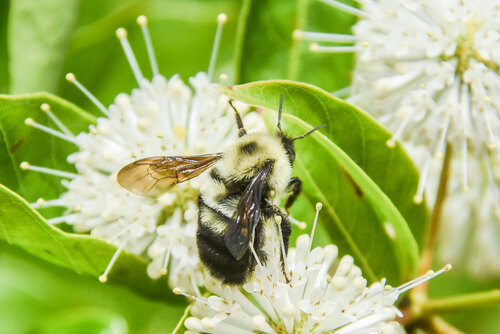
Common Eastern Velvet Ant

Common Eastern Velvet Ant

Dasymutilla occidentalis

Daily sighting probability <5% · Rare
at Baltimore

In 3 days ~10% in a week ~20%

9 Verified sightings at Baltimore
121 In all 6 parks From 2019 to 2026
August Best month
☀️ Diurnal When it's spotted

About the Common Eastern Velvet Ant

Dasymutilla occidentalis (red velvet ant, eastern velvet ant, cow ant or cow killer) is a species of parasitoid wasp that ranges from Connecticut to Kansas in the north and Florida to Texas in the south. Adults are mostly seen in the summer months.

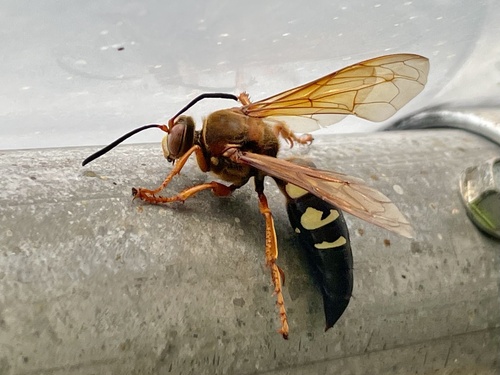
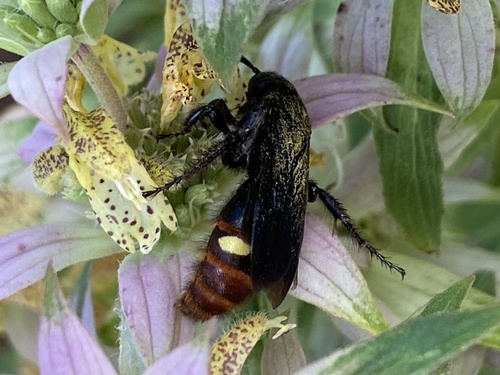
The eastern velvet ant is the largest of the velvet ant species in the eastern United States, attaining an approximate length of 1.9 cm (0.75 in). Adults display aposematic coloration, consisting of black overall coloring with an orange-red pattern on the dorsal surface of the thorax and abdomen.

Commonly mistaken for an ant because of its appearance and its common name, it is a parasitoid wasp species in which the females are wingless, as is true for all females of Mutillidae. It can be recognized by its distinctive coloring, black with bright red on the upper side of the head, thorax, and abdomen. They are quick-moving and often take a defensive posture when threatened. Unlike the females, males have dark, translucent wings and do not possess a stinger.

Dasymutilla occidentalis plays an ecological role as parasites and prey. Dasymutilla species have multiple defensive strategies... Wikipedia →

Global Distribution

Parks Where Found

# Park Country Daily sighting probability
1 Congaree National Park 🇺🇸 United States
~20%
2 Big Cypress National Preserve 🇺🇸 United States
~10%
3 Everglades National Park 🇺🇸 United States
~10%
4 Great Smoky Mountains National Park 🇺🇸 United States
~10%
5 Shenandoah National Park 🇺🇸 United States
~10%
6 Merritt Island National Wildlife Refuge 🇺🇸 United States
~10%

Cities Where Found

# City Country Daily sighting probability
1 Houston 🇺🇸 United States
~10%
2 Dallas 🇺🇸 United States
~10%
3 Philadelphia 🇺🇸 United States
<5%
4 Baltimore 🇺🇸 United States
<5%
5 Washington 🇺🇸 United States
<5%

Before you go

What are the chances of seeing a Common Eastern Velvet Ant in Baltimore?

Rare

Under 5% of wildlife watchers report a Common Eastern Velvet Ant sighting in Baltimore on a given day, based on 9 verified sightings from GBIF citizen-science data. It is the 445th most-seen of the 705 insects we can rate there. Over three days the chance rises to about 10%, and over a week to about 20%, if each day is a fresh chance.

When is the best time to see a Common Eastern Velvet Ant in Baltimore?

August

In that month about 10% of wildlife watchers report a Common Eastern Velvet Ant in Baltimore on a given day, against under 5% in September to July, the lowest months.

What time of day is best to see a Common Eastern Velvet Ant?

Between 10 am and 1 pm

Across all the parks we cover, that three-hour window holds the most Common Eastern Velvet Ant sightings with a recorded time, and nearly all of them come between 6 am and 6 pm: it is a daytime animal.

Is Baltimore the best place to see a Common Eastern Velvet Ant?

4th of 5

Of the 5 cities where we can rate Common Eastern Velvet Ant sightings, Baltimore ranks 4th at under 5%. The best odds are in Houston (United States, about 10%), Dallas (United States, about 10%) and Philadelphia (United States, under 5%).

Which relatives of the Common Eastern Velvet Ant live in Baltimore?

Same order: Hymenoptera

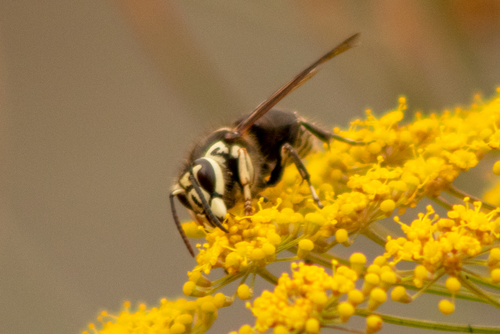
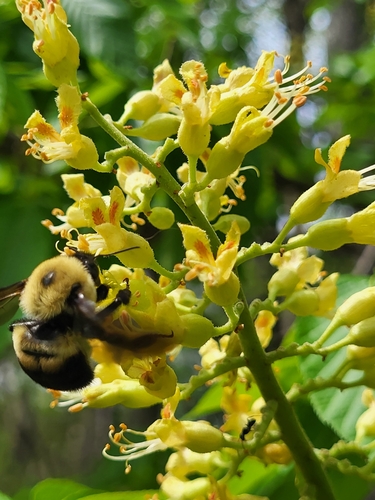
The closest relatives of the Common Eastern Velvet Ant that you can see in Baltimore (order Hymenoptera, Ants, Bees, Wasps, and Sawflies) are Common Eastern Bumble Bee (about 30%), Eastern Carpenter Bee (about 30%) and Bald-Faced Hornet (about 20%), with each one's daily chance of a sighting.

Where does the Common Eastern Velvet Ant sighting chance come from?

GBIF citizen-science records

It is estimated from how often the Common Eastern Velvet Ant is recorded against all the insects logged in Baltimore (9 verified sightings), calibrated against known sighting rates. Figures are rounded to the nearest 10% because citizen-science data supports honest approximations, not decimals, and months with records from fewer than five people show "—". How it works.

← Back to Baltimore