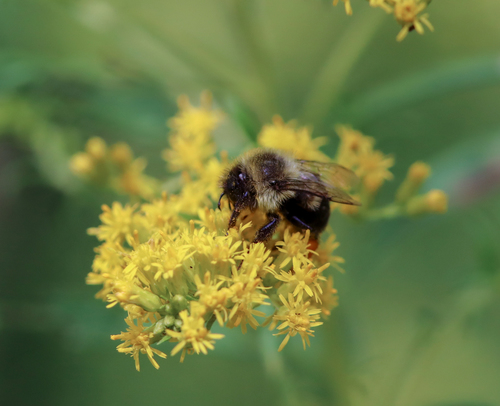
About the Southern Yellowjacket
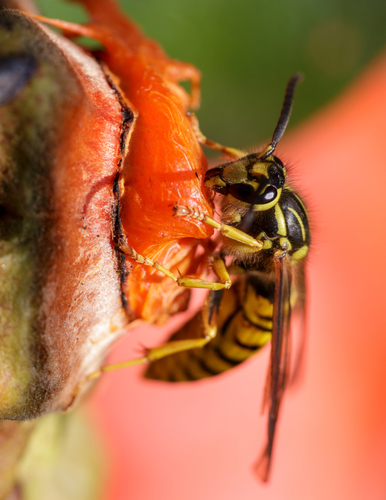
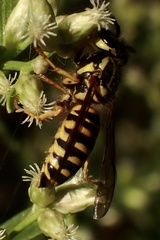
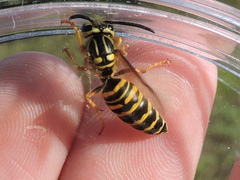
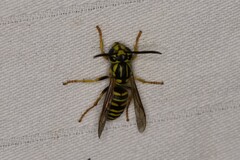
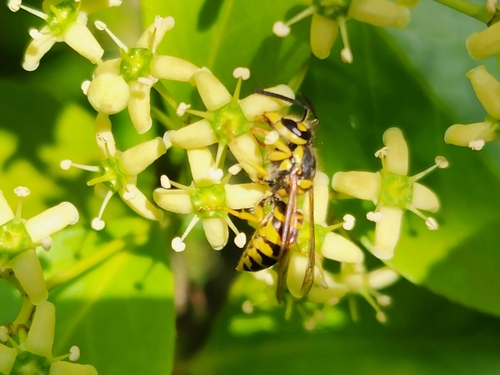
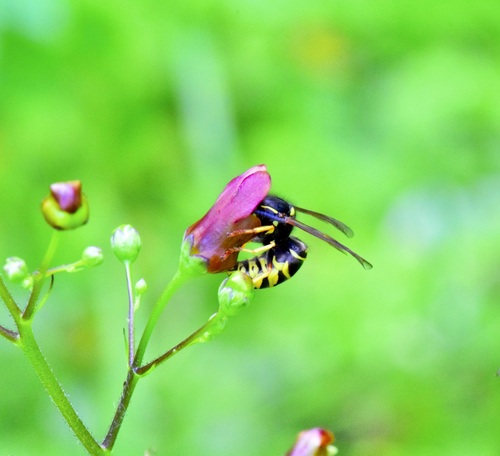
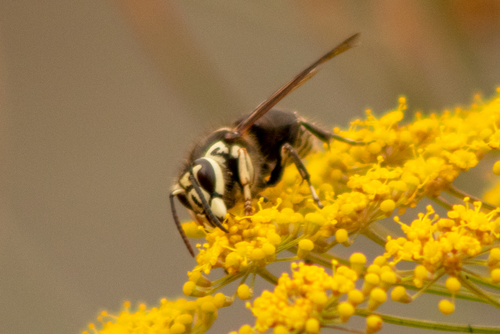
Vespula squamosa, or the southern yellowjacket, is a social wasp. This species can be identified by its distinctive black and yellow patterning and orange queen. This species is typically found in eastern North America, and its territory extends as far south as Central America. Within these territories, they create enormous, multiple-comb nests. The colonies may be either annual or perennial depending on the climate, and in many perennial nests, polygyny takes place. In addition, this species uses pheromones both as a sexual attractant and an alarm signal. This species feeds on insects and animal carcasses; it does not produce honey. V. squamosa, a social insect, has developed a parasitic relationship with the species V. vidua and V. maculifrons. Due to their painful, venomous stings, the species is considered a pest.
V. squamosa is commonly called the southern yellowjacket. It was described by Dru Drury around 1770. It is a member of the family Vespidae, which includes paper wasps (subfamily Polistinae), pollen wasps (subfamily Masarinae), potter and mason wasps (subfamily Eumeninae), and yellow jackets (subfamily Vespinae). The family Vespidae has about... Wikipedia →