North American Tarnished Plant Bug

North American Tarnished Plant Bug

Lygus lineolaris

Daily sighting probability ~10% · With luck
at Baltimore

In 3 days ~20% in a week ~30%

22 Verified sightings at Baltimore
36 In all 2 parks From 2019 to 2026
September Best month
☀️ Diurnal When it's spotted

About the North American Tarnished Plant Bug

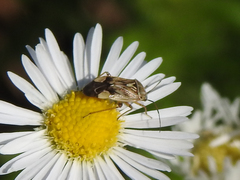
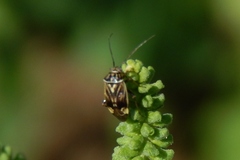
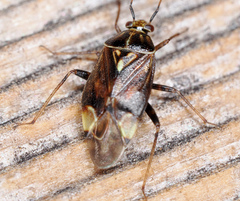
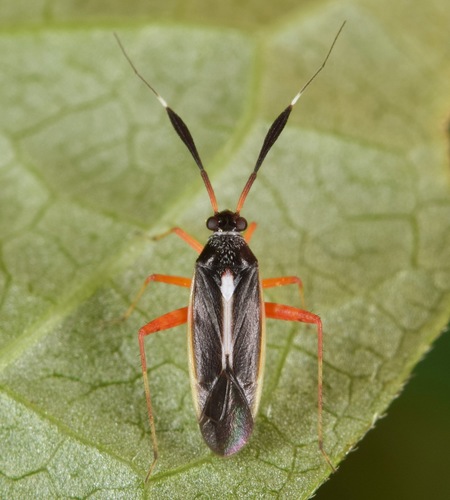
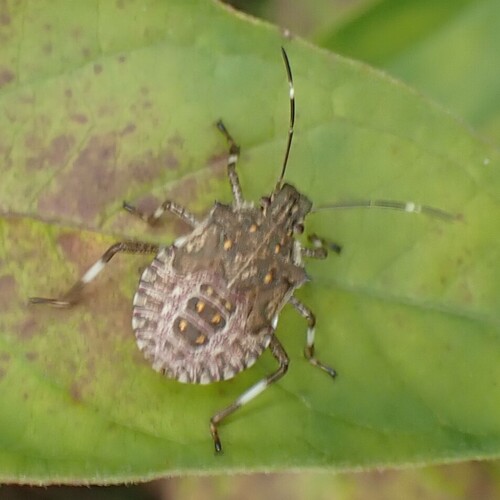
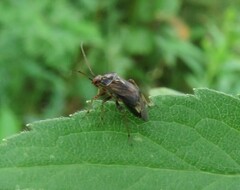
The tarnished plant bug (TPB), Lygus lineolaris, is a species of plant-feeding insect in the family Miridae. It has piercing-sucking mouthparts and has become a serious pest on small fruits and vegetables in North America. It is considered a highly polyphagous species and feeds on over half of all commercially grown crop plants, but favors cotton, alfalfa, beans, stone fruits, and conifer seedlings. A study done in southwestern Quebec, Canada has investigated the presence of L. lineolaris in a commercial vineyard. This study also indicated that weeds that grow from cultivation of crops serve as an important food source for L. lineolaris. This insect can be found across North America, from northern Canada to southern Mexico. Adults grow up to 6.5 mm in length, and are brown with accents of yellow, orange or red, with a light-colored "V" on the back (dorsal). The genome has recently been sequenced for the first time.

Lygus lineolaris is most commonly found in the eastern half of North America. A study done to track the genetic diversity and overall distribution of L. lineolaris, specifically on host plants, in North America sampled three separate populations... Wikipedia →
Global Distribution

Parks Where Found

# Park Country Daily sighting probability
1 Great Smoky Mountains National Park 🇺🇸 United States
~10%
2 Shenandoah National Park 🇺🇸 United States
~10%

Cities Where Found

# City Country Daily sighting probability
1 Montreal 🇨🇦 Canada
~10%
2 Minneapolis [Saint Paul] 🇺🇸 United States
~10%
3 Dallas 🇺🇸 United States
~10%
4 Baltimore 🇺🇸 United States
~10%
5 Boston 🇺🇸 United States
~10%
6 Washington 🇺🇸 United States
<5%
7 New York City 🇺🇸 United States
<5%
8 Calgary 🇨🇦 Canada
<5%
9 Philadelphia 🇺🇸 United States
<5%
10 Edmonton 🇨🇦 Canada
<5%

Before you go

What are the chances of seeing a North American Tarnished Plant Bug in Baltimore?

With luck

About 10% of wildlife watchers report a North American Tarnished Plant Bug sighting in Baltimore on a given day, based on 22 verified sightings from GBIF citizen-science data. It is the 225th most-seen of the 705 insects we can rate there. Over three days the chance rises to about 20%, and over a week to about 30%, if each day is a fresh chance.

When is the best time to see a North American Tarnished Plant Bug in Baltimore?

May–June, August–September and November

In those months about 10% of wildlife watchers report a North American Tarnished Plant Bug in Baltimore on a given day, against under 5% in July, October and December–April, the lowest months.

What time of day is best to see a North American Tarnished Plant Bug?

Between 1 and 4 pm

Across all the parks we cover, that three-hour window holds the most North American Tarnished Plant Bug sightings with a recorded time, and about 9 in 10 of them come between 6 am and 6 pm: it is a daytime animal.

Is Baltimore the best place to see a North American Tarnished Plant Bug?

Among the best

Of the 12 cities where we can rate North American Tarnished Plant Bug sightings, Baltimore ranks 4th at about 10%, level with the leaders once rounded. The best odds are in Montreal (Canada, about 10%), Minneapolis [Saint Paul] (United States, about 10%) and Dallas (United States, about 10%).

Where does the North American Tarnished Plant Bug sighting chance come from?

GBIF citizen-science records

It is estimated from how often the North American Tarnished Plant Bug is recorded against all the insects logged in Baltimore (22 verified sightings), calibrated against known sighting rates. Figures are rounded to the nearest 10% because citizen-science data supports honest approximations, not decimals, and months with records from fewer than five people show "—". How it works.

← Back to Baltimore