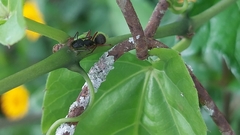
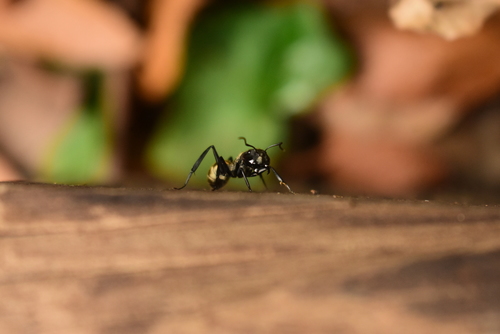
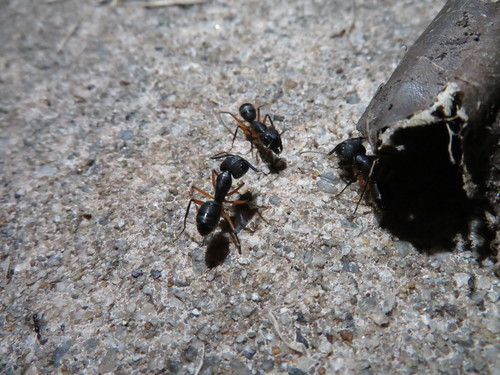
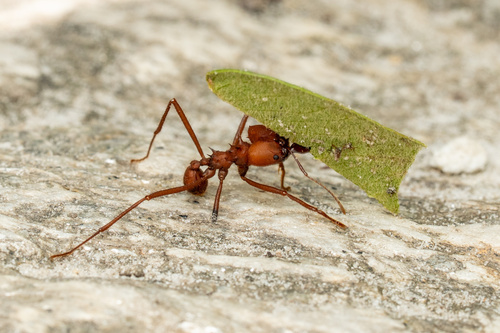
Camponotus rufipes
Daily sighting probability ~10% · With luck
at Belo Horizonte

In 3 days ~10% in a week ~30%

10 Verified sightings at Belo Horizonte
35 In all 3 parks From 2019 to 2026
January Best month
☀️ Diurnal When it's spotted

About the Camponotus rufipes

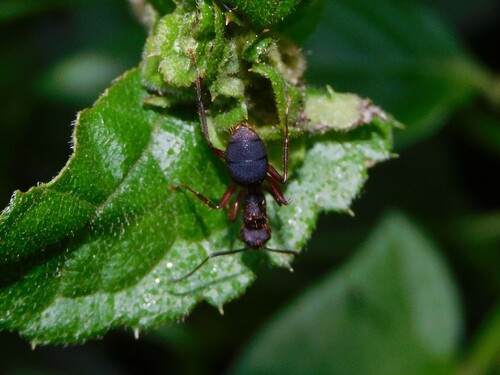
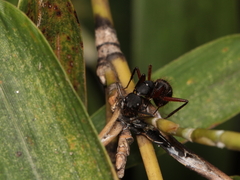
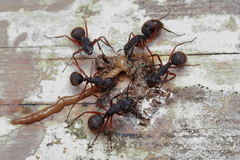
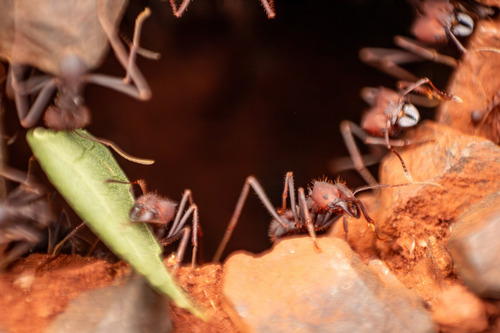
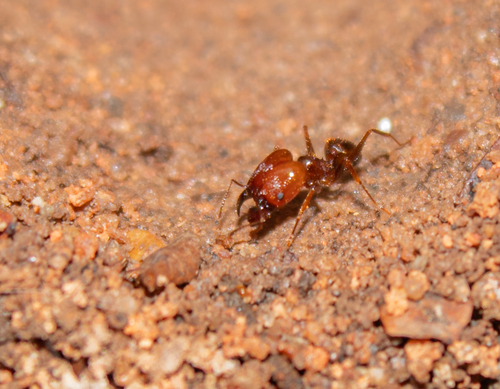
Camponotus rufipes is a dark-brown ant with reddish-yellow legs and a body covered in fine reddish hairs. Workers of this species measure about 6 mm in length. Nocturnal in habit, they attack beehives and build ground nests shaped like a mound of dry grass, approximately 20–30 cm in diameter.

These ants are very common in Southeastern Brazil and are highly aggressive, delivering painful bites accompanied by venom secretion at the bite site, which can cause mild burns. They lack a stinger, and their venom is primarily composed of formic acid.

This is a still poorly studied ant species, with limited research on its biology. Males undergo four larval stages, featuring various types of hairs that play a role in their life cycle. Wikipedia →

Global Distribution

Parks Where Found

# Park Country Daily sighting probability
1 Itatiaia National Park 🇧🇷 Brazil
~20%
2 Serra dos Órgãos National Park 🇧🇷 Brazil
~20%
3 Iguazú National Park 🇦🇷 Argentina
~10%

Cities Where Found

# City Country Daily sighting probability
1 Cochabamba 🇧🇴 Bolivia
~20%
2 Porto Alegre 🇧🇷 Brazil
~10%
3 Curitiba 🇧🇷 Brazil
~10%
4 São Paulo 🇧🇷 Brazil
~10%
5 Brasilia 🇧🇷 Brazil
~10%
6 Campinas 🇧🇷 Brazil
~10%
7 Belo Horizonte 🇧🇷 Brazil
~10%

Before you go

What are the chances of seeing a Camponotus rufipes in Belo Horizonte?

With luck

About 10% of wildlife watchers report a Camponotus rufipes sighting in Belo Horizonte on a given day, based on 10 verified sightings from GBIF citizen-science data. It is the 105th most-seen of the 186 insects we can rate there. Over three days the chance rises to about 10%, and over a week to about 30%, if each day is a fresh chance.

When is the best time to see a Camponotus rufipes in Belo Horizonte?

January, April and October

In those months about 10% of wildlife watchers report a Camponotus rufipes in Belo Horizonte on a given day, against under 5% in February–March, May–September and November–December, the lowest months.

What time of day is best to see a Camponotus rufipes?

Between 11 am and 2 pm

Across all the parks we cover, that three-hour window holds the most Camponotus rufipes sightings with a recorded time, and about 9 in 10 of them come between 6 am and 6 pm: it is a daytime animal.

Is Belo Horizonte the best place to see a Camponotus rufipes?

7th of 7

Of the 7 cities where we can rate Camponotus rufipes sightings, Belo Horizonte ranks 7th at about 10%. The best odds are in Cochabamba (Bolivia, about 20%), Porto Alegre (Brazil, about 10%) and Curitiba (Brazil, about 10%).

Which relatives of the Camponotus rufipes live in Belo Horizonte?

Same genus: Camponotus

The closest relatives of the Camponotus rufipes that you can see in Belo Horizonte (genus Camponotus, Carpenter Ants, Typical Sugar Ants and Allies) are Shimmering Golden Sugar Ant (about 10%) and Camponotus renggeri (about 10%), with each one's daily chance of a sighting.

Where does the Camponotus rufipes sighting chance come from?

GBIF citizen-science records

It is estimated from how often the Camponotus rufipes is recorded against all the insects logged in Belo Horizonte (10 verified sightings), calibrated against known sighting rates. Figures are rounded to the nearest 10% because citizen-science data supports honest approximations, not decimals, and months with records from fewer than five people show "—". How it works.

← Back to Belo Horizonte