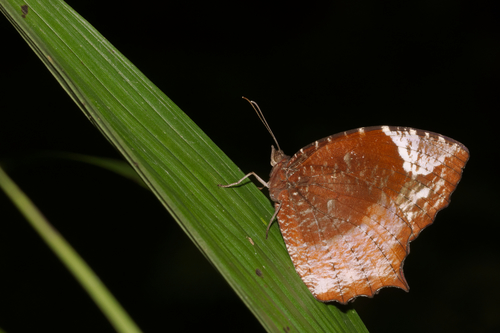
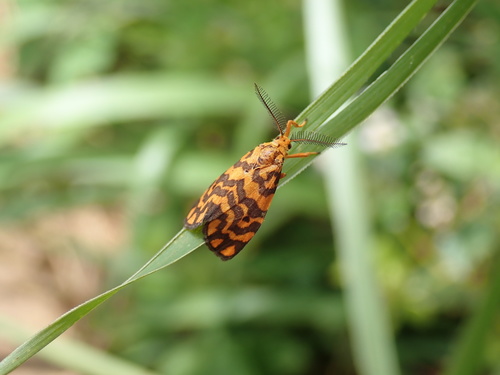
Teak Defoliator

Teak Defoliator

Hyblaea puera

Daily sighting probability <5% · Rare
at Bengaluru

In 3 days ~10% in a week ~20%

6 Verified sightings at Bengaluru
29 In all 3 parks From 2019 to 2026
July Best month
🌙 Nocturnal When it's spotted

About the Teak Defoliator

Hyblaea puera, the teak defoliator, is a moth and cryptic species complex native to South Asia and Southeast Asia, though also reported from Central America and Africa. It was first described by Pieter Cramer in 1777. The caterpillar feeds on teak and other trees, and considered to be one of the major teak pests around the world.

Hyblaea puera occurs in forests across southern Asia from India, Sri Lanka and Bangladesh, and southeast Asia from Thailand to New Guinea, and north Queensland in Australia. The species has been reported from Guadeloupe, and Suriname.

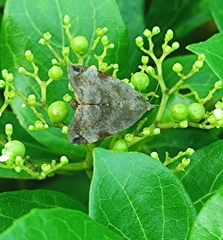
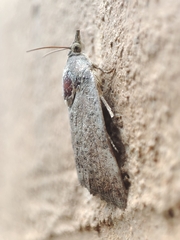
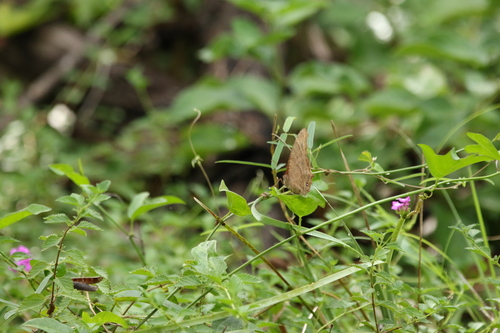
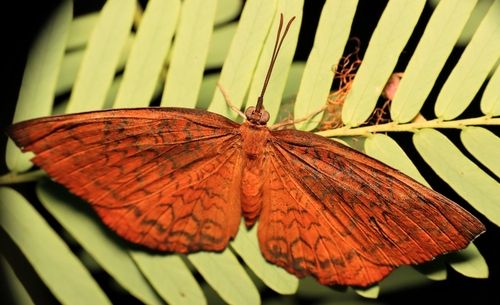
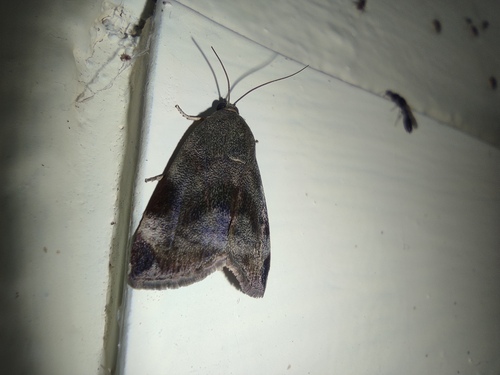
The adult moths are comparatively small, with a wingspan of 3–4 cm (1.2–1.6 in), and have a characteristic resting posture that conceals the black and orange-yellow hindwings under the greyish-brown forewings. There are five larval instars, with the last instar measuring about 3.5–4.5 cm (1.4–1.8 in), and there is considerable colour variation in the fourth and fifth instars; the body may be either wholly black or dark greyish to black, with longitudinal coloured bands which may include a dorsal orange or ocherous band and lateral white lines.

The instars have characteristic feeding... Wikipedia →
Global Distribution

Parks Where Found

# Park Country Daily sighting probability
1 Kanha National Park 🇮🇳 India
~20%
2 Doi Inthanon National Park 🇹🇭 Thailand
~10%
3 Kaeng Krachan National Park 🇹🇭 Thailand
~10%

Cities Where Found

# City Country Daily sighting probability
1 Ahmedabad 🇮🇳 India
~10%
2 Yogyakarta 🇮🇩 Indonesia
~10%
3 Mumbai 🇮🇳 India
~10%
4 Kochi 🇮🇳 India
~10%
5 Kolkata 🇮🇳 India
~10%
6 Chennai 🇮🇳 India
~10%
7 Hyderabad 🇮🇳 India
~10%
8 Bengaluru 🇮🇳 India
<5%
9 Bangkok 🇹🇭 Thailand
<5%

Before you go

What are the chances of seeing a Teak Defoliator in Bengaluru?

Rare

Under 5% of wildlife watchers report a Teak Defoliator sighting in Bengaluru on a given day, based on 6 verified sightings from GBIF citizen-science data. It is the 395th most-seen of the 477 insects we can rate there. Over three days the chance rises to about 10%, and over a week to about 20%, if each day is a fresh chance.

When is the best time to see a Teak Defoliator in Bengaluru?

July

In that month about 10% of wildlife watchers report a Teak Defoliator in Bengaluru on a given day, against under 5% in August to June, the lowest months. That is one of Bengaluru's wettest months, with about 100 mm of rain against almost none in January.

What time of day is best to see a Teak Defoliator?

Between 9 pm and midnight

Across all the parks we cover, that three-hour window holds the most Teak Defoliator sightings with a recorded time, and about 9 in 10 of them come between 6 pm and 6 am: it is mostly seen at night.

Is Bengaluru the best place to see a Teak Defoliator?

8th of 9

Of the 9 cities where we can rate Teak Defoliator sightings, Bengaluru ranks 8th at under 5%. The best odds are in Ahmedabad (India, about 10%), Yogyakarta (Indonesia, about 10%) and Mumbai (India, about 10%).

Where does the Teak Defoliator sighting chance come from?

GBIF citizen-science records

It is estimated from how often the Teak Defoliator is recorded against all the insects logged in Bengaluru (6 verified sightings), calibrated against known sighting rates. Figures are rounded to the nearest 10% because citizen-science data supports honest approximations, not decimals, and months with records from fewer than five people show "—". How it works.

← Back to Bengaluru