Dark Spinach

Dark Spinach

Pelurga comitata

Daily sighting probability ~10% · With luck
at Berlin

In 3 days ~20% in a week ~40%

43 Verified sightings at Berlin
9 In 1 park From 2019 to 2026
August Best month
🌙 Nocturnal When it's spotted

About the Dark Spinach

Pelurga comitata, the dark spinach, is a moth of the family Geometridae. It is found throughout the Palearctic, including Europe (except the South-west and the Arctic Region), Siberia, the Russian Far East and northern China

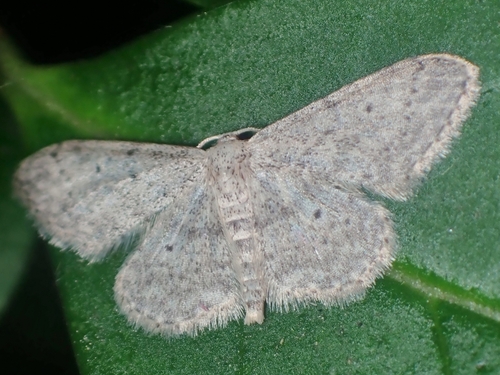
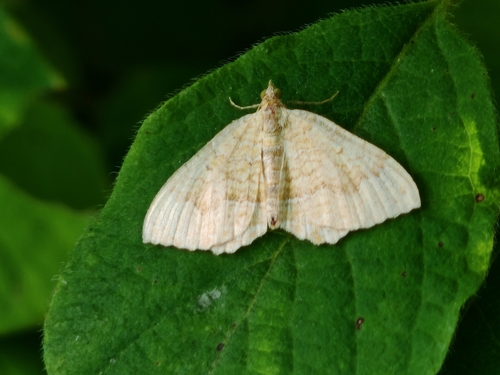
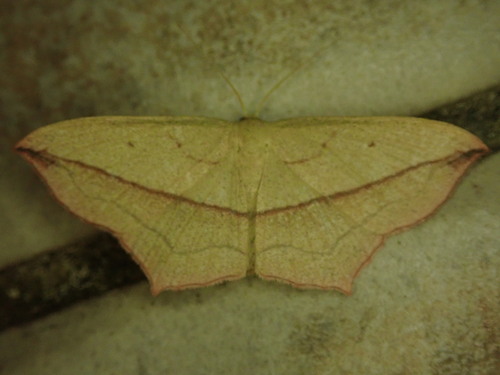
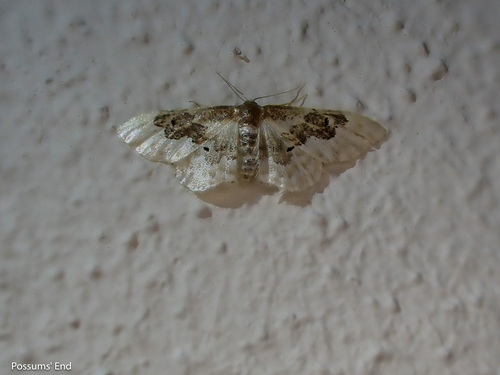
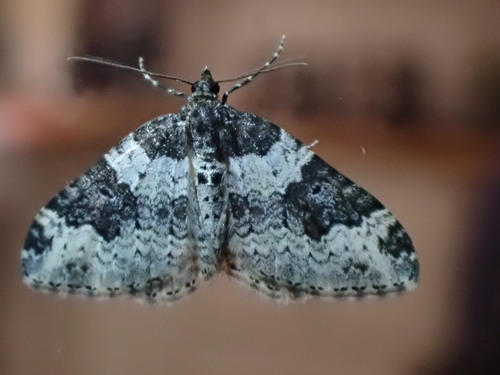
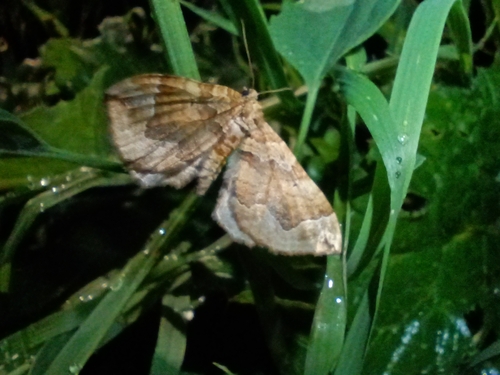
The wingspan is 25–30 mm. The length of the forewings is 16–18 mm. The forewings have a yellow-brown ground colour. The basal field is darker brownish. The midfield is wide, intersected by several lines and has a dark band on the inside. The basic colour of the forewings varies only slightly, in the tints of pale and dark browns. The outside of the midfield is bordered by a dark cross line with a pronounced bend distad. The wing apex is divided by a dark bar. The paler marginal field is marked with a faint wavy line that is shaded on the inside by brownish stains. The hind wings are yellowish grey and have indistinct crossbars.

In ab. ferruginascens Krulik. [the ground colour] becomes bright rust-reddish. - In ab. moldavinata Carad. It is much darker and more unicolorous, the hindwing is also darkened. This latter form, which is recorded from N. Germany, Romnania, the Ural, Ussuri, etc., is perhaps in some localities tending to form a local race. — ab. zonata Wahhgren has the median band entirely brown-black, ground colour normal.

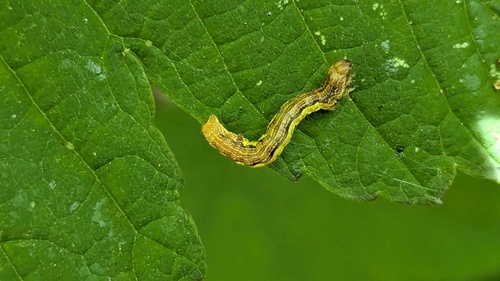
The larva is stout, rugose laterally, segmentation distinct; ochreous brown; dorsum tinged with green and with a row of large V-shaped dark markings on the abdominal segments, pointing forward. The moth flies from mid June to mid September [1].

The larva feeds on orache and goosefoot especially on the flowers and seeds. Wikipedia →
Global Distribution

Parks Where Found

# Park Country Daily sighting probability
1 Wadden Sea National Park 🇩🇪 Germany
<5%

More parks will be added in future updates.

Cities Where Found

# City Country Daily sighting probability
1 Kharkiv 🇺🇦 Ukraine
~10%
2 Nizhny Novgorod 🇷🇺 Russia
~10%
3 Kyiv 🇺🇦 Ukraine
~10%
4 Berlin 🇩🇪 Germany
~10%
5 Helsinki 🇫🇮 Finland
~10%
6 Novosibirsk 🇷🇺 Russia
~10%
7 Kazan 🇷🇺 Russia
~10%
8 Minsk 🇧🇾 Belarus
~10%
9 Moscow 🇷🇺 Russia
<5%
10 Vienna 🇦🇹 Austria
<5%

Before you go

What are the chances of seeing a Dark Spinach in Berlin?

With luck

About 10% of wildlife watchers report a Dark Spinach sighting in Berlin on a given day, based on 43 verified sightings from GBIF citizen-science data. It is the 212th most-seen of the 1065 insects we can rate there. Over three days the chance rises to about 20%, and over a week to about 40%, if each day is a fresh chance.

When is the best time to see a Dark Spinach in Berlin?

August

In that month about 20% of wildlife watchers report a Dark Spinach in Berlin on a given day, against under 5% in October to July, the lowest months.

What time of day is best to see a Dark Spinach?

Between midnight and 3 am

Across all the parks we cover, that three-hour window holds the most Dark Spinach sightings with a recorded time, and about 8 in 10 of them come between 6 pm and 6 am: it is mostly seen at night.

Is Berlin the best place to see a Dark Spinach?

Among the best

Of the 12 cities where we can rate Dark Spinach sightings, Berlin ranks 4th at about 10%, level with the leaders once rounded. The best odds are in Kharkiv (Ukraine, about 10%), Nizhny Novgorod (Russia, about 10%) and Kyiv (Ukraine, about 10%).

Which relatives of the Dark Spinach live in Berlin?

Same family: Geometridae

The closest relatives of the Dark Spinach that you can see in Berlin (family Geometridae, Geometer Moths) are Small Dusty Wave (about 10%), Yellow Shell Moth (about 10%) and Willow Beauty (about 10%), with each one's daily chance of a sighting.

Where does the Dark Spinach sighting chance come from?

GBIF citizen-science records

It is estimated from how often the Dark Spinach is recorded against all the insects logged in Berlin (43 verified sightings), calibrated against known sighting rates. Figures are rounded to the nearest 10% because citizen-science data supports honest approximations, not decimals, and months with records from fewer than five people show "—". How it works.

← Back to Berlin