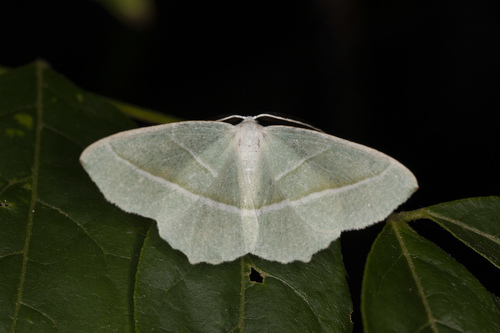
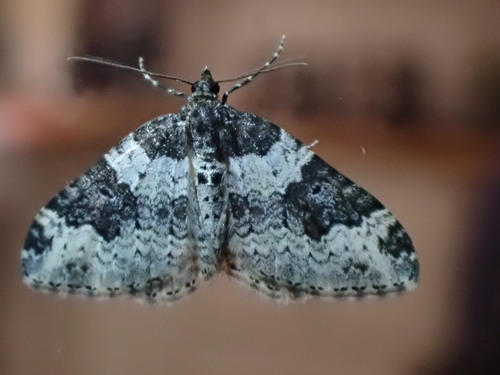
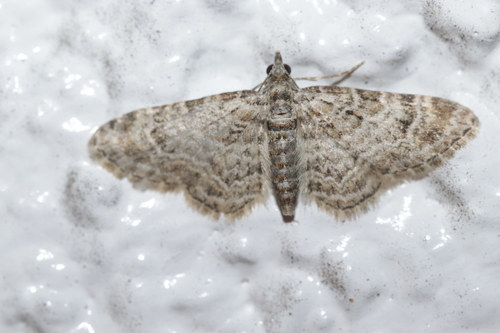
Royal Mantle

Royal Mantle

Catarhoe cuculata

Daily sighting probability <5% · Rare
at Berlin

In 3 days ~10% in a week ~20%

6 Verified sightings at Berlin
17 In all 2 parks From 2019 to 2026
August Best month
🌙 Nocturnal When it's spotted

About the Royal Mantle

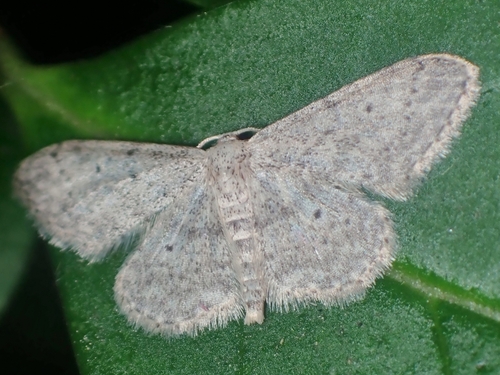
Catarhoe cuculata, the royal mantle, is a moth of the family Geometridae. The species was first described by Johann Siegfried Hufnagel in 1767. It is found from Europe to western Central Asia and east Siberia. The species prefers to live in light forests and forest edges, but also occurs on meadows.

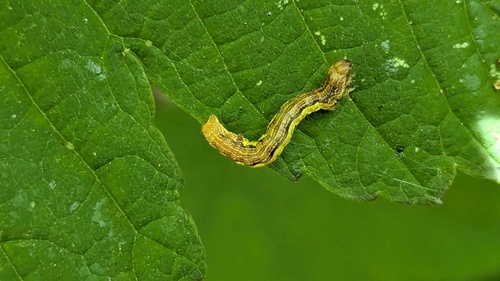
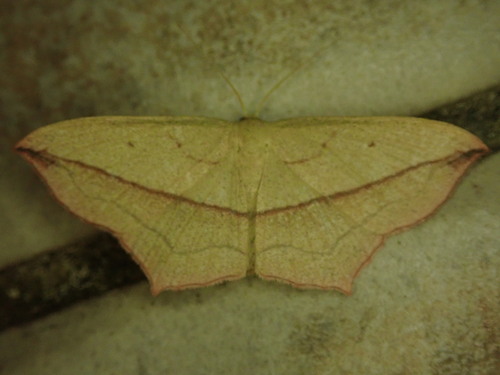
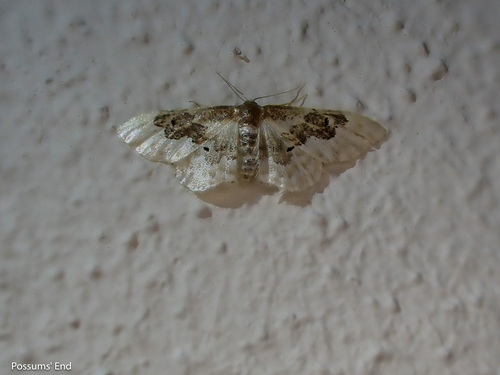
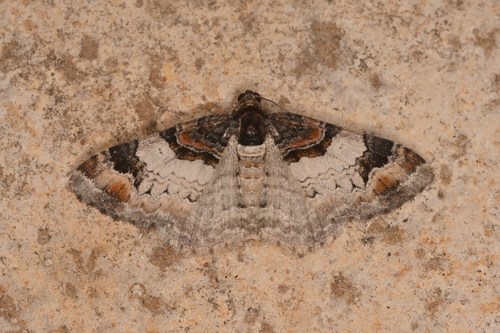
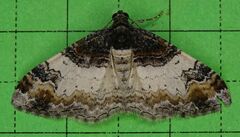
The wingspan is 22–27 mm. The basic or ground colour of the wings is whitish. The base of the forewing is black with a red-brown band, and at the apex are two reddish-brown stains that pass into a red-brown crossline and a dark brown and black spot (separated by a thin black crossline). The first crossline near the base of the forewing is red with a thick black border. It is characterized by the alternate bands of chestnut and blackish brown in the proximal area, the white median area and the form of the postmedian band— ab. circulata Rbl. is a remarkable and perhaps unique aberration in which the dark bands of the central area are connected on the subcostal and median veins, enclosing a roundish white patch. The larva is green or yellowish with conspicuous blackish or dark purple subdorsal stripes. The pupa is reddish, with browner wings.

Adults are on wing from April to August in one generation. The larvae feed on Galium species. Larvae can be found in July to September. It overwinters as a pupa. Wikipedia →

Global Distribution

Parks Where Found

# Park Country Daily sighting probability
1 Mercantour National Park 🇫🇷 France
~10%
2 Bavarian Forest National Park 🇩🇪 Germany
~10%

Cities Where Found

# City Country Daily sighting probability
1 Munich 🇩🇪 Germany
<5%
2 Prague 🇨🇿 Czechia
<5%
3 Berlin 🇩🇪 Germany
<5%

Before you go

What are the chances of seeing a Royal Mantle in Berlin?

Rare

Under 5% of wildlife watchers report a Royal Mantle sighting in Berlin on a given day, based on 6 verified sightings from GBIF citizen-science data. It is the 869th most-seen of the 1065 insects we can rate there. Over three days the chance rises to about 10%, and over a week to about 20%, if each day is a fresh chance.

When is the best time to see a Royal Mantle in Berlin?

August

In that month about 10% of wildlife watchers report a Royal Mantle in Berlin on a given day, against under 5% in September to July, the lowest months.

What time of day is best to see a Royal Mantle?

Between 10 pm and 1 am

Across all the parks we cover, that three-hour window holds the most Royal Mantle sightings with a recorded time, and about 8 in 10 of them come between 6 pm and 6 am: it is mostly seen at night.

Is Berlin the best place to see a Royal Mantle?

Among the best

Of the 3 cities where we can rate Royal Mantle sightings, Berlin ranks 3rd at under 5%, level with the leaders once rounded. The best odds are in Munich (Germany, under 5%) and Prague (Czechia, under 5%).

Which relatives of the Royal Mantle live in Berlin?

Same family: Geometridae

The closest relatives of the Royal Mantle that you can see in Berlin (family Geometridae, Geometer Moths) are Small Dusty Wave (about 10%), Yellow Shell Moth (about 10%) and Willow Beauty (about 10%), with each one's daily chance of a sighting.

Where does the Royal Mantle sighting chance come from?

GBIF citizen-science records

It is estimated from how often the Royal Mantle is recorded against all the insects logged in Berlin (6 verified sightings), calibrated against known sighting rates. Figures are rounded to the nearest 10% because citizen-science data supports honest approximations, not decimals, and months with records from fewer than five people show "—". How it works.
← Back to Berlin