Antler Moth

Antler Moth

Cerapteryx graminis

Daily sighting probability <5% · Rare
at Birmingham

In 3 days ~10% in a week ~20%

6 Verified sightings at Birmingham
135 In all 6 parks From 2019 to 2026
August Best month
☀️ Diurnal When it's spotted

About the Antler Moth

Cerapteryx graminis, the antler moth, is a moth of the family Noctuidae. It is a common species throughout most of Europe but is lacking in the very dry southern regions. The northernmost occurrence is Iceland, and above the Arctic Circle. It also occurs in Siberia and in North Mongolia. The species has been introduced to North America. In the Alps it rises to an altitude of 2100 meters.

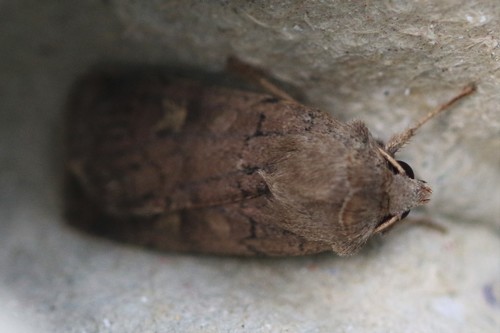
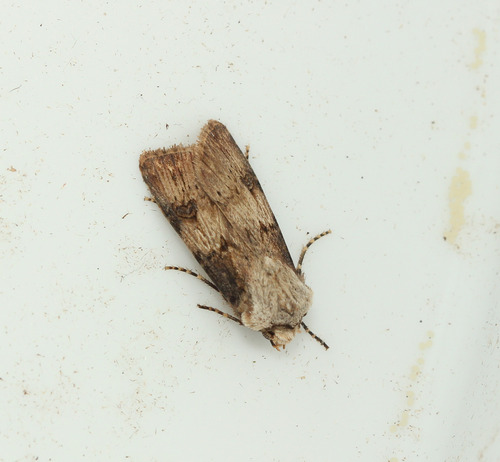
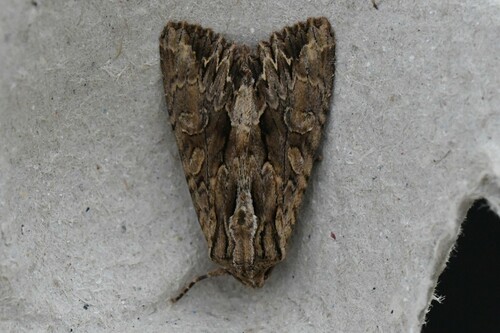
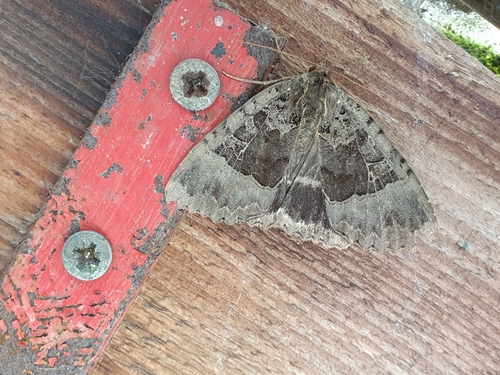
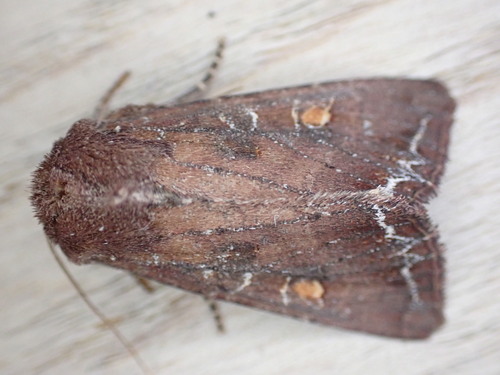
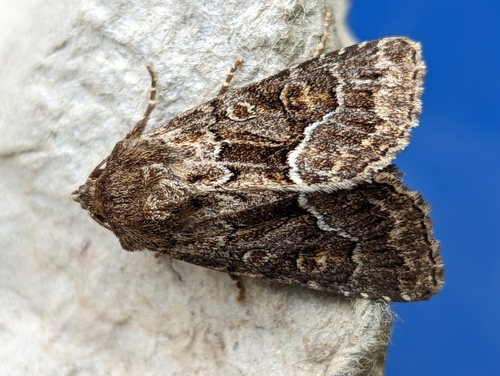
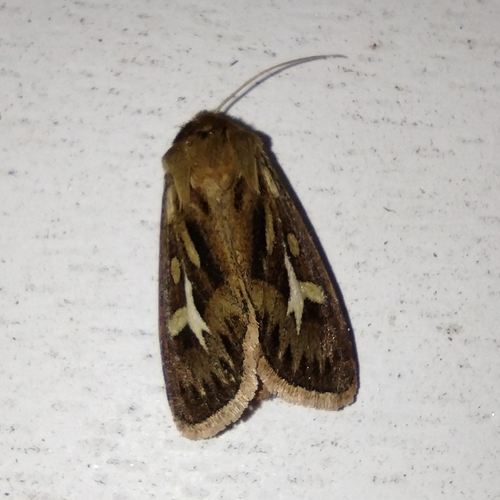
This species is unusual for a noctuid in that there is marked sexual dimorphism. The male has a wingspan of 27–32 mm but the female is larger with a wingspan of 35–39 mm. The forewings are brown, speckled with black and marked with a bold white branched basal streak which gives the species its common name. The hindwings are dark brown with a white fringe.

Larvae feed on a variety of grasses. Forewing olive grey or olive rufous, or olive fuscous; median and marginal areas sometimes deeper coloured, otherwise the 3 lines are undefined; stigmata pale, especially the reniform, which at base is white, emitting a ray basewards along the median vein, and two externally along veins 3 and 4; claviform elongate; orbicular flattened; hindwing dark fuscous... Wikipedia →
Global Distribution

Parks Where Found

# Park Country Daily sighting probability
1 Cairngorms National Park 🇬🇧 United Kingdom
~20%
2 Snowdonia National Park 🇬🇧 United Kingdom
~20%
3 Tatra National Park 🇸🇰 Slovakia
~10%
4 Bavarian Forest National Park 🇩🇪 Germany
~10%
5 Wadden Sea National Park 🇩🇪 Germany
<5%
6 Pyrénées National Park 🇫🇷 France
<5%

Cities Where Found

# City Country Daily sighting probability
1 Helsinki 🇫🇮 Finland
~10%
2 Manchester 🇬🇧 United Kingdom
~10%
3 Stockholm 🇸🇪 Sweden
~10%
4 Liverpool 🇬🇧 United Kingdom
<5%
5 Birmingham 🇬🇧 United Kingdom
<5%

Before you go

What are the chances of seeing an Antler Moth in Birmingham?

Rare

Under 5% of wildlife watchers report an Antler Moth sighting in Birmingham on a given day, based on 6 verified sightings from GBIF citizen-science data. It is the 745th most-seen of the 811 insects we can rate there. Over three days the chance rises to about 10%, and over a week to about 20%, if each day is a fresh chance.

When is the best time to see an Antler Moth in Birmingham?

August

In that month about 10% of wildlife watchers report an Antler Moth in Birmingham on a given day, against under 5% in September to July, the lowest months.

What time of day is best to see an Antler Moth?

Between 8 and 11 am

Across all the parks we cover, that three-hour window holds the most Antler Moth sightings with a recorded time, and about 8 in 10 of them come between 6 am and 6 pm: it is a daytime animal.

Is Birmingham the best place to see an Antler Moth?

5th of 5

Of the 5 cities where we can rate Antler Moth sightings, Birmingham ranks 5th at under 5%. The best odds are in Helsinki (Finland, about 10%), Manchester (United Kingdom, about 10%) and Stockholm (Sweden, about 10%).

Which relatives of the Antler Moth live in Birmingham?

Same family: Noctuidae

The closest relatives of the Antler Moth that you can see in Birmingham (family Noctuidae, Cutworm Moths and Allies) are Large Yellow Underwing (about 20%), Silver Υ (about 20%) and Knot Grass Moth (about 20%), with each one's daily chance of a sighting.

Where does the Antler Moth sighting chance come from?

GBIF citizen-science records

It is estimated from how often the Antler Moth is recorded against all the insects logged in Birmingham (6 verified sightings), calibrated against known sighting rates. Figures are rounded to the nearest 10% because citizen-science data supports honest approximations, not decimals, and months with records from fewer than five people show "—". How it works.

← Back to Birmingham