
Bank Vole

Bank Vole

Myodes glareolus

Silhouette: PhyloPic

Daily sighting probability ~10% · With luck
at Birmingham

In 3 days ~20% in a week ~30%

7 Verified sightings at Birmingham
47 In all 4 parks From 2019 to 2026
July Best month
☀️ Diurnal When it's spotted

About the Bank Vole

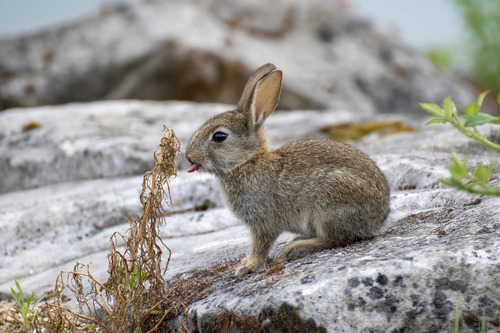
The bank vole (Clethrionomys glareolus) is a small vole with red-brown fur and some grey patches, with a tail about half as long as its body. A rodent, it lives in woodland areas and is around 100 millimetres (3.9 in) in length. The bank vole is found in much of Europe and in northwestern Asia. It is native to Great Britain but not to Ireland, where it has been accidentally introduced, and has now colonised much of the south and southwest.

The bank vole lives in woodland, hedgerows and other dense vegetation, such as bracken and bramble. Its underground chamber is lined with moss, feathers and vegetable fibre and contains a store of food. It can live for eighteen months to two years in the wild and over 42 months in captivity and is mostly herbivorous, eating buds, bark, seeds, nuts, leaves and fruits and occasionally insects and other small invertebrates. It readily climbs into scrub and low branches of trees although it is not as versatile as a mouse. It breeds in shallow burrows, the female rearing about four litters of pups during the summer.

The bank vole is a small rodent resembling a mouse when young but developing a stouter body, a slightly rounder head with... Wikipedia →

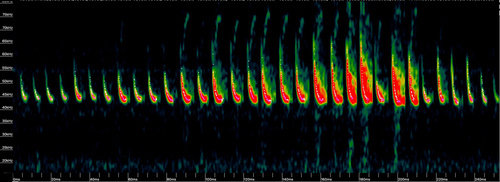
Sounds

Recording0:05

Netherlands · 2025

© Jurriën de Vries · iNaturalist · CC BY-NC 4.0

Recording0:11

Germany · 2023

© Annika Oberlaender · Observation.org, Nature data from around the World · CC BY-NC-ND 4.0

Global Distribution

Parks Where Found

# Park Country Daily sighting probability
1 Plitvice Lakes National Park 🇭🇷 Croatia
~40%
2 Białowieża National Park 🇵🇱 Poland
~20%
3 Cairngorms National Park 🇬🇧 United Kingdom
~10%
4 Snowdonia National Park 🇬🇧 United Kingdom
~10%

Cities Where Found

# City Country Daily sighting probability
1 Essen 🇩🇪 Germany
~10%
2 Moscow 🇷🇺 Russia
~10%
3 Munich 🇩🇪 Germany
~10%
4 Helsinki 🇫🇮 Finland
~10%
5 Kyiv 🇺🇦 Ukraine
~10%
6 Brussels 🇧🇪 Belgium
~10%
7 Hamburg 🇩🇪 Germany
~10%
8 Kazan 🇷🇺 Russia
~10%
9 Cologne 🇩🇪 Germany
~10%
10 Birmingham 🇬🇧 United Kingdom
~10%

Zoos & Centres Where Found

# Zoo / Centre Country
1 Skansen 🇸🇪 Sweden In captivity
2 Ranua Wildlife Park 🇫🇮 Finland In captivity
3 Zoo de La Flèche 🇫🇷 France In captivity
4 Baltic Sea Science Center 🇸🇪 Sweden In captivity

Before you go

What are the chances of seeing a Bank Vole in Birmingham?

With luck

About 10% of wildlife watchers report a Bank Vole sighting in Birmingham on a given day, based on 7 verified sightings from GBIF citizen-science data. It is the 12th most-seen of the 14 mammals we can rate there. Over three days the chance rises to about 20%, and over a week to about 30%, if each day is a fresh chance.

When is the best time to see a Bank Vole in Birmingham?

May–August and December

In those months about 10% of wildlife watchers report a Bank Vole in Birmingham on a given day, against under 5% in January–April and September–November, the lowest months.

What time of day is best to see a Bank Vole?

Between 11 am and 2 pm

Across all the parks we cover, that three-hour window holds the most Bank Vole sightings with a recorded time, and about 8 in 10 of them come between 6 am and 6 pm: it is a daytime animal.

Is Birmingham the best place to see a Bank Vole?

Among the best

Of the 15 cities where we can rate Bank Vole sightings, Birmingham ranks 10th at about 10%, level with the leaders once rounded. The best odds are in Essen (Germany, about 10%), Moscow (Russia, about 10%) and Munich (Germany, about 10%).

Where does the Bank Vole sighting chance come from?

GBIF citizen-science records

It is estimated from how often the Bank Vole is recorded against all the mammals logged in Birmingham (7 verified sightings), calibrated against known sighting rates. Figures are rounded to the nearest 10% because citizen-science data supports honest approximations, not decimals, and months with records from fewer than five people show "—". How it works.

← Back to Birmingham