



Completed
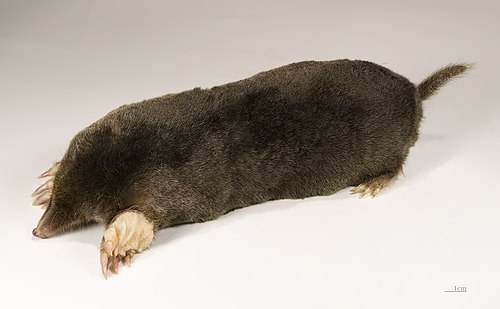

European Mole
Talpa europaea
Silhouette: Steven Traver · PhyloPic
- KingdomAnimalia (Animals)
- PhylumChordata (Chordates)
- ClassMammalia (Mammals)
- OrderSoricomorpha
- FamilyTalpidae (Moles and Desmans)
- GenusTalpa (Eurasian Moles)
- SpeciesTalpa europaea (European Mole)
In 3 days ~50% in a week ~80%
66 Verified sightings at Birmingham
286 In all 12 parks From 2019 to 2026
November Best month
☀️ Diurnal When it's spotted
About the European Mole
The European mole (Talpa europaea) is a mammal of the order Eulipotyphla. It is also known as the common mole and the northern mole. This mole lives in a tunnel system, which it constantly extends. It uses these tunnels to hunt its prey. Under normal conditions, the displaced earth is pushed to the surface, resulting in the characteristic molehills. It is an omnivore that feeds mainly on earthworms, but also on insects, centipedes and mammals such as rodents and other moles. Its saliva contains toxins which paralyse earthworms in particular.
The Aquitanian mole (T. aquitania) was formerly considered conspecific, but was described as a distinct species in 2017. The European mole has a wide range throughout Europe and westernmost Asia, being found as far north as the United Kingdom and southern Scandinavia, as far south as northern Greece, and as far east as western Siberia. It is the only mole species in most of this range. The Loire River in France was thought to form the western barrier to the species' range, separating it from the Aquitanian mole, but studies indicate that while this is largely true, it is not a strict barrier, as member of either... Wikipedia →
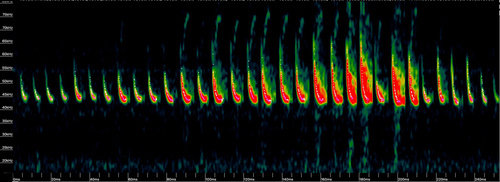
Sounds
Uncertain1:28
United Kingdom · 2014
© david m · XC960913 · CC BY-NC-ND 4.0
Recent sightings of European Mole in Birmingham
LIVEiNaturalistGlobal Distribution
Parks Where Found
| # | Park | Country | Daily sighting probability |
|---|---|---|---|
| 1 | Białowieża National Park | 🇵🇱 Poland | |
| 2 | Biebrza National Park | 🇵🇱 Poland | |
| 3 | Kiskunság National Park | 🇭🇺 Hungary | |
| 4 | Hortobágy National Park | 🇭🇺 Hungary | |
| 5 | Bavarian Forest National Park | 🇩🇪 Germany | |
| 6 | Tatra National Park | 🇸🇰 Slovakia | |
| 7 | Fertő-Hanság National Park | 🇭🇺 Hungary | |
| 8 | Snowdonia National Park | 🇬🇧 United Kingdom | |
| 9 | Cairngorms National Park | 🇬🇧 United Kingdom | |
| 10 | Hohe Tauern National Park | 🇦🇹 Austria | |
| 11 | Triglav National Park | 🇸🇮 Slovenia | |
| 12 | Wadden Sea National Park | 🇩🇪 Germany |
Cities Where Found
| # | City | Country | Daily sighting probability |
|---|---|---|---|
| 1 | Kyiv | 🇺🇦 Ukraine | |
| 2 | Liverpool | 🇬🇧 United Kingdom | |
| 3 | Manchester | 🇬🇧 United Kingdom | |
| 4 | Birmingham | 🇬🇧 United Kingdom | |
| 5 | Brussels | 🇧🇪 Belgium | |
| 6 | Budapest | 🇭🇺 Hungary | |
| 7 | Minsk | 🇧🇾 Belarus | |
| 8 | Munich | 🇩🇪 Germany | |
| 9 | Hamburg | 🇩🇪 Germany | |
| 10 | Warsaw | 🇵🇱 Poland |
Closest Relatives at Birmingham







Before you go
What are the chances of seeing a European Mole in Birmingham?
Possible
About 20% of wildlife watchers report a European Mole sighting in Birmingham on a given day, based on 66 verified sightings from GBIF citizen-science data. It is the 5th most-seen of the 14 mammals we can rate there. Over three days the chance rises to about 50%, and over a week to about 80%, if each day is a fresh chance.
When is the best time to see a European Mole in Birmingham?
April and November
In those months about 30% of wildlife watchers report a European Mole in Birmingham on a given day, against under 5% in March, the lowest month.
What time of day is best to see a European Mole?
Between 10 am and 1 pm
Across all the parks we cover, that three-hour window holds the most European Mole sightings with a recorded time, and about 9 in 10 of them come between 6 am and 6 pm: it is a daytime animal.
Is Birmingham the best place to see a European Mole?
4th of 28
Of the 28 cities where we can rate European Mole sightings, Birmingham ranks 4th at about 20%. The best odds are in Kyiv (Ukraine, about 40%), Liverpool (United Kingdom, about 30%) and Manchester (United Kingdom, about 20%).
Where does the European Mole sighting chance come from?
GBIF citizen-science records
It is estimated from how often the European Mole is recorded against all the mammals logged in Birmingham (66 verified sightings), calibrated against known sighting rates. Figures are rounded to the nearest 10% because citizen-science data supports honest approximations, not decimals, and months with records from fewer than five people show "—". How it works.
