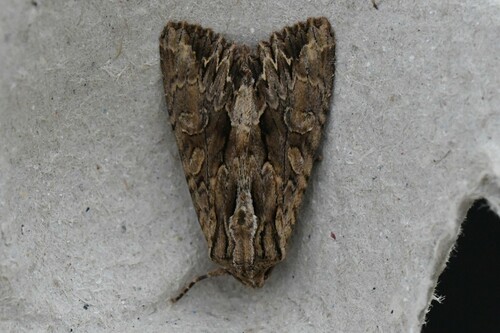
Grey Dagger
Daily sighting probability ~10% · With luck
at Birmingham

In 3 days ~20% in a week ~40%

29 Verified sightings at Birmingham
42 In all 4 parks From 2019 to 2026
October Best month
☀️ Diurnal When it's spotted

About the Grey Dagger

The grey dagger (Acronicta psi) is a moth of the family Noctuidae. This species can be found from Europe and North Africa to northern Iran, central Asia, southern and central Siberia and Mongolia. In the Levant it is found in Lebanon and Israel.

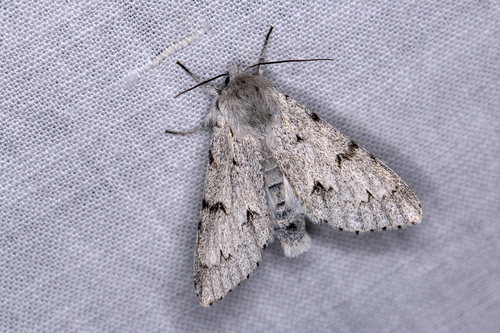
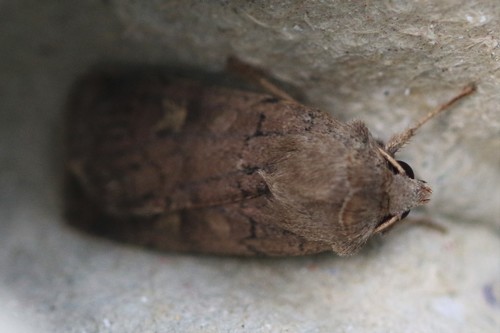
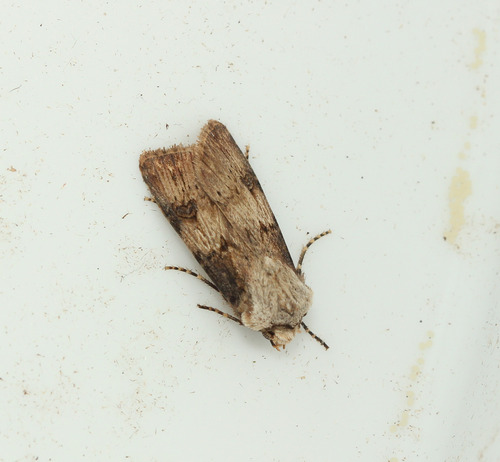
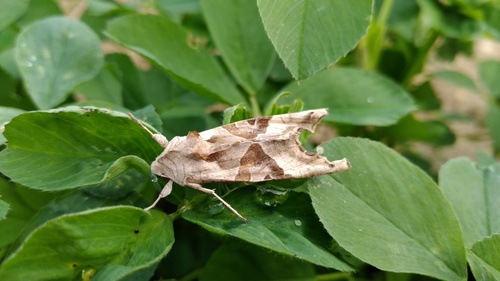
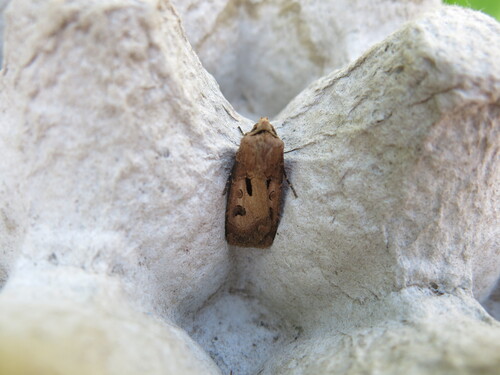
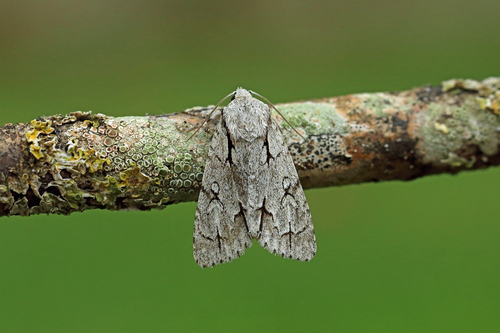
These moths mainly inhabit deciduous forests, hedgerows, parks and gardens, at an elevation up to 1,600 metres (5,200 ft) above sea level. Acronicta psi has a wingspan of 34–45 mm (1.3–1.8 in). These moths have grey forewings with bold black dagger-shaped markings. (The Latin specific name also refers to these markings, as resembling the Greek letter psi, ψ.) The hindwings are dirty grey, generally paler in the male.

The moth is very similar to the dark dagger (Acronicta tridens) and identification is generally only possible by minute examination of the genitalia. See Townsend et al. However, in general this moth is generally darker in colour than the dark dagger and always lacks the white hindwings often present in the male of that species. Moreover, the larvae of the two species are very different.

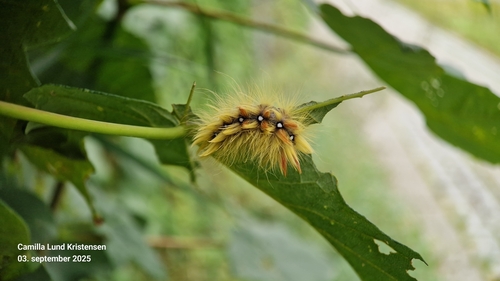
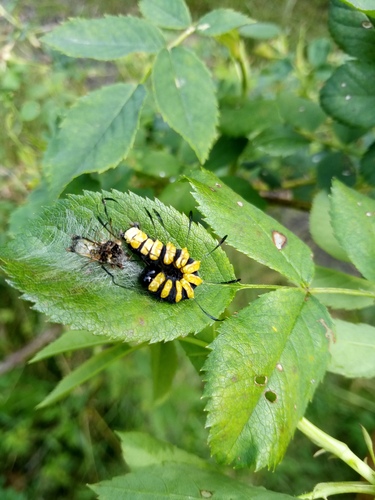
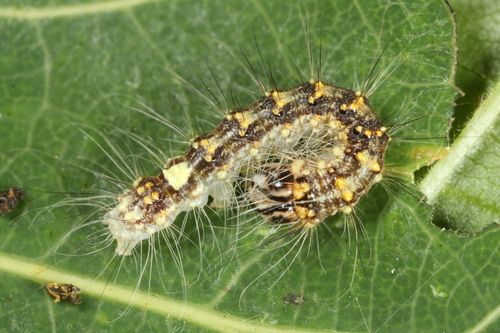
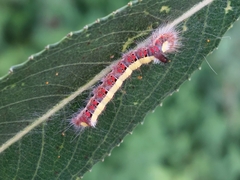
The larva of Acronicta psi is quite hairy, greyish or brownish below and black above, with... Wikipedia →
Global Distribution

Parks Where Found

# Park Country Daily sighting probability
1 Bavarian Forest National Park 🇩🇪 Germany
~10%
2 Cairngorms National Park 🇬🇧 United Kingdom
~10%
3 Cévennes National Park 🇫🇷 France
<5%
4 Wadden Sea National Park 🇩🇪 Germany
<5%

Cities Where Found

# City Country Daily sighting probability
1 Liverpool 🇬🇧 United Kingdom
~10%
2 Manchester 🇬🇧 United Kingdom
~10%
3 Birmingham 🇬🇧 United Kingdom
~10%
4 Copenhagen 🇩🇰 Denmark
~10%
5 London 🇬🇧 United Kingdom
<5%
6 Helsinki 🇫🇮 Finland
<5%
7 Novosibirsk 🇷🇺 Russia
<5%
8 Warsaw 🇵🇱 Poland
<5%
9 Munich 🇩🇪 Germany
<5%
10 Hamburg 🇩🇪 Germany
<5%

Before you go

What are the chances of seeing a Grey Dagger in Birmingham?

With luck

About 10% of wildlife watchers report a Grey Dagger sighting in Birmingham on a given day, based on 29 verified sightings from GBIF citizen-science data. It is the 274th most-seen of the 811 insects we can rate there. Over three days the chance rises to about 20%, and over a week to about 40%, if each day is a fresh chance.

When is the best time to see a Grey Dagger in Birmingham?

October

In that month about 20% of wildlife watchers report a Grey Dagger in Birmingham on a given day, against under 5% in November to June, the lowest months.

What time of day is best to see a Grey Dagger?

Between 3 and 6 pm

Across all the parks we cover, that three-hour window holds the most Grey Dagger sightings with a recorded time, and about 8 in 10 of them come between 6 am and 6 pm: it is a daytime animal.

Is Birmingham the best place to see a Grey Dagger?

Among the best

Of the 14 cities where we can rate Grey Dagger sightings, Birmingham ranks 3rd at about 10%, level with the leaders once rounded. The best odds are in Liverpool (United Kingdom, about 10%) and Manchester (United Kingdom, about 10%).

Which relatives of the Grey Dagger live in Birmingham?

Same genus: Acronicta

The closest relatives of the Grey Dagger that you can see in Birmingham (genus Acronicta, Dagger Moths) are Knot Grass Moth (about 20%), Sycamore Moth (about 10%) and The Miller (about 10%), with each one's daily chance of a sighting.

Where does the Grey Dagger sighting chance come from?

GBIF citizen-science records

It is estimated from how often the Grey Dagger is recorded against all the insects logged in Birmingham (29 verified sightings), calibrated against known sighting rates. Figures are rounded to the nearest 10% because citizen-science data supports honest approximations, not decimals, and months with records from fewer than five people show "—". How it works.

← Back to Birmingham