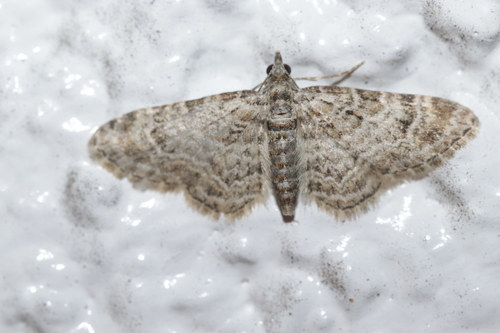
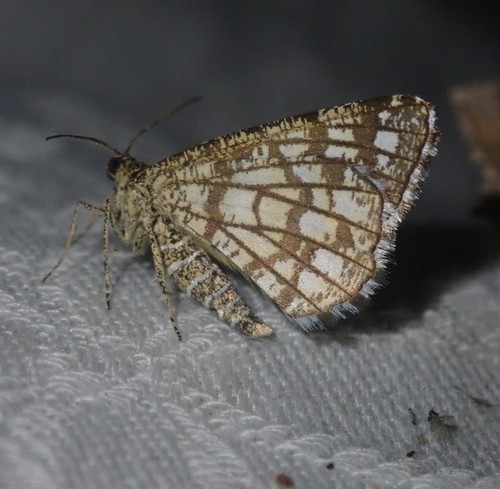
About the Small Fan-Footed Wave
The small fan-footed wave (Idaea biselata) is a moth of the family Geometridae. The species was first described by Johann Siegfried Hufnagel in 1767. The species is widespread from the British Isles across western Europe and east to the Urals. In northern Europe, the range extends about to central Fennoscandia. In the south the range extends up to central Portugal, Corsica, the northern Apennines and northern Greece. Isolated occurrences are known from Calabria and the Peloponnese. Outside of Europe it is found in the Caucasus, Transcaucasia, in the north of Turkey, in Siberia, in northern Kazakhstan, as well as in the Russian Far East. The subspecies Idaea biselata extincta (Staudinger, 1897) is represented in Korea and the Ussuri region. It rises to about 1,700 metres above sea level in the Alps. South of the Alps, is found from 600 to 1,500 metres and is rarely found below this range.
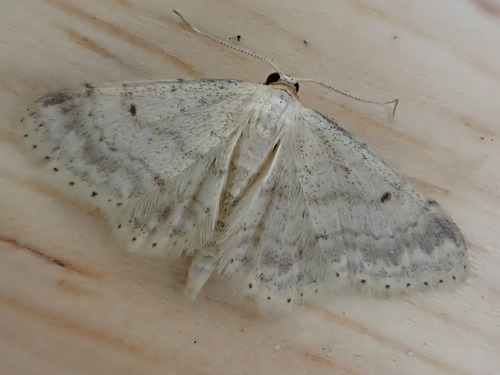
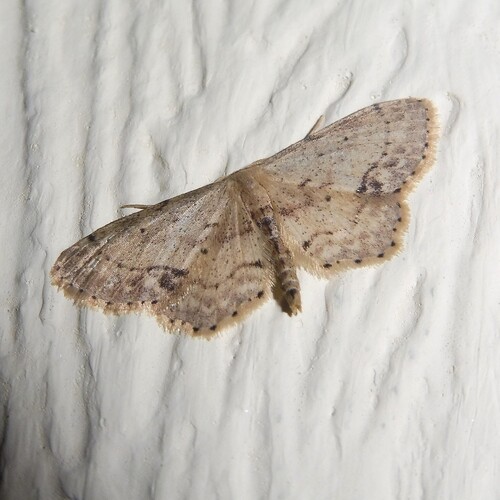
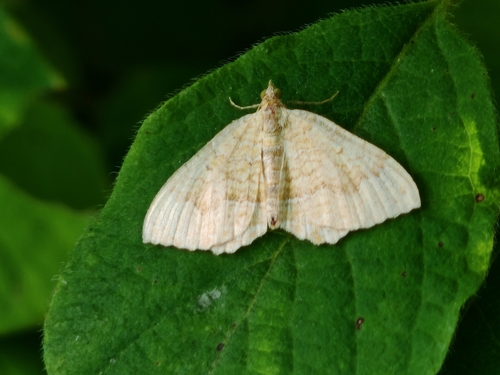
It is a small (wingspan 22–25 mm), easily missed species. The wings are creamy white with darker bands with a small black discal spot on each wing. The basic colouring and pattern vary relatively little. The ground colour is yellowish white to slightly brownish... Wikipedia →