American Giant Water Bug

American Giant Water Bug

Lethocerus americanus

Silhouette: TGHays · PhyloPic

Daily sighting probability <5% · Rare
at Boston

In 3 days ~10% in a week ~20%

14 Verified sightings at Boston
45 In all 3 parks From 2019 to 2026
April Best month
☀️ Diurnal When it's spotted

About the American Giant Water Bug

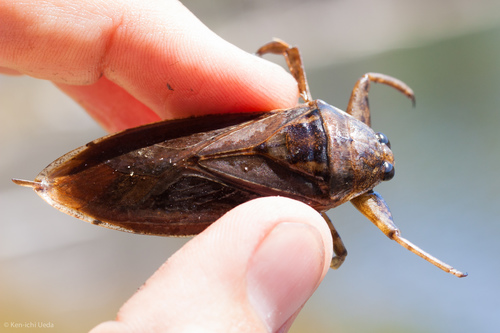
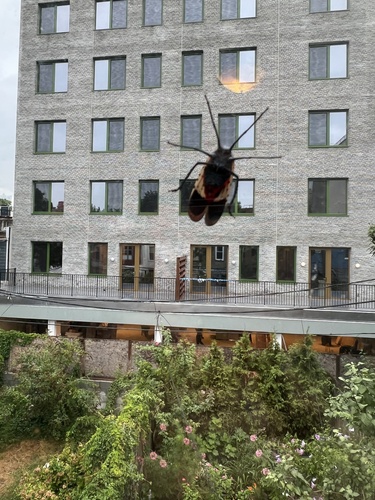
Lethocerus americanus, sometimes called the electric light bug, toe biter or fish killer, is a giant water bug in the family Belostomatidae, native to southern Canada and the United States (north of 35°N; other Lethocerus species are found southwards). It typically has a length around 5–6 cm (2.0–2.4 in). It was originally classified as a species in the genus Belostoma.

Commonly found in ponds, marshes, and on the edges of lakes and slow-moving streams and creeks, adults and larvae feed on other insects, small crustaceans (crabs/crayfish), tadpoles/frogs, snails, and small fish. The adult swims with the aid of its hind legs. A pair of front fore limbs is used for capturing and latching onto its intended prey, which it then injects with digestive toxins through a somewhat retractable proboscis much like that of a mosquito. L. americanus tends to let its prey digest for 10–15 minutes before eating. Multiple L. americanus bugs have been seen to hunt and then share the same prey animal. Under water, the adult breathes air that it traps under its wings using two snorkel-like tubes that extend from the rear of its abdomen.

Commonly known as "toe biter", L. americanus may deliver... Wikipedia →

Global Distribution

Parks Where Found

# Park Country Daily sighting probability
1 Riding Mountain National Park 🇨🇦 Canada
~10%
2 Great Bear Rainforest 🇨🇦 Canada
~10%
3 Acadia National Park 🇺🇸 United States
~10%

Cities Where Found

# City Country Daily sighting probability
1 Minneapolis [Saint Paul] 🇺🇸 United States
~10%
2 Edmonton 🇨🇦 Canada
~10%
3 Calgary 🇨🇦 Canada
<5%
4 Montreal 🇨🇦 Canada
<5%
5 Vancouver 🇨🇦 Canada
<5%
6 Salt Lake City 🇺🇸 United States
<5%
7 Boston 🇺🇸 United States
<5%
8 Toronto 🇨🇦 Canada
<5%

Before you go

What are the chances of seeing an American Giant Water Bug in Boston?

Rare

Under 5% of wildlife watchers report an American Giant Water Bug sighting in Boston on a given day, based on 14 verified sightings from GBIF citizen-science data. It is the 640th most-seen of the 1200 insects we can rate there. Over three days the chance rises to about 10%, and over a week to about 20%, if each day is a fresh chance.

When is the best time to see an American Giant Water Bug in Boston?

Any time of year

In every month with enough records, under 5% of wildlife watchers report an American Giant Water Bug in Boston on a given day, so our monthly data shows no clear season.

What time of day is best to see an American Giant Water Bug?

Between 9 am and noon

Across all the parks we cover, that three-hour window holds the most American Giant Water Bug sightings with a recorded time, and about 7 in 10 of them come between 6 am and 6 pm: it is a daytime animal.

Is Boston the best place to see an American Giant Water Bug?

7th of 8

Of the 8 cities where we can rate American Giant Water Bug sightings, Boston ranks 7th at under 5%. The best odds are in Minneapolis [Saint Paul] (United States, about 10%), Edmonton (Canada, about 10%) and Calgary (Canada, under 5%).

Which relatives of the American Giant Water Bug live in Boston?

Same order: Hemiptera

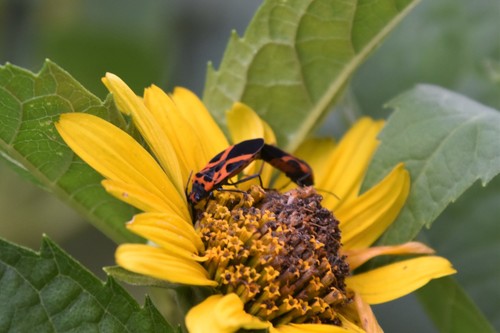
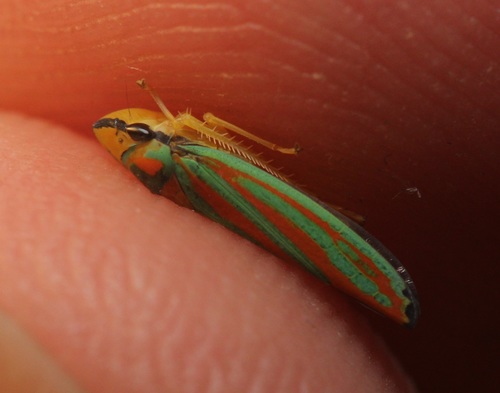
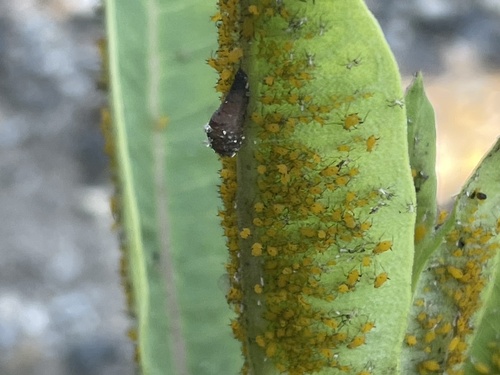
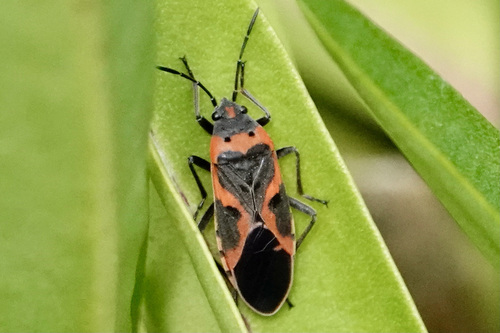
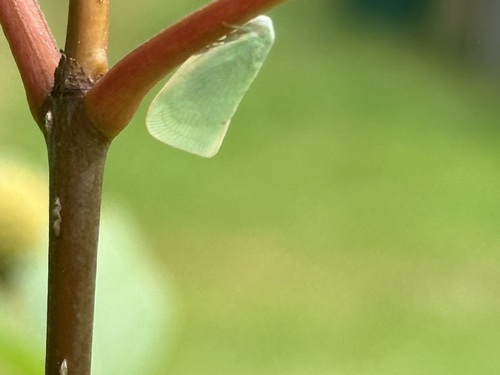
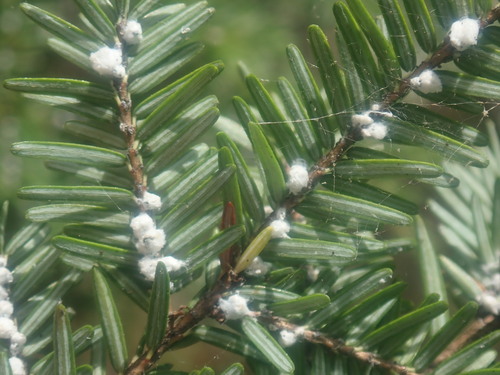
The closest relatives of the American Giant Water Bug that you can see in Boston (order Hemiptera, True Bugs, Hoppers, Aphids, and allies) are False Milkweed Bug (about 20%), Red-Banded Leafhopper (about 20%) and Oleander Aphid (about 20%), with each one's daily chance of a sighting.

Where does the American Giant Water Bug sighting chance come from?

GBIF citizen-science records

It is estimated from how often the American Giant Water Bug is recorded against all the insects logged in Boston (14 verified sightings), calibrated against known sighting rates. Figures are rounded to the nearest 10% because citizen-science data supports honest approximations, not decimals, and months with records from fewer than five people show "—". How it works.

← Back to Boston