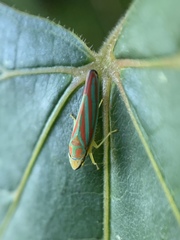
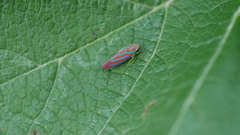
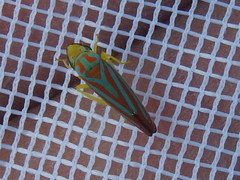
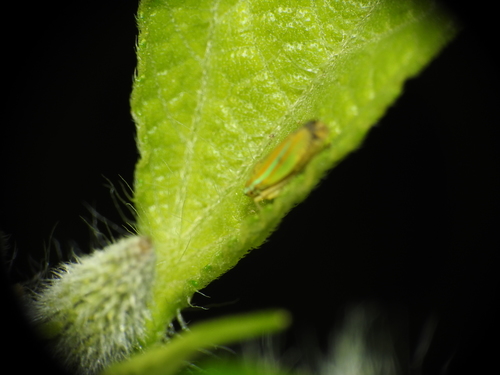
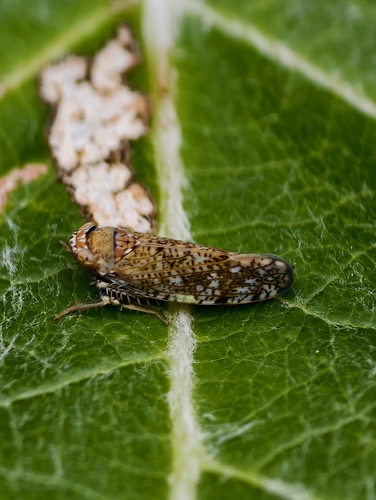
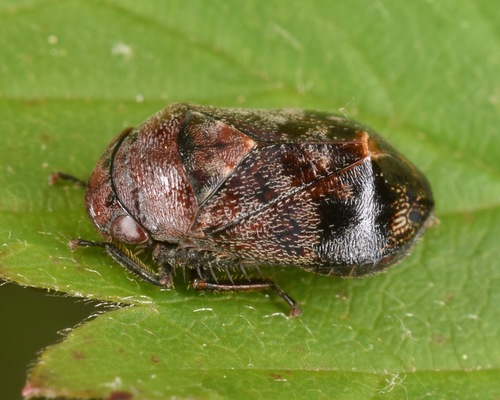
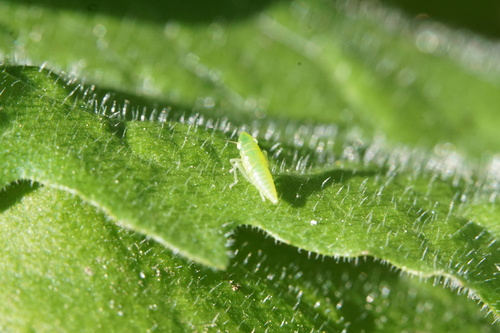
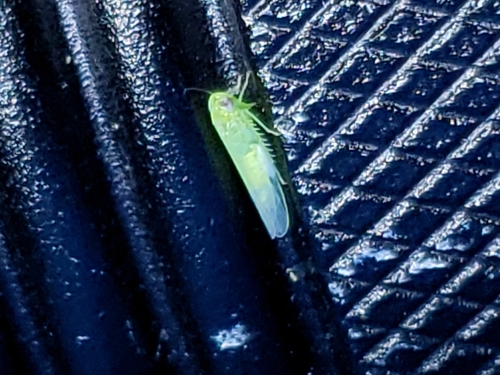
Red-Banded Leafhopper

Red-Banded Leafhopper

Graphocephala coccinea

Daily sighting probability ~20% · Possible
at Boston

In 3 days ~40% in a week ~70%

515 Verified sightings at Boston
56 In all 3 parks From 2019 to 2026
June Best month
☀️ Diurnal When it's spotted

About the Red-Banded Leafhopper

Graphocephala coccinea is a meadow and woodland-dwelling species of brightly colored leafhopper native to North and Central America, from Canada south to Panama. Common names include candy-striped leafhopper, red-banded leafhopper, scarlet-and-green leafhopper, red-and-blue leafhopper, and sharpshooter.

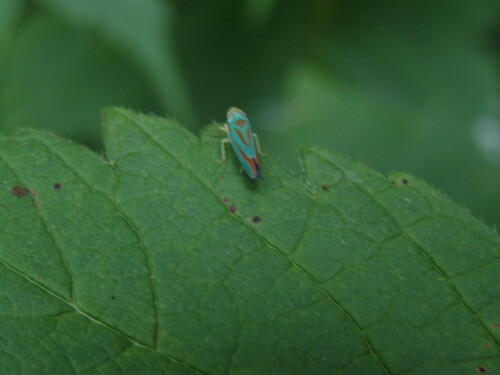
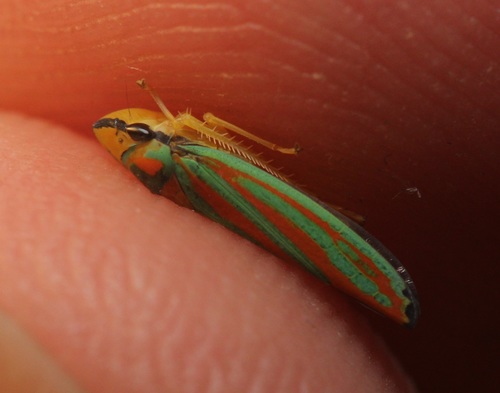
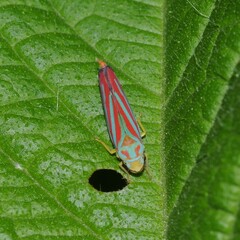
Adults measure 6.7–8.4 mm in length and have vivid blue (or green) and red (or orange-red) stripes on their wings and the top of their thorax combined with bright yellow coloration on their head, legs, abdomen, and elsewhere.

Leafhoppers feed on plant sap with the aid of specialized mouthparts. G. coccinea has been identified as one of several leafhopper species that is a vector in leaf scorch caused by the gammaproteobacteria Xylella fastidiosa ("Pierce's disease"). X. fastidiosa is responsible for the decline of certain woody plants such as elm, oak, and other ornamental trees. According to a research entomologist at the United States National Arboretum, "An understanding of the transmission of this bacterium by insect vectors is economically important because there is neither any known effective therapy for infected trees and shrubs nor a strategy for preventing... Wikipedia →
Global Distribution

Parks Where Found

# Park Country Daily sighting probability
1 Shenandoah National Park 🇺🇸 United States
~10%
2 Great Smoky Mountains National Park 🇺🇸 United States
~10%
3 Riding Mountain National Park 🇨🇦 Canada
~10%

Cities Where Found

# City Country Daily sighting probability
1 Detroit 🇺🇸 United States
~20%
2 Boston 🇺🇸 United States
~20%
3 Minneapolis [Saint Paul] 🇺🇸 United States
~10%
4 Chicago 🇺🇸 United States
~10%
5 Toronto 🇨🇦 Canada
~10%
6 Dallas 🇺🇸 United States
~10%
7 Washington 🇺🇸 United States
~10%
8 New York City 🇺🇸 United States
~10%
9 Baltimore 🇺🇸 United States
~10%
10 Mexico City 🇲🇽 México
~10%

Before you go

What are the chances of seeing a Red-Banded Leafhopper in Boston?

Possible

About 20% of wildlife watchers report a Red-Banded Leafhopper sighting in Boston on a given day, based on 515 verified sightings from GBIF citizen-science data. It is the 24th most-seen of the 1200 insects we can rate there. Over three days the chance rises to about 40%, and over a week to about 70%, if each day is a fresh chance.

When is the best time to see a Red-Banded Leafhopper in Boston?

June

In that month about 30% of wildlife watchers report a Red-Banded Leafhopper in Boston on a given day, against under 5% in December to May, the lowest months.

What time of day is best to see a Red-Banded Leafhopper?

Between 1 and 4 pm

Across all the parks we cover, that three-hour window holds the most Red-Banded Leafhopper sightings with a recorded time, and about 9 in 10 of them come between 6 am and 6 pm: it is a daytime animal.

Is Boston the best place to see a Red-Banded Leafhopper?

Among the best

Of the 17 cities where we can rate Red-Banded Leafhopper sightings, Boston ranks 2nd at about 20%, level with the leaders once rounded. The best odds are in Detroit (United States, about 20%).

Which relatives of the Red-Banded Leafhopper live in Boston?

Same genus: Graphocephala

The closest relatives of the Red-Banded Leafhopper that you can see in Boston (genus Graphocephala) are Versute Sharpshooter (about 20%) and Rhododendron Leafhopper (about 10%), with each one's daily chance of a sighting.

Where does the Red-Banded Leafhopper sighting chance come from?

GBIF citizen-science records

It is estimated from how often the Red-Banded Leafhopper is recorded against all the insects logged in Boston (515 verified sightings), calibrated against known sighting rates. Figures are rounded to the nearest 10% because citizen-science data supports honest approximations, not decimals, and months with records from fewer than five people show "—". How it works.

← Back to Boston