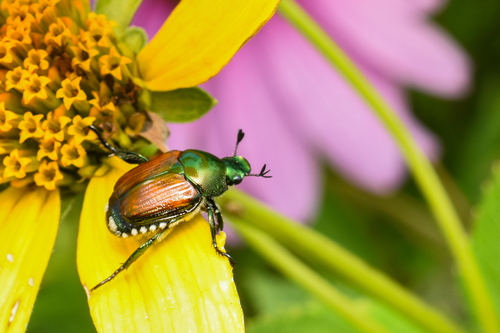
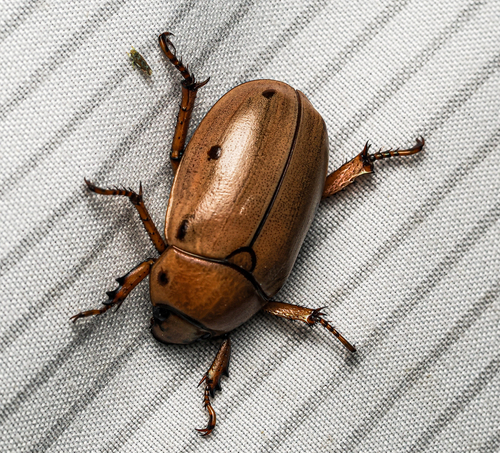
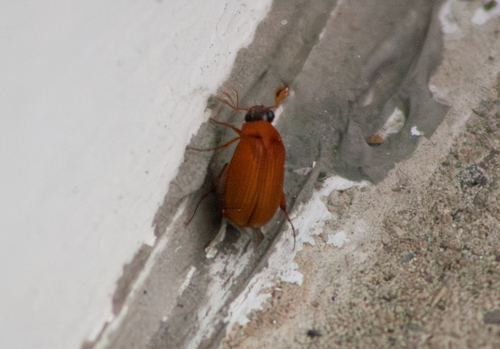
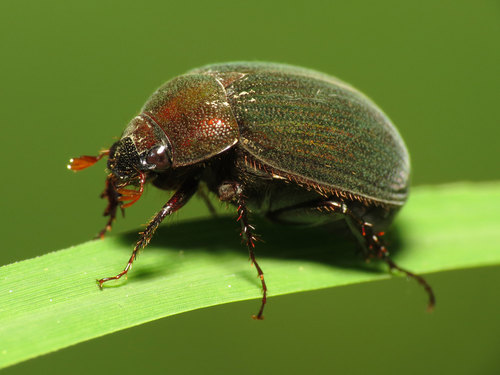
European Chafer silhouette

Silhouette: Udo Schmidt · PhyloPic

European Chafer

Amphimallon majale

Daily sighting probability <5% · Rare
at Boston

In 3 days ~10% in a week ~20%

6 Verified sightings at Boston
June Best month

About the European Chafer

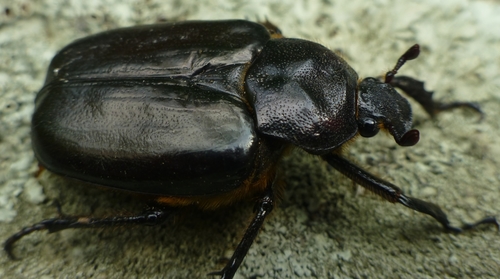
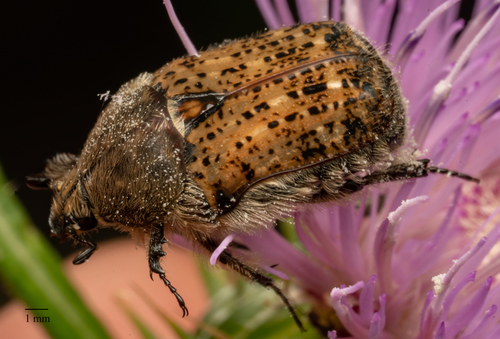
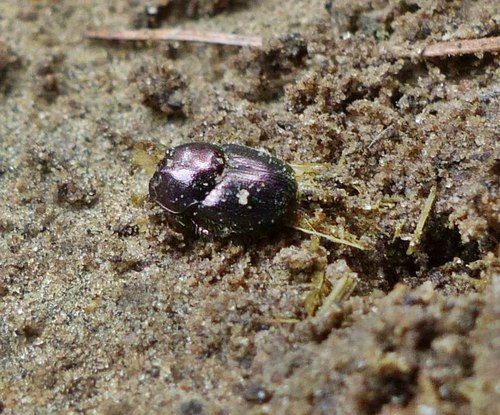
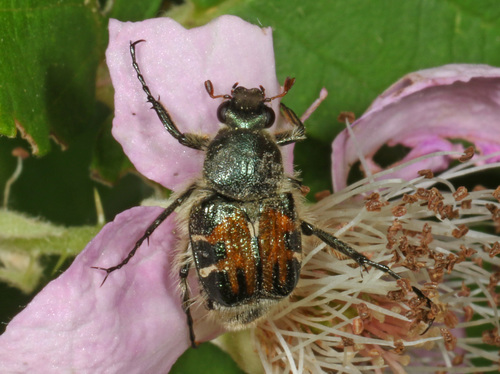
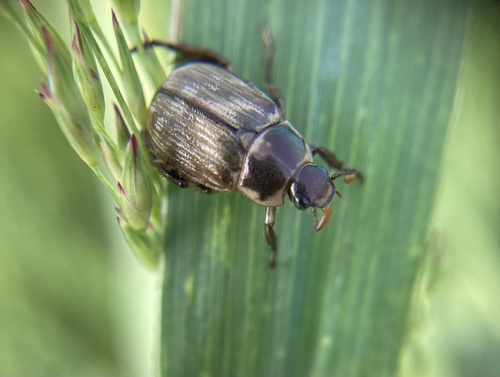
The European chafer (Amphimallon majale; formerly classified as Rhizotrogus majalis) is a beetle of the family Scarabaeidae. Formerly found only in continental Europe, this invasive species is now found at temperate latitudes in North America. The large, white grubs of A. majale feed on the roots of most cool-latitude grasses, both wild and cultivated. This has made the European chafer an enemy of lawns.

Adult beetles are medium-sized, light reddish-brown, and approximately 13–14 millimetres (1⁄2–9⁄16 in) long. Their pronotum features a narrow band of light-yellow setae and the underside of the thorax has similar coloured setae. The tip of the abdomen protrudes beyond the wing covers. Wing covers have longitudinal grooves.

Larvae are white-coloured and C-shaped, with a yellow-brown head and six jointed legs. The raster has two distinct rows of small spines that diverge outward at the tip of the abdomen. Fully grown larvae are 20–23 millimetres (25⁄32–29⁄32 in) long.

The pupae of the European chafer resemble those of the other turf-infesting scarab beetles, such as the Japanese beetle. Pupae are about 16 millimetres (5... Wikipedia →
Global Distribution

Parks Where Found

# Park Country Daily sighting probability

More parks will be added in future updates.

Cities Where Found

# City Country Daily sighting probability
1 Vancouver 🇨🇦 Canada
~10%
2 Seattle 🇺🇸 United States
~10%
3 Minneapolis [Saint Paul] 🇺🇸 United States
<5%
4 Montreal 🇨🇦 Canada
<5%
5 Portland 🇺🇸 United States
<5%
6 Paris 🇫🇷 France
<5%
7 Toronto 🇨🇦 Canada
<5%
8 Chicago 🇺🇸 United States
<5%
9 Boston 🇺🇸 United States
<5%

Before you go

What are the chances of seeing a European Chafer in Boston?

Rare

Under 5% of wildlife watchers report a European Chafer sighting in Boston on a given day, based on 6 verified sightings from GBIF citizen-science data. It is the 967th most-seen of the 1200 insects we can rate there. Over three days the chance rises to about 10%, and over a week to about 20%, if each day is a fresh chance.

When is the best time to see a European Chafer in Boston?

Any time of year

In every month with enough records, under 5% of wildlife watchers report a European Chafer in Boston on a given day, so our monthly data shows no clear season.

Is Boston the best place to see a European Chafer?

9th of 9

Of the 9 cities where we can rate European Chafer sightings, Boston ranks 9th at under 5%. The best odds are in Vancouver (Canada, about 10%), Seattle (United States, about 10%) and Minneapolis [Saint Paul] (United States, under 5%).

Which relatives of the European Chafer live in Boston?

Same family: Scarabaeidae

The closest relatives of the European Chafer that you can see in Boston (family Scarabaeidae, Scarabs) are Oriental Beetle (about 20%), Japanese Beetle (about 20%) and Grapevine Beetle (about 10%), with each one's daily chance of a sighting.

Where does the European Chafer sighting chance come from?

GBIF citizen-science records

It is estimated from how often the European Chafer is recorded against all the insects logged in Boston (6 verified sightings), calibrated against known sighting rates. Figures are rounded to the nearest 10% because citizen-science data supports honest approximations, not decimals, and months with records from fewer than five people show "—". How it works.

← Back to Boston