Sumac Flea Beetle

Sumac Flea Beetle

Blepharida rhois

Daily sighting probability <5% · Rare
at Boston

In 3 days ~10% in a week ~20%

6 Verified sightings at Boston
August Best month

About the Sumac Flea Beetle

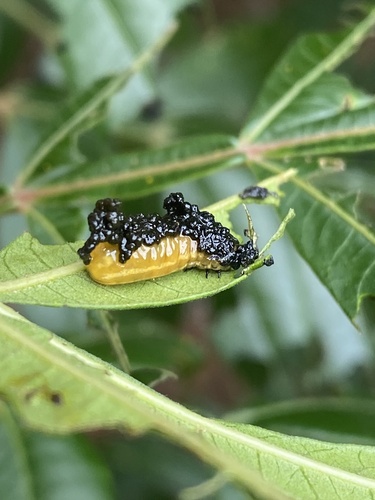
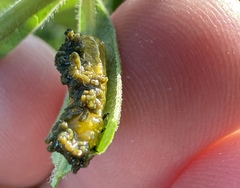
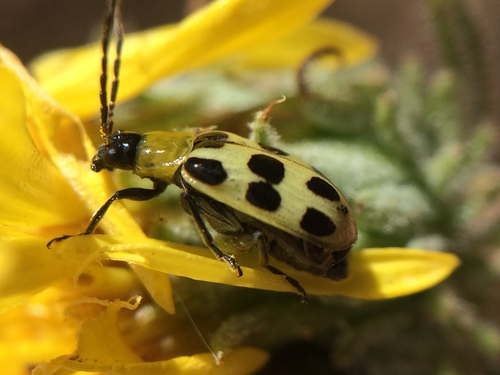
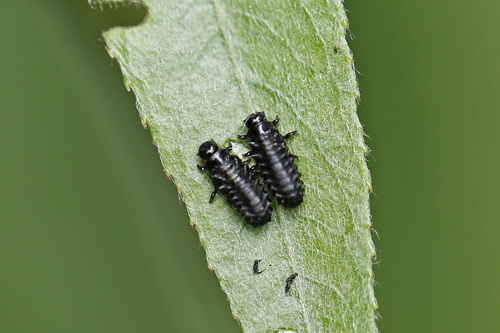
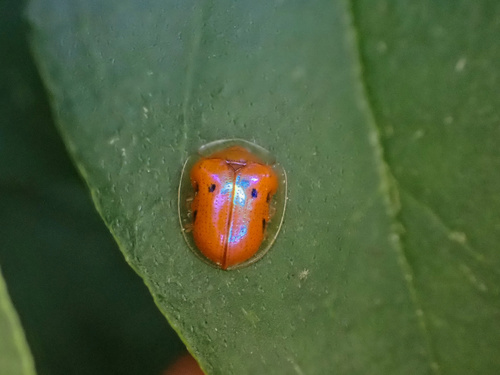
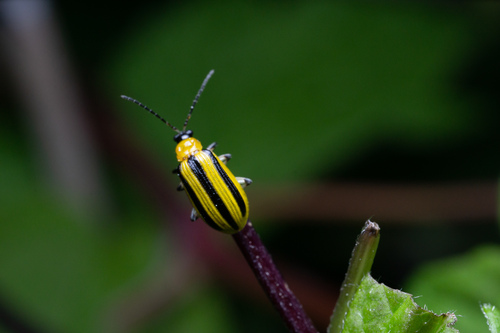
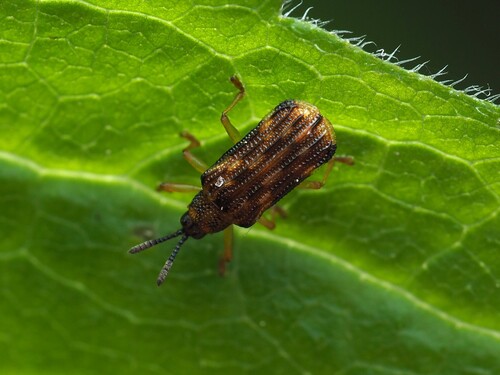
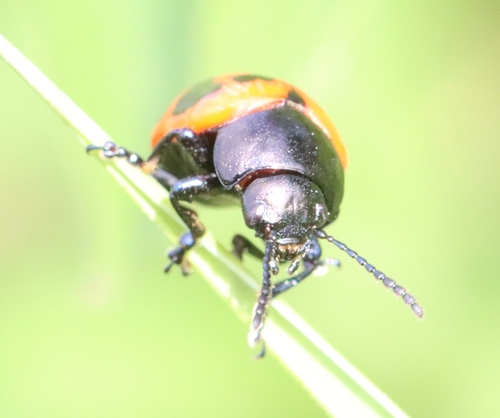
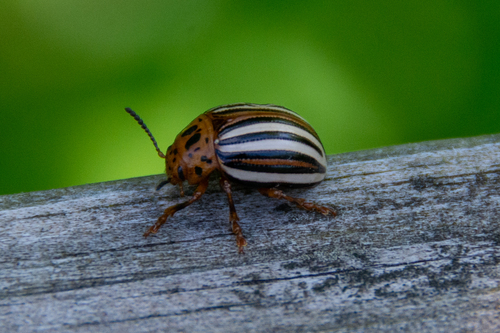
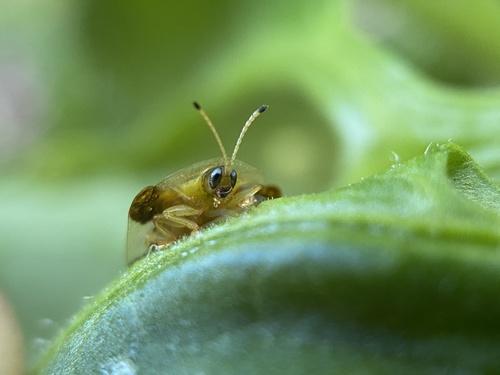
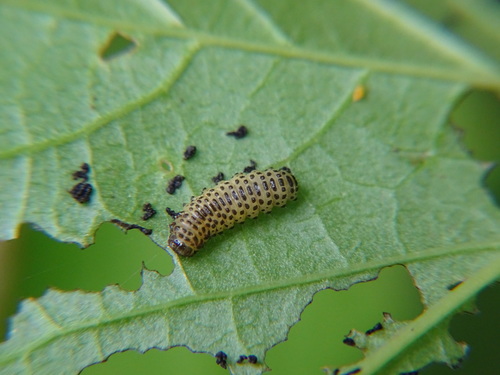
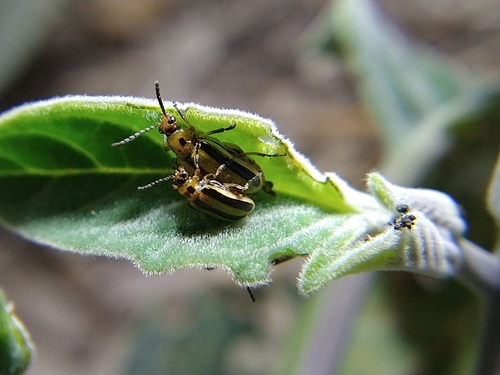
The sumac flea beetle, Blepharida rhois, is most commonly found in North America and is a member of the herbivorous beetle family, Chrysomelidae. More specifically, this beetle is part of the Alticinae subfamily, a highly diverse subfamily that includes more than 1000 species in 550 genera. Members of the Alticinae subfamily are distinguished by their enlarged metafemora and their ability to jump up to 100 times their length. This gives the beetle the ability to catapult jump in order to escape approaching predators. This ability has led to the common name of “flea beetle.” Both larvae and adults are typically a quarter of an inch long. While adults are cream colored with irregular reddish patterns, larvae are typically gray with yellow stripes.

This beetle primarily feeds on the external surface of Rhus leaves. Through this diet, larvae are able to digest useful chemical compounds that can be used as a form of chemical defense against predators. This defense system is contained in a fecal shield, a key characteristic of this beetle’s larvae. Because Rhus plants are necessary for the production of this chemical defense system, B. rhois’ geographic distribution often correlates with the presence of Rhus plants. Wikipedia →

Global Distribution

Parks Where Found

# Park Country Daily sighting probability

More parks will be added in future updates.

Cities Where Found

# City Country Daily sighting probability
1 Salt Lake City 🇺🇸 United States
~10%
2 Minneapolis [Saint Paul] 🇺🇸 United States
~10%
3 Dallas 🇺🇸 United States
<5%
4 Boston 🇺🇸 United States
<5%
5 Chicago 🇺🇸 United States
<5%

Before you go

What are the chances of seeing a Sumac Flea Beetle in Boston?

Rare

Under 5% of wildlife watchers report a Sumac Flea Beetle sighting in Boston on a given day, based on 6 verified sightings from GBIF citizen-science data. It is the 967th most-seen of the 1200 insects we can rate there. Over three days the chance rises to about 10%, and over a week to about 20%, if each day is a fresh chance.

When is the best time to see a Sumac Flea Beetle in Boston?

Any time of year

In every month with enough records, under 5% of wildlife watchers report a Sumac Flea Beetle in Boston on a given day, so our monthly data shows no clear season.

Is Boston the best place to see a Sumac Flea Beetle?

4th of 5

Of the 5 cities where we can rate Sumac Flea Beetle sightings, Boston ranks 4th at under 5%. The best odds are in Salt Lake City (United States, about 10%), Minneapolis [Saint Paul] (United States, about 10%) and Dallas (United States, under 5%).

Where does the Sumac Flea Beetle sighting chance come from?

GBIF citizen-science records

It is estimated from how often the Sumac Flea Beetle is recorded against all the insects logged in Boston (6 verified sightings), calibrated against known sighting rates. Figures are rounded to the nearest 10% because citizen-science data supports honest approximations, not decimals, and months with records from fewer than five people show "—". How it works.

← Back to Boston