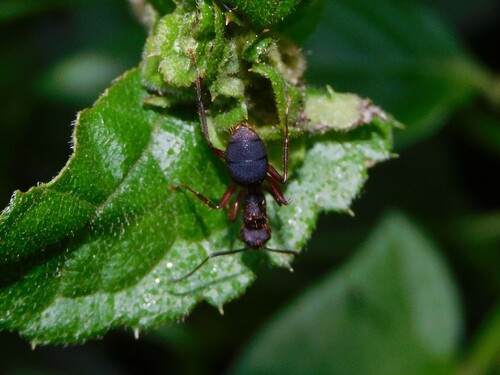
Nannotrigona testaceicornis

Nannotrigona testaceicornis

Nannotrigona testaceicornis

Daily sighting probability ~10% · With luck
at Campinas

In 3 days ~20% in a week ~50%

12 Verified sightings at Campinas
18 In 1 park From 2019 to 2026
July Best month
☀️ Diurnal When it's spotted

About the Nannotrigona testaceicornis

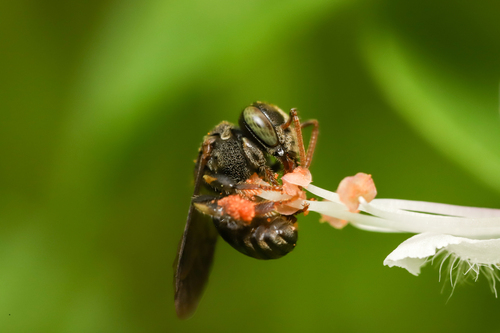
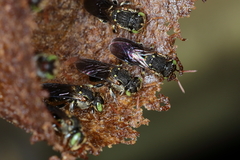
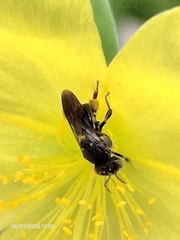
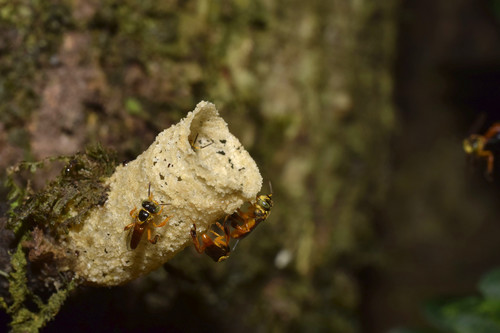
Nannotrigona testaceicornis is a eusocial stingless bee species of the order Hymenoptera and the genus Nannotrigona. Its local common name is abelhas iraí. This species has a large geographic distribution and occupies different biomes, including urban areas, around Neotropical America. The bees of this species nest in trees or artificial cavities because of this broad distribution. N. testaceicornis is important for agriculture because it will pollinate a vast number of plant species year round.

Nannotrigona testaceicornis is a member of the family Apidae of eusocial bees within the order Hymenoptera. The subfamily Meliponini is commonly referred to as "stingless bees." The genus Nannotrigonna has about nine known species and ranges from Sonora, Chihuahua, and San Luis Potosí, Mexico, to Santa Catarina, Brazil, and Paraguay.

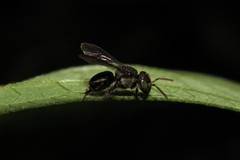
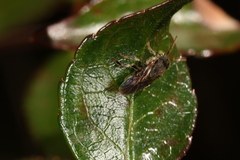
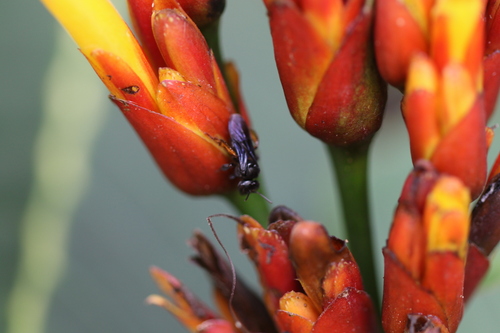
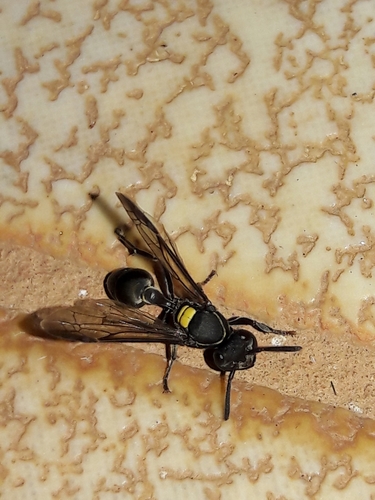
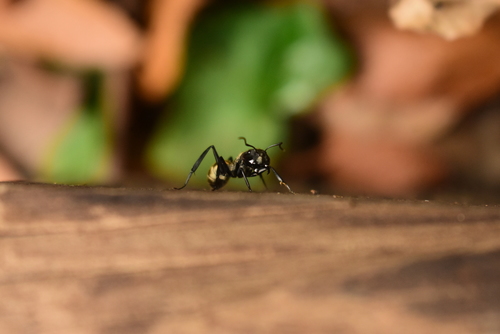
Nannotrigona testaceicornis bees are black and generally have grey hairs with a coarse and wrinkled thorax. Along with the rest of the genus Nannotrigonis, they are about 3 to 5 millimeters long. There is much variation within the species genotype, leading to variation in the venation of the wings. Colonies consist of about 2000... Wikipedia →

Global Distribution

Parks Where Found

# Park Country Daily sighting probability
1 Tijuca National Park 🇧🇷 Brazil
~10%

More parks will be added in future updates.

Cities Where Found

# City Country Daily sighting probability
1 João Pessoa 🇧🇷 Brazil
~10%
2 São Paulo 🇧🇷 Brazil
~10%
3 Brasilia 🇧🇷 Brazil
~10%
4 Rio de Janeiro 🇧🇷 Brazil
~10%
5 Campinas 🇧🇷 Brazil
~10%
6 Niterói 🇧🇷 Brazil
~10%
7 Belo Horizonte 🇧🇷 Brazil
~10%

Before you go

What are the chances of seeing a Nannotrigona testaceicornis in Campinas?

With luck

About 10% of wildlife watchers report a Nannotrigona testaceicornis sighting in Campinas on a given day, based on 12 verified sightings from GBIF citizen-science data. It is the 23rd most-seen of the 89 insects we can rate there. Over three days the chance rises to about 20%, and over a week to about 50%, if each day is a fresh chance.

When is the best time to see a Nannotrigona testaceicornis in Campinas?

July

In that month about 20% of wildlife watchers report a Nannotrigona testaceicornis in Campinas on a given day, against under 5% in March, June and August, the lowest months. That is one of Campinas's driest months, with about 45 mm of rain against 240 mm in January.

What time of day is best to see a Nannotrigona testaceicornis?

Between 10 am and 1 pm

Across all the parks we cover, that three-hour window holds the most Nannotrigona testaceicornis sightings with a recorded time, and nearly all of them come between 6 am and 6 pm: it is a daytime animal.

Is Campinas the best place to see a Nannotrigona testaceicornis?

Among the best

Of the 7 cities where we can rate Nannotrigona testaceicornis sightings, Campinas ranks 5th at about 10%, level with the leaders once rounded. The best odds are in João Pessoa (Brazil, about 10%), São Paulo (Brazil, about 10%) and Brasilia (Brazil, about 10%).

Which relatives of the Nannotrigona testaceicornis live in Campinas?

Same family: Apidae

The closest relatives of the Nannotrigona testaceicornis that you can see in Campinas (family Apidae, Honey Bees, Bumble Bees, and Allies) are Narrow Stingless Bee (about 10%) and Spiny-Legged Stingless Bee (about 10%), with each one's daily chance of a sighting.

Where does the Nannotrigona testaceicornis sighting chance come from?

GBIF citizen-science records

It is estimated from how often the Nannotrigona testaceicornis is recorded against all the insects logged in Campinas (12 verified sightings), calibrated against known sighting rates. Figures are rounded to the nearest 10% because citizen-science data supports honest approximations, not decimals, and months with records from fewer than five people show "—". How it works.

← Back to Campinas