African Clawless Otter

African Clawless Otter

Aonyx capensis

Silhouette: Margot Michaud · PhyloPic

LCNTNear ThreatenedVUENCR
Daily sighting probability ~10% · With luck
at Cape Town

In 3 days ~20% in a week ~40%

45 Verified sightings at Cape Town
259 In all 4 parks From 2019 to 2026
February Best month
☀️ Diurnal When it's spotted

About the African Clawless Otter

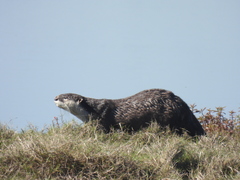
The African clawless otter (Lutra capensis), also known as the Cape clawless otter or groot otter, is the second-largest freshwater otter species. It inhabits permanent water bodies in savannah and lowland forest areas through most of sub-Saharan Africa. It is characterised by partly webbed and clawless feet, from which their name is derived. The word 'aonyx' means clawless, derived from the prefix a- ("without") and onyx ("claw/hoof").

Aonyx capensis is a member of the weasel family (Mustelidae) and of the order Carnivora. The earliest known species of otter, Potamotherium valetoni, occurred in the upper Oligocene of Europe: A. capensis first appears in the fossil record during the Pleistocene. Aonyx is closely related to the extinct giant Sardinian otter, Megalenhydris.

Until recently the Congo clawless otter was considered a subspecies as well, but recent authorities treat it as a separate species A. congicus. Wikipedia →

Global Distribution

Parks Where Found

# Park Country Daily sighting probability
1 Table Mountain National Park 🇿🇦 South Africa
~10%
2 Garden Route National Park 🇿🇦 South Africa
~10%
3 Addo Elephant National Park 🇿🇦 South Africa
~10%
4 Kruger National Park 🇿🇦 South Africa
~10%

Cities Where Found

# City Country Daily sighting probability
1 Pretoria 🇿🇦 South Africa
~10%
2 Cape Town 🇿🇦 South Africa
~10%

Zoos & Centres Where Found

# Zoo / Centre Country
1 Terra Natura Murcia 🇪🇸 Spain In captivity
2 Hartbeespoort Dam Snake and Animal Park 🇿🇦 South Africa In captivity
3 Zero Distance Aquarium Ise Sea Paradise 🇯🇵 Japan In captivity
4 Two Oceans Aquarium 🇿🇦 South Africa In captivity

Before you go

What are the chances of seeing an African Clawless Otter in Cape Town?

With luck

About 10% of wildlife watchers report an African Clawless Otter sighting in Cape Town on a given day, based on 45 verified sightings from GBIF citizen-science data. It is the 13th most-seen of the 29 mammals we can rate there. Over three days the chance rises to about 20%, and over a week to about 40%, if each day is a fresh chance.

When is the best time to see an African Clawless Otter in Cape Town?

December to September

In those months about 10% of wildlife watchers report an African Clawless Otter in Cape Town on a given day, against under 5% in October and November, the lowest months.

What time of day is best to see an African Clawless Otter?

Between 8 and 11 am

Across all the parks we cover, that three-hour window holds the most African Clawless Otter sightings with a recorded time, and about 9 in 10 of them come between 6 am and 6 pm: it is a daytime animal.

Is Cape Town the best place to see an African Clawless Otter?

Among the best

Of the 2 cities where we can rate African Clawless Otter sightings, Cape Town ranks 2nd at about 10%, level with the leaders once rounded. The best odds are in Pretoria (South Africa, about 10%).

Which relatives of the African Clawless Otter live in Cape Town?

Same order: Carnivora

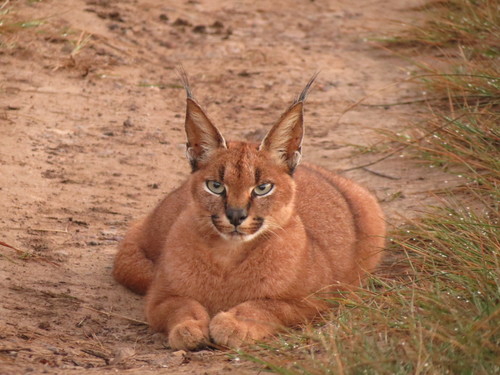
The closest relatives of the African Clawless Otter that you can see in Cape Town (order Carnivora, Carnivorans) are Afro-Australian Fur Seal (about 30%), Cape Gray Mongoose (about 10%) and Caracal (about 10%), with each one's daily chance of a sighting.

Where does the African Clawless Otter sighting chance come from?

GBIF citizen-science records

It is estimated from how often the African Clawless Otter is recorded against all the mammals logged in Cape Town (45 verified sightings), calibrated against known sighting rates. Figures are rounded to the nearest 10% because citizen-science data supports honest approximations, not decimals, and months with records from fewer than five people show "—". How it works.

← Back to Cape Town