Cape Golden Mole

Cape Golden Mole

Chrysochloris asiatica

Silhouette: T. Michael Keesey · PhyloPic

LCLeast ConcernNTVUENCR Endemic
Daily sighting probability ~10% · With luck
at Cape Town

In 3 days ~30% in a week ~50%

74 Verified sightings at Cape Town
137 In all 2 parks From 2019 to 2026
September Best month
☀️ Diurnal When it's spotted

About the Cape Golden Mole

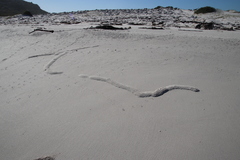
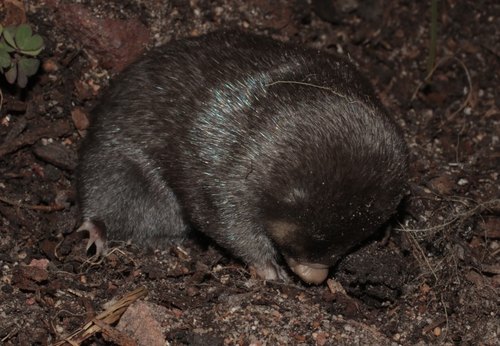
The Cape golden mole (Chrysochloris asiatica) is a small, insectivorous mammal of the family Chrysochloridae, the golden moles. The species is a solitary subterranean insectivore, confined to the coastal regions of the southwestern and southern Cape in South Africa. When foraging for small, soil invertebrates and small lizards, these golden moles excavate superficial burrows using their conical nose shield and highly modified forefeet. Females are smaller than males. Golden moles have very dense, soft, and silky coats. The coats are colored blackish to slaty-grey and brown to pale fawn. They have also been observed to venture onto sandy beaches, presumably to feed on amphipods and isopods occurring there.

Manyeleti Private Game Reserve - description of golden moles Archived 2025-02-23 at the Wayback Machine Wikipedia →

Global Distribution

Parks Where Found

# Park Country Daily sighting probability
1 Table Mountain National Park 🇿🇦 South Africa
~10%
2 Garden Route National Park 🇿🇦 South Africa
<5%

Cities Where Found

# City Country Daily sighting probability
1 Cape Town 🇿🇦 South Africa
~10%

Closest Relatives at Cape Town

No species of the same family or order lives in Cape Town, so these are its closest relatives here: other mammals.

Before you go

What are the chances of seeing a Cape Golden Mole in Cape Town?

With luck

About 10% of wildlife watchers report a Cape Golden Mole sighting in Cape Town on a given day, based on 74 verified sightings from GBIF citizen-science data. It is the 9th most-seen of the 29 mammals we can rate there. Over three days the chance rises to about 30%, and over a week to about 50%, if each day is a fresh chance.

When is the best time to see a Cape Golden Mole in Cape Town?

February to December

In those months about 10% of wildlife watchers report a Cape Golden Mole in Cape Town on a given day, against under 5% in January, the lowest month.

What time of day is best to see a Cape Golden Mole?

Between noon and 3 pm

Across all the parks we cover, that three-hour window holds the most Cape Golden Mole sightings with a recorded time, and about 9 in 10 of them come between 6 am and 6 pm: it is a daytime animal.

Where else can you see a Cape Golden Mole?

Only Cape Town, in our data

Cape Town is the only city on Wallace's Line with enough records to rate Cape Golden Mole sightings: about 10% of wildlife watchers there report one on a given day.

Where does the Cape Golden Mole sighting chance come from?

GBIF citizen-science records

It is estimated from how often the Cape Golden Mole is recorded against all the mammals logged in Cape Town (74 verified sightings), calibrated against known sighting rates. Figures are rounded to the nearest 10% because citizen-science data supports honest approximations, not decimals, and months with records from fewer than five people show "—". How it works.
← Back to Cape Town