Mediterranean Fruit Fly

Mediterranean Fruit Fly

Ceratitis capitata

Daily sighting probability <5% · Rare
at Cape Town

In 3 days ~10% in a week ~20%

7 Verified sightings at Cape Town
5 In 1 park From 2019 to 2026
February Best month
🌅 Crepuscular When it's spotted

About the Mediterranean Fruit Fly

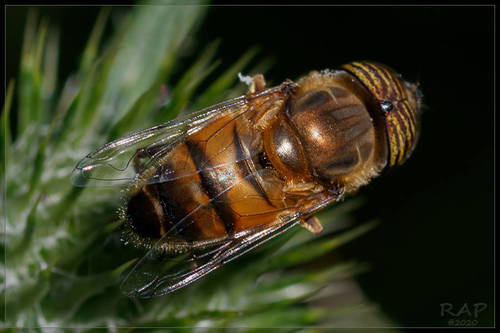
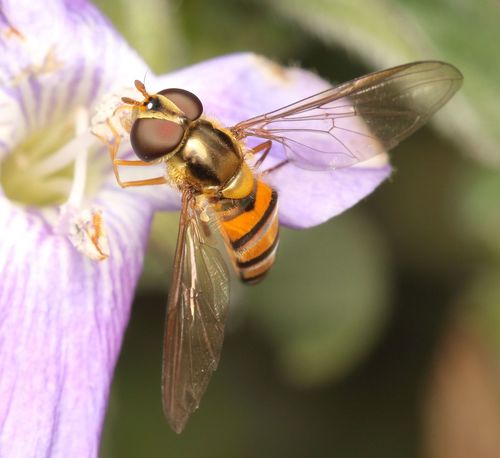
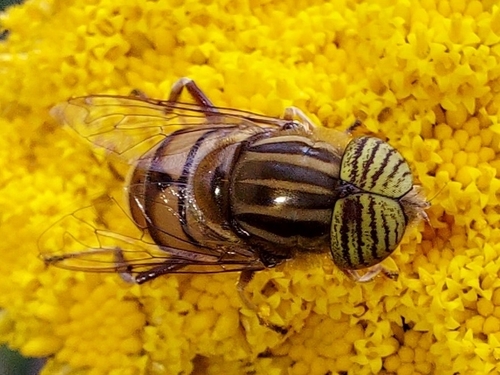
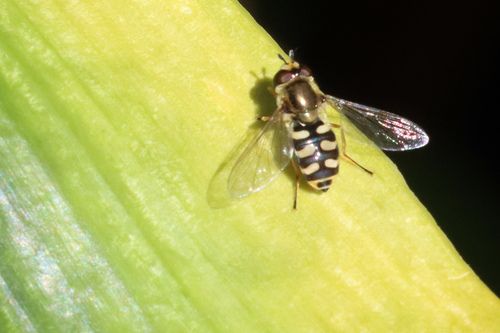
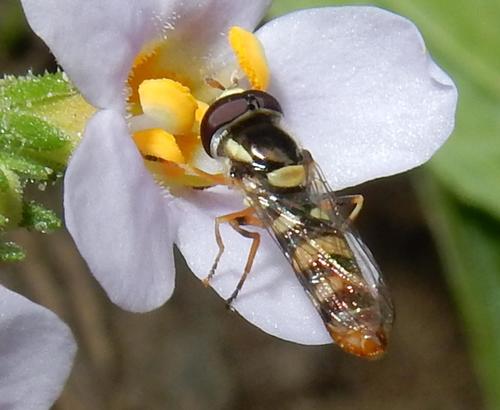
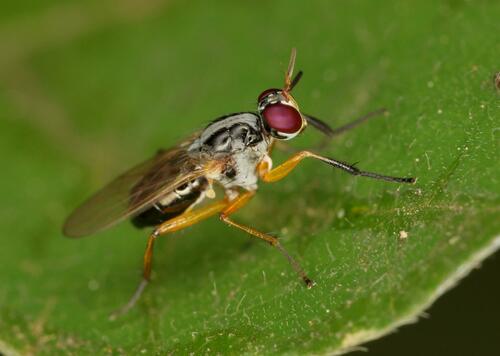
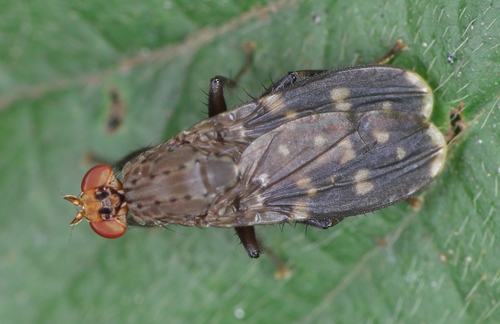
Ceratitis capitata, commonly known as the Mediterranean fruit fly or medfly, is a yellow-and-brown fly native to sub-Saharan Africa. It has no near relatives in the Western Hemisphere and is considered to be one of the most destructive fruit pests in the world. There have been occasional medfly infestations in California, Florida, and Texas that require extensive eradication efforts to prevent the fly from establishing itself in the United States.

C. capitata is the most economically important fruit fly species because of both its ability to survive cooler climates more successfully than most other fruit fly species and its ability to inhabit more than 200 tropical fruits and vegetables to which it causes severe destruction and degradation. The practices that are used to eradicate the medfly after its introduction into a new environment can be extremely difficult and expensive, but infestation of C. capitata lowers crop yields and induces costly sorting processes for fresh fruits and vegetables.

C. capitata eggs are characterized by their curved shape, shiny white color, and smooth features. Each egg is approximately 1 millimetre (5⁄128 in) in length... Wikipedia →

Global Distribution

Parks Where Found

# Park Country Daily sighting probability
1 Sierra Nevada National Park 🇪🇸 Spain
~10%

More parks will be added in future updates.

Cities Where Found

# City Country Daily sighting probability
1 Mendoza 🇦🇷 Argentina
~20%
2 Valencia 🇪🇸 Spain
~10%
3 Los Angeles 🇺🇸 United States
~10%
4 Santiago 🇨🇱 Chile
~10%
5 Athens 🇬🇷 Greece
~10%
6 Lisbon 🇵🇹 Portugal
~10%
7 Tel Aviv 🇮🇱 Israel
~10%
8 Perth 🇦🇺 Australia
<5%
9 Porto 🇵🇹 Portugal
<5%
10 Madrid 🇪🇸 Spain
<5%

Before you go

What are the chances of seeing a Mediterranean Fruit Fly in Cape Town?

Rare

Under 5% of wildlife watchers report a Mediterranean Fruit Fly sighting in Cape Town on a given day, based on 7 verified sightings from GBIF citizen-science data. It is the 243rd most-seen of the 311 insects we can rate there. Over three days the chance rises to about 10%, and over a week to about 20%, if each day is a fresh chance.

When is the best time to see a Mediterranean Fruit Fly in Cape Town?

February

In that month about 10% of wildlife watchers report a Mediterranean Fruit Fly in Cape Town on a given day, against under 5% in March to January, the lowest months. That is one of Cape Town's driest months, with about 15 mm of rain against 140 mm in June.

What time of day is best to see a Mediterranean Fruit Fly?

Between 5 and 8 pm

Across all the parks we cover, that three-hour window holds the most Mediterranean Fruit Fly sightings with a recorded time, and about 6 in 10 of them come between 6 am and 6 pm: it is most active around dawn and dusk.

Is Cape Town the best place to see a Mediterranean Fruit Fly?

17th of 18

Of the 18 cities where we can rate Mediterranean Fruit Fly sightings, Cape Town ranks 17th at under 5%. The best odds are in Mendoza (Argentina, about 20%), Valencia (Spain, about 10%) and Los Angeles (United States, about 10%).

Where does the Mediterranean Fruit Fly sighting chance come from?

GBIF citizen-science records

It is estimated from how often the Mediterranean Fruit Fly is recorded against all the insects logged in Cape Town (7 verified sightings), calibrated against known sighting rates. Figures are rounded to the nearest 10% because citizen-science data supports honest approximations, not decimals, and months with records from fewer than five people show "—". How it works.

← Back to Cape Town