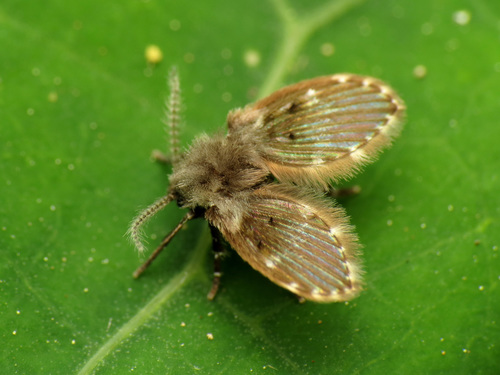
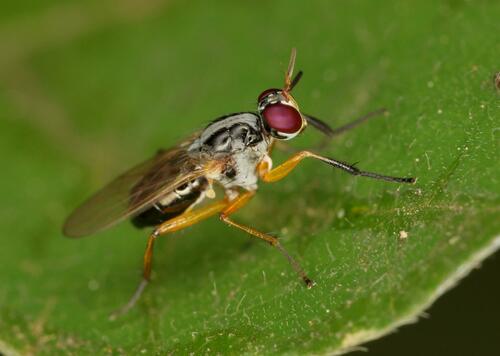
Oriental Latrine Fly

Oriental Latrine Fly

Chrysomya megacephala

Daily sighting probability <5% · Rare
at Cape Town

In 3 days ~10% in a week ~20%

5 Verified sightings at Cape Town
11 In all 2 parks From 2019 to 2026
June Best month
☀️ Diurnal When it's spotted

About the Oriental Latrine Fly

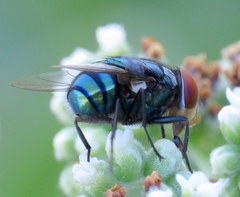
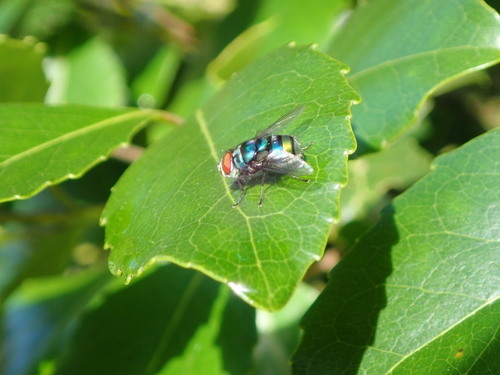
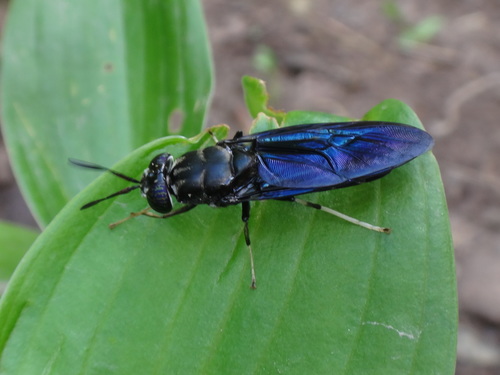
Chrysomya megacephala, more commonly known as the oriental latrine fly or oriental blue fly, is a member of the family Calliphoridae (blowflies). It is a warm-weather fly with a greenish-blue metallic box-like body. The fly infests corpses soon after death, making it important to forensic science. This fly is implicated in some public health issues; it can be the cause of myiasis, and also infects fish and livestock.

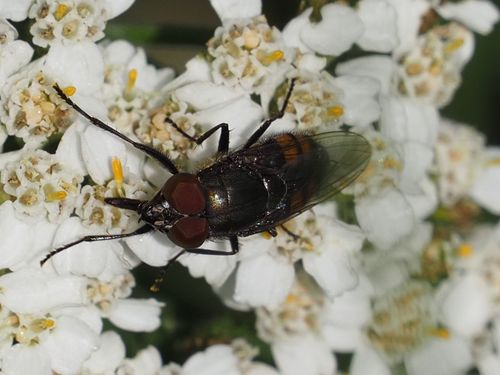
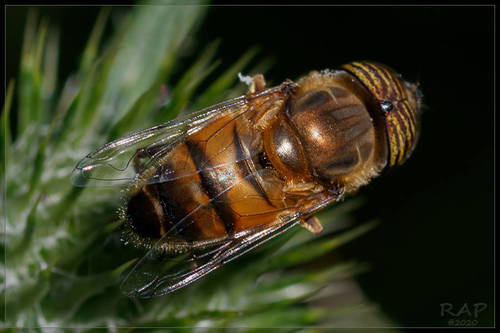
Chrysomya megacephala's eggs are "oval with one flat face and another convex". Adult flies reflect a metallic blue-green color on their thorax and abdomen and have yellow gena, or cheeks. Larvae vary in size according to instar and are shaped more thickly towards the rear. C. megacephala have large red eyes, those of males being close together, and those of females farther apart. The cercus of the male is longer than that of the female.

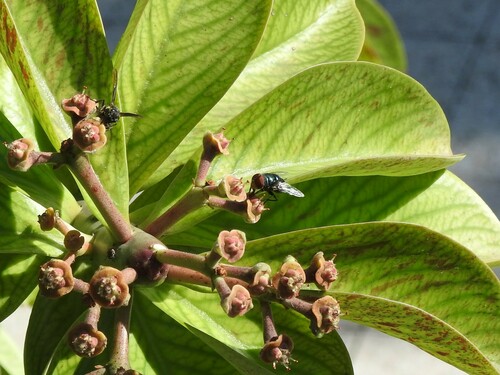
Chrysomya megacephala has a wide geographical distribution. It is most common in the Oriental and Australasian realms. It is also found in Japan and the Palearctic realm. The range of C. megacephala has grown since the 1970s, with the species expanding into New Zealand and Africa, along with... Wikipedia →

Global Distribution

Parks Where Found

# Park Country Daily sighting probability
1 Everglades National Park 🇺🇸 United States
<5%
2 Galápagos Islands 🇪🇨 Ecuador
<5%

Cities Where Found

# City Country Daily sighting probability
1 Guiyang 🇨🇳 China
~30%
2 Tel Aviv 🇮🇱 Israel
~20%
3 Prayagraj 🇮🇳 India
~10%
4 Zhuhai [Macau] 🇨🇳 China
~10%
5 Montevideo 🇺🇾 Uruguay
~10%
6 Pune 🇮🇳 India
~10%
7 Manila 🇵🇭 Philippines
~10%
8 Buenos Aires 🇦🇷 Argentina
~10%
9 Chennai 🇮🇳 India
~10%
10 Mumbai 🇮🇳 India
~10%

Before you go

What are the chances of seeing an Oriental Latrine Fly in Cape Town?

Rare

Under 5% of wildlife watchers report an Oriental Latrine Fly sighting in Cape Town on a given day, based on 5 verified sightings from GBIF citizen-science data. It is the 291st most-seen of the 311 insects we can rate there. Over three days the chance rises to about 10%, and over a week to about 20%, if each day is a fresh chance.

When is the best time to see an Oriental Latrine Fly in Cape Town?

Any time of year

In every month with enough records, under 5% of wildlife watchers report an Oriental Latrine Fly in Cape Town on a given day, so our monthly data shows no clear season.

What time of day is best to see an Oriental Latrine Fly?

Between 8 and 11 am

Across all the parks we cover, that three-hour window holds the most Oriental Latrine Fly sightings with a recorded time, and about 9 in 10 of them come between 6 am and 6 pm: it is a daytime animal.

Is Cape Town the best place to see an Oriental Latrine Fly?

28th of 31

Of the 31 cities where we can rate Oriental Latrine Fly sightings, Cape Town ranks 28th at under 5%. The best odds are in Guiyang (China, about 30%), Tel Aviv (Israel, about 20%) and Prayagraj (India, about 10%).

Where does the Oriental Latrine Fly sighting chance come from?

GBIF citizen-science records

It is estimated from how often the Oriental Latrine Fly is recorded against all the insects logged in Cape Town (5 verified sightings), calibrated against known sighting rates. Figures are rounded to the nearest 10% because citizen-science data supports honest approximations, not decimals, and months with records from fewer than five people show "—". How it works.

← Back to Cape Town