
Sand Toad

Sand Toad

Vandijkophrynus angusticeps

Silhouette: Michael Scroggie, from original photograph by Gary M. Stolz, USFWS (original photograph in public domain). · PhyloPic

LCLeast ConcernNTVUENCR Endemic
Daily sighting probability ~10% · With luck
at Cape Town

In 3 days ~20% in a week ~50%

121 Verified sightings at Cape Town
169 In 1 park From 2019 to 2026
July Best month
☀️🌙 Day & Night When it's spotted

About the Sand Toad

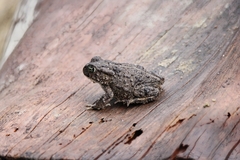
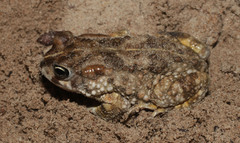
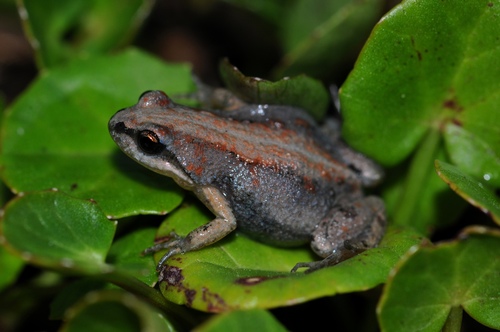
The sand toad, Cape sand toad, common Cape toad, or narrow-headed toad (Vandijkophrynus angusticeps) is a species of toad in the family Bufonidae (true toads). It is endemic to South Africa and found in southwestern and southern part of Western Cape Province to extreme southwestern Eastern Cape Province, from Nieuwoudtville in the west to Humansdorp in the east, along the coastal flats and Cape Fold Mountains from the sea level to 1,500 m (4,900 ft) asl.

Sand toads are morphologically similar to other Vandijkophrynus species, but can usually be distinguished by their unspotted white ventrum and bright yellow flush over the dorsal surfaces of their feet. Sand toads may emerge from their refuges to breed in winter, May–September, when heavy rains have saturated the soil and created pools lasting for many weeks. They breed in temporary depressions in sandy areas, and also in clay soils. Males call on exposed sites near the water's edge. Testes are unusually large, suggesting intense male-male competition.

Sand toads inhabit fynbos heathland. They can sometimes also survive in agricultural areas. The species is threatened... Wikipedia →

Sounds

Recording0:09

South Africa · 2021

© Oliver Angus · iNaturalist · CC BY-NC 4.0

Recording0:16

South Africa · 2020

Marius Burger · iNaturalist · CC0

Global Distribution

Parks Where Found

# Park Country Daily sighting probability
1 Table Mountain National Park 🇿🇦 South Africa
~10%

More parks will be added in future updates.

Cities Where Found

# City Country Daily sighting probability
1 Cape Town 🇿🇦 South Africa
~10%

Before you go

What are the chances of seeing a Sand Toad in Cape Town?

With luck

About 10% of wildlife watchers report a Sand Toad sighting in Cape Town on a given day, based on 121 verified sightings from GBIF citizen-science data. It is the 8th most-seen of the 13 amphibians we can rate there. Over three days the chance rises to about 20%, and over a week to about 50%, if each day is a fresh chance.

When is the best time to see a Sand Toad in Cape Town?

July and August

In those months about 20% of wildlife watchers report a Sand Toad in Cape Town on a given day, against under 5% in November to March, the lowest months. Those are among Cape Town's wettest months, with about 120 mm of rain a month against 15 mm in February.

What time of day is best to see a Sand Toad?

Between 7 and 10 pm

Across all the parks we cover, that three-hour window holds the most Sand Toad sightings with a recorded time, and about 6 in 10 of them come between 6 am and 6 pm: it is seen both by day and at night.

Where else can you see a Sand Toad?

Only Cape Town, in our data

Cape Town is the only city on Wallace's Line with enough records to rate Sand Toad sightings: about 10% of wildlife watchers there report one on a given day.

Where does the Sand Toad sighting chance come from?

GBIF citizen-science records

It is estimated from how often the Sand Toad is recorded against all the amphibians logged in Cape Town (121 verified sightings), calibrated against known sighting rates. Figures are rounded to the nearest 10% because citizen-science data supports honest approximations, not decimals, and months with records from fewer than five people show "—". How it works.

← Back to Cape Town