Common Leopard

Common Leopard

Phalanta phalantha

Daily sighting probability ~20% · Possible
at Chandigarh

In 3 days ~50% in a week ~80%

7 Verified sightings at Chandigarh
132 In all 6 parks From 2019 to 2026
November Best month
☀️ Diurnal When it's spotted

About the Common Leopard

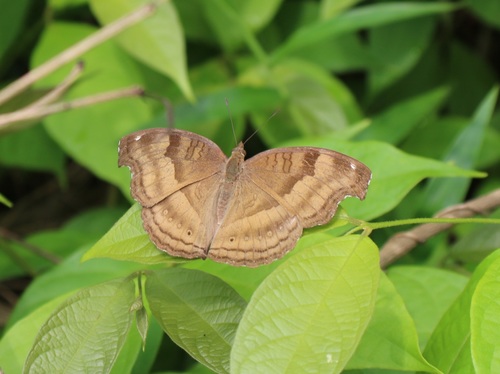
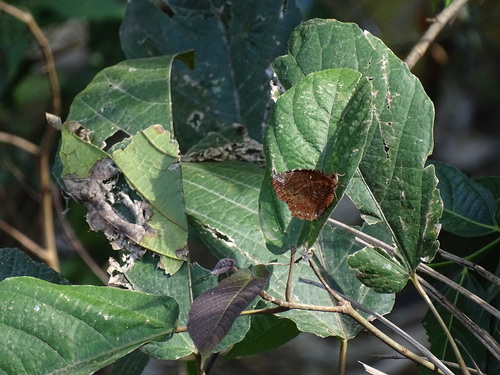
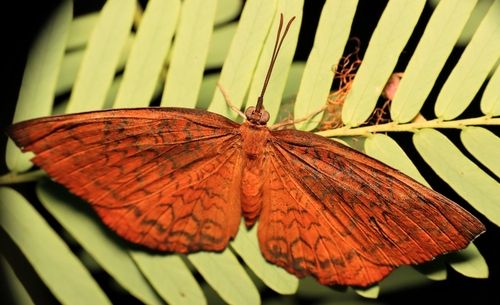
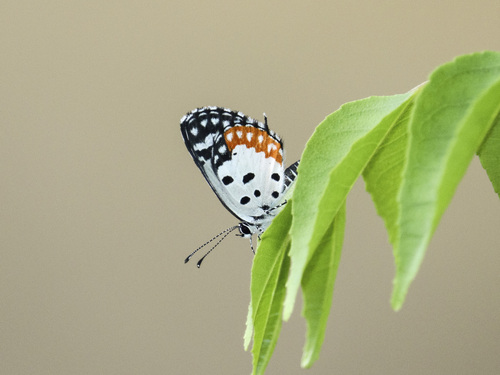
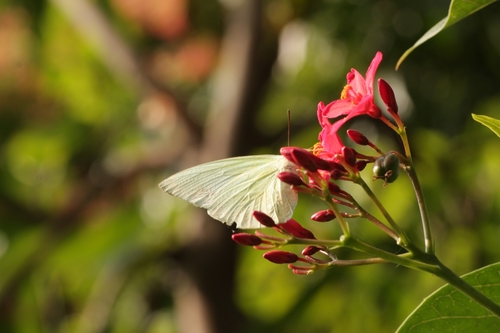
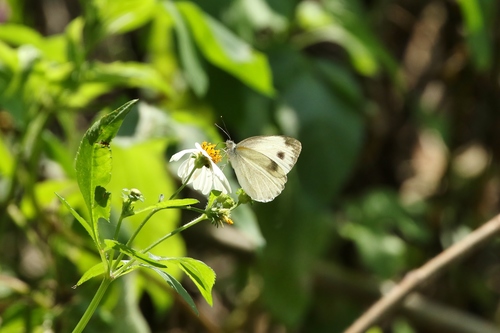
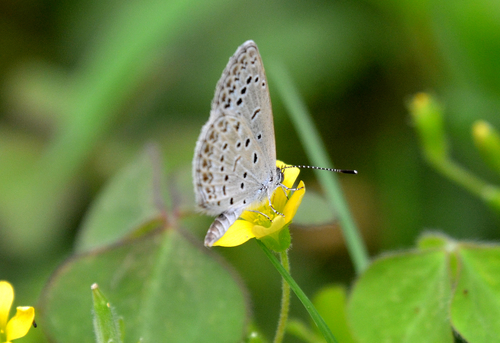
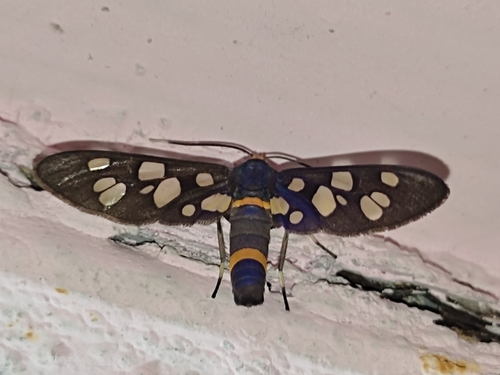
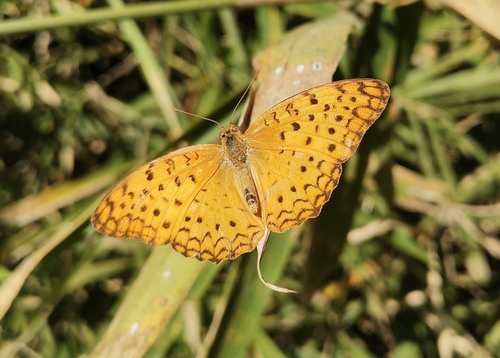
Phalanta phalantha, the common leopard or spotted rustic, is a sun-loving butterfly of the nymphalid or brush-footed butterfly family. The common leopard is a medium-sized butterfly with a wingspan of 50–55 mm with a tawny colour and marked with black spots. The underside of the butterfly is more glossy than the upper and both the male and female are similar looking. A more prominent purple gloss on the underside is found in the dry-season form of this butterfly.

Male aud female. Upperside bright yellowish-ochreous. Forewing with two black short slender sinuous bars across middle of the cell, a similar darker pair at its end, followed beyond by a short broad sinuous streak from the costa to the lower radial, and is then succeeded below the cell by an inwardly-oblique series of four irregular-shaped spots, and beyond by a medial-discal transverse row of similarly disposed narrow spots, an outer-discal row of round spots, then an inner submarginal sinuous line, confluent with an outer straight line, and a marginal row of triangular spots. Hindwing with a slightly-defined slender black lunule within the cell, two before its end, and two also above it; a transverse inner... Wikipedia →

Global Distribution

Parks Where Found

# Park Country Daily sighting probability
1 Mudumalai National Park 🇮🇳 India
~20%
2 Doi Inthanon National Park 🇹🇭 Thailand
~20%
3 iSimangaliso Wetland Park 🇿🇦 South Africa
~10%
4 Pilanesberg National Park 🇿🇦 South Africa
~10%
5 Kruger National Park 🇿🇦 South Africa
~10%
6 Kaeng Krachan National Park 🇹🇭 Thailand
~10%

Cities Where Found

# City Country Daily sighting probability
1 Prayagraj 🇮🇳 India
~30%
2 Accra 🇬🇭 Ghana
~30%
3 Jabalpur 🇮🇳 India
~30%
4 Thrissur 🇮🇳 India
~20%
5 Kanpur 🇮🇳 India
~20%
6 Chandigarh 🇮🇳 India
~20%
7 Dehradun 🇮🇳 India
~20%
8 Lusaka 🇿🇲 Zambia
~20%
9 Chennai 🇮🇳 India
~20%
10 Chattogram 🇧🇩 Bangladesh
~20%

Before you go

What are the chances of seeing a Common Leopard in Chandigarh?

Possible

About 20% of wildlife watchers report a Common Leopard sighting in Chandigarh on a given day, based on 7 verified sightings from GBIF citizen-science data. It is the 21st most-seen of the 26 insects we can rate there. Over three days the chance rises to about 50%, and over a week to about 80%, if each day is a fresh chance.

When is the best time to see a Common Leopard in Chandigarh?

November

In that month about 60% of wildlife watchers report a Common Leopard in Chandigarh on a given day, against under 5% in March–July, September–October and December–January, the lowest months. That is one of Chandigarh's driest months, with about 5 mm of rain against 280 mm in July.

What time of day is best to see a Common Leopard?

Between 11 am and 2 pm

Across all the parks we cover, that three-hour window holds the most Common Leopard sightings with a recorded time, and nearly all of them come between 6 am and 6 pm: it is a daytime animal.

Is Chandigarh the best place to see a Common Leopard?

6th of 35

Of the 35 cities where we can rate Common Leopard sightings, Chandigarh ranks 6th at about 20%. The best odds are in Prayagraj (India, about 30%), Accra (Ghana, about 30%) and Jabalpur (India, about 30%).

Which relatives of the Common Leopard live in Chandigarh?

Same family: Nymphalidae

The closest relatives of the Common Leopard that you can see in Chandigarh (family Nymphalidae, Brush-footed Butterflies) are Plain Tiger Butterfly (about 30%), Great Eggfly (about 30%) and Chocolate Pansy (about 30%), with each one's daily chance of a sighting.

Where does the Common Leopard sighting chance come from?

GBIF citizen-science records

It is estimated from how often the Common Leopard is recorded against all the insects logged in Chandigarh (7 verified sightings), calibrated against known sighting rates. Figures are rounded to the nearest 10% because citizen-science data supports honest approximations, not decimals, and months with records from fewer than five people show "—". How it works.

← Back to Chandigarh