Common Five-Ring

Common Five-Ring

Ypthima baldus

Daily sighting probability ~30% · Possible
at Chattogram

In 3 days ~60% in a week ~90%

9 Verified sightings at Chattogram
36 In all 4 parks From 2019 to 2026
August Best month
☀️ Diurnal When it's spotted

About the Common Five-Ring

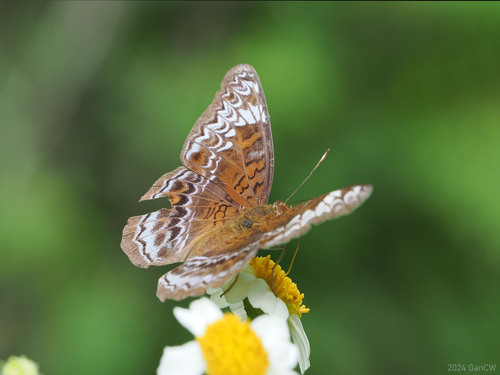
Ypthima baldus, the common five-ring, is a species of butterfly in the subfamily Satyrinae found in Asia. Male: Upperside brown, both forewing and hindwing with terminal margins much darker, and generally with more or less distinct subbasal and discal dark bands. Forewing with a large, slightly oblique, oval, bi-pupilled, yellow-ringed black, pre-apical ocellus. Hindwing with two postdiscal, round, uni-pupilled, similar but smaller ocelli, and very often one or two minute tornal ocelli also.

Underside similar to the underside in Y. philomela but the ochraceous-white ground colour paler, thin transverse brown striae coarser, the ocelli on the hindwing more distinctly arranged in an echelon, two tornal, two median, and two preapical, and on both forewing and hindwing more or less distinctly defined, subbasal, discal and subterminal brown transverse bands.

Female: Differs on the upperside in having the area surrounding or bordering the ocelli on both forewing and hindwing paler, closely irrorated (sprinkled) with brown striae, the discal transverse band generally clearly defined, and very often both the tornal, and at least one of the... Wikipedia →

Global Distribution

Parks Where Found

# Park Country Daily sighting probability
1 Namdapha National Park 🇮🇳 India
~40%
2 Periyar National Park 🇮🇳 India
~30%
3 Nagarhole National Park 🇮🇳 India
~20%
4 Taman Negara National Park 🇲🇾 Malaysia
~20%

Cities Where Found

# City Country Daily sighting probability
1 Guwahati 🇮🇳 India
~30%
2 Chattogram 🇧🇩 Bangladesh
~30%
3 Dehradun 🇮🇳 India
~20%
4 Thiruvananthapuram 🇮🇳 India
~20%
5 Tuen Mun 🇨🇳 China
~20%
6 Hong Kong 🇨🇳 China
~20%
7 Pune 🇮🇳 India
~20%
8 Kozhikode 🇮🇳 India
~20%
9 Singapore 🇸🇬 Singapore
~10%
10 Jakarta 🇮🇩 Indonesia
~10%

Before you go

What are the chances of seeing a Common Five-Ring in Chattogram?

Possible

About 30% of wildlife watchers report a Common Five-Ring sighting in Chattogram on a given day, based on 9 verified sightings from GBIF citizen-science data. It is the most-seen of the 35 insects we can rate there. Over three days the chance rises to about 60%, and over a week to about 90%, if each day is a fresh chance.

When is the best time to see a Common Five-Ring in Chattogram?

May and July–August

In those months about 40% of wildlife watchers report a Common Five-Ring in Chattogram on a given day, against under 5% in February–March, June, September–October and December, the lowest months. Those are among Chattogram's wettest months, with about 540 mm of rain a month against 10 mm in January.

What time of day is best to see a Common Five-Ring?

Between 9 am and noon

Across all the parks we cover, that three-hour window holds the most Common Five-Ring sightings with a recorded time, and nearly all of them come between 6 am and 6 pm: it is a daytime animal.

Is Chattogram the best place to see a Common Five-Ring?

Among the best

Of the 16 cities where we can rate Common Five-Ring sightings, Chattogram ranks 2nd at about 30%, level with the leaders once rounded. The best odds are in Guwahati (India, about 30%).

Which relatives of the Common Five-Ring live in Chattogram?

Same family: Nymphalidae

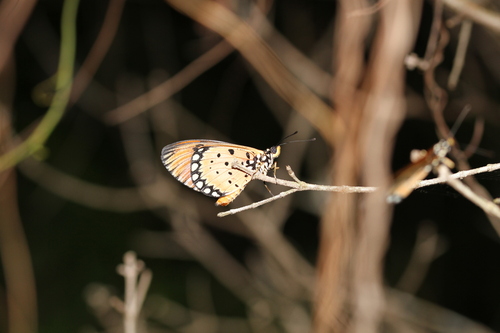
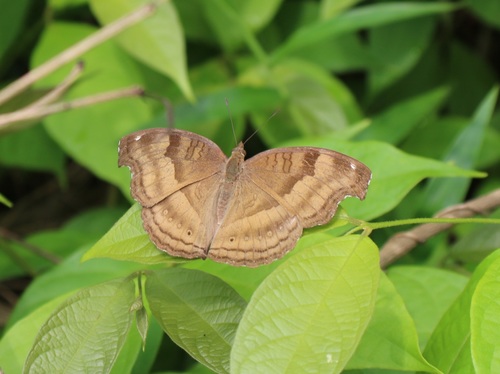
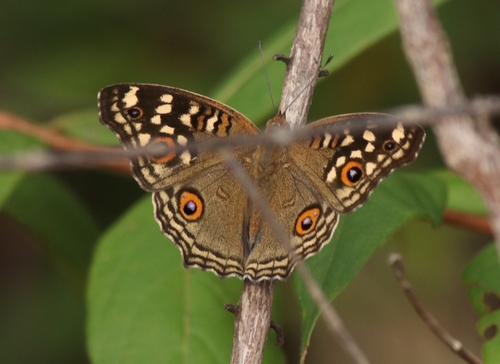
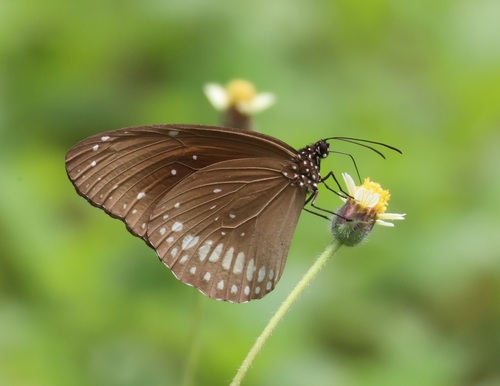
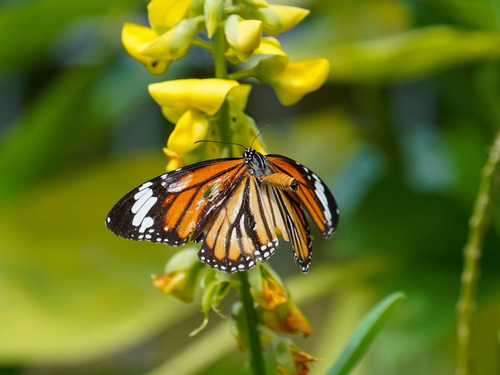
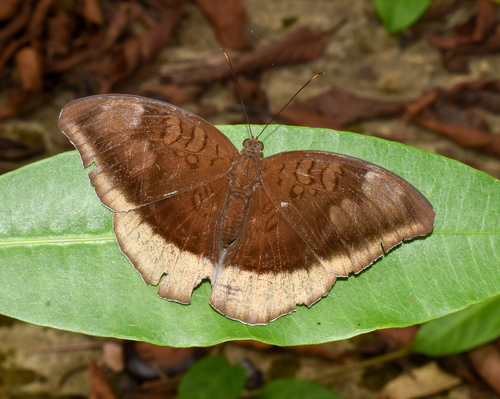
The closest relatives of the Common Five-Ring that you can see in Chattogram (family Nymphalidae, Brush-footed Butterflies) are Knight (about 30%), Tawny Coster (about 20%) and Chocolate Pansy (about 20%), with each one's daily chance of a sighting.

Where does the Common Five-Ring sighting chance come from?

GBIF citizen-science records

It is estimated from how often the Common Five-Ring is recorded against all the insects logged in Chattogram (9 verified sightings), calibrated against known sighting rates. Figures are rounded to the nearest 10% because citizen-science data supports honest approximations, not decimals, and months with records from fewer than five people show "—". How it works.

← Back to Chattogram