Red Mason Bee
Daily sighting probability ~10% · With luck
at Copenhagen

In 3 days ~20% in a week ~50%

46 Verified sightings at Copenhagen
47 In all 3 parks From 2019 to 2026
May Best month
☀️ Diurnal When it's spotted

About the Red Mason Bee

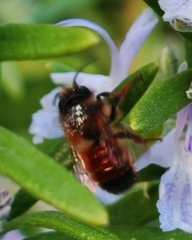
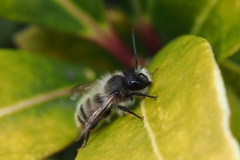
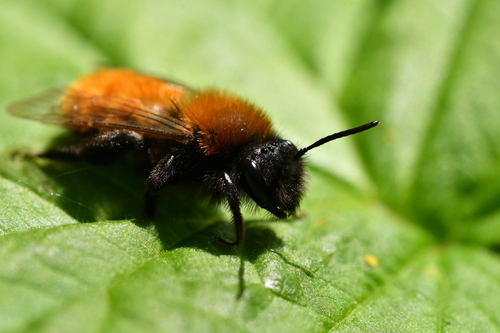
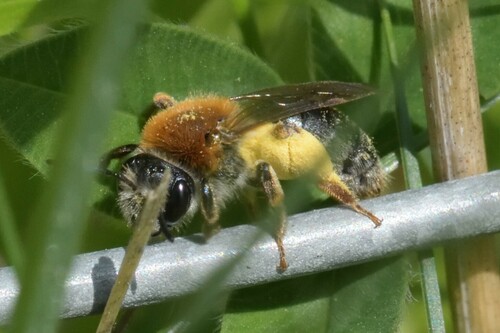
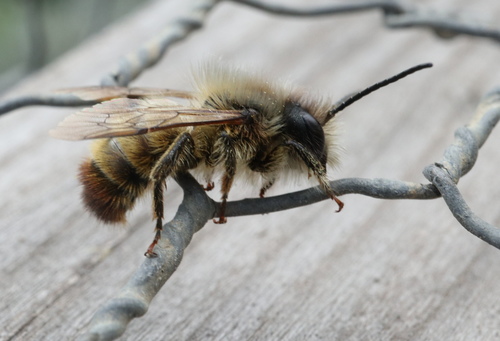
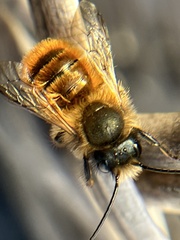
Osmia bicornis (synonym Osmia rufa) is a species of mason bee, and is known as the red mason bee due to its covering of dense gingery hair. It is a solitary bee that nests in holes or stems and is polylectic, meaning it forages pollen from various different flowering plants. These bees can be seen aggregating together and nests in preexisting hollows, choosing not to excavate their own. These bees are not aggressive; they will only sting if handled very roughly and are safe to be closely observed by children. Females only mate once, usually with closely related males. Further, females can determine the sex ratio of their offspring based on their body size, where larger females will invest more in diploid females eggs than small bees. These bees also have trichromatic colour vision and are important pollinators in agriculture.

This species is part of the order Hymenoptera, which consists of bees, wasps, ants, and sawflies, and a member of the family Megachilidae, which mostly consists of solitary bees, and is among 11 species of Osmia identified in Britain. O. bicornis is the current scientific name for this bee, although it was formerly known as O. rufa... Wikipedia →
Global Distribution

Parks Where Found

# Park Country Daily sighting probability
1 Bavarian Forest National Park 🇩🇪 Germany
~10%
2 Snowdonia National Park 🇬🇧 United Kingdom
~10%
3 Wadden Sea National Park 🇩🇪 Germany
~10%

Cities Where Found

# City Country Daily sighting probability
1 Birmingham 🇬🇧 United Kingdom
~20%
2 Warsaw 🇵🇱 Poland
~20%
3 Liverpool 🇬🇧 United Kingdom
~20%
4 London 🇬🇧 United Kingdom
~10%
5 Manchester 🇬🇧 United Kingdom
~10%
6 Berlin 🇩🇪 Germany
~10%
7 Helsinki 🇫🇮 Finland
~10%
8 Hamburg 🇩🇪 Germany
~10%
9 Copenhagen 🇩🇰 Denmark
~10%
10 Cologne 🇩🇪 Germany
~10%

Before you go

What are the chances of seeing a Red Mason Bee in Copenhagen?

With luck

About 10% of wildlife watchers report a Red Mason Bee sighting in Copenhagen on a given day, based on 46 verified sightings from GBIF citizen-science data. It is the 80th most-seen of the 476 insects we can rate there. Over three days the chance rises to about 20%, and over a week to about 50%, if each day is a fresh chance.

When is the best time to see a Red Mason Bee in Copenhagen?

April and May

In those months about 20% of wildlife watchers report a Red Mason Bee in Copenhagen on a given day, against under 5% in July to February, the lowest months.

What time of day is best to see a Red Mason Bee?

Between 10 am and 1 pm

Across all the parks we cover, that three-hour window holds the most Red Mason Bee sightings with a recorded time, and about 8 in 10 of them come between 6 am and 6 pm: it is a daytime animal.

Is Copenhagen the best place to see a Red Mason Bee?

9th of 28

Of the 28 cities where we can rate Red Mason Bee sightings, Copenhagen ranks 9th at about 10%. The best odds are in Birmingham (United Kingdom, about 20%), Warsaw (Poland, about 20%) and Liverpool (United Kingdom, about 20%).

Where does the Red Mason Bee sighting chance come from?

GBIF citizen-science records

It is estimated from how often the Red Mason Bee is recorded against all the insects logged in Copenhagen (46 verified sightings), calibrated against known sighting rates. Figures are rounded to the nearest 10% because citizen-science data supports honest approximations, not decimals, and months with records from fewer than five people show "—". How it works.

← Back to Copenhagen