Rough-Haired Lagria Beetle

Rough-Haired Lagria Beetle

Lagria hirta

Daily sighting probability ~10% · With luck
at Copenhagen

In 3 days ~10% in a week ~30%

16 Verified sightings at Copenhagen
25 In all 3 parks From 2019 to 2026
July Best month
☀️🌙 Day & Night When it's spotted

About the Rough-Haired Lagria Beetle

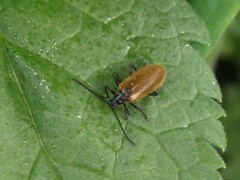
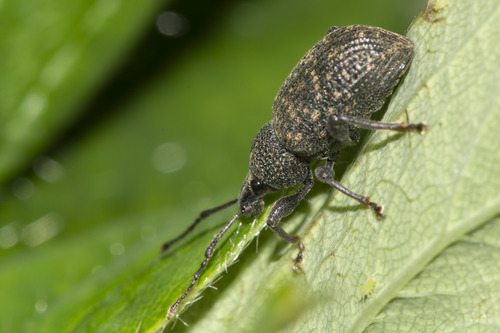
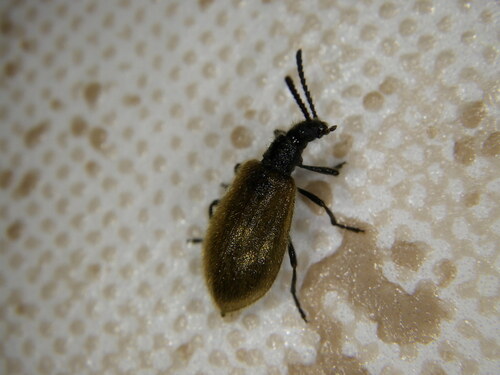
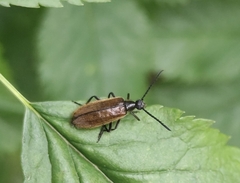
Lagria hirta is a species of beetle in the family Tenebrionidae. The species name hirta comes from the Latin hirtus meaning rough hair or rough wool, referring to the coarse, fuzzy appearance of the beetle. This species is present in Europe, in North Africa (Algeria, Morocco), in Russia (Western and Eastern Siberia), in Israel, Turkey, Iran, Iraq, Paraguay, Kazakhstan, Turkmenistan, Uzbekistan and Tajikistan.

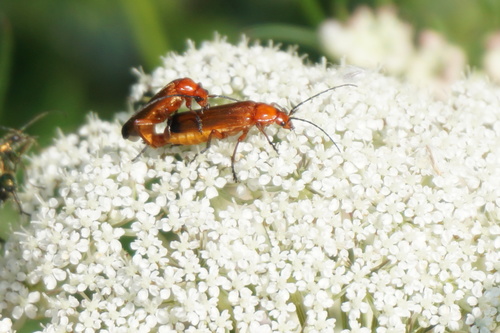
L. hirta prefers areas with sandy soils. It can be found in open woods, deciduous forests, forest clearings, forest edges, grasslands, and wet meadows, but also in dry valleys and wet areas. Lagria hirta can reach a length of 7–8 millimetres (0.28–0.31 in). They have a soft and elongated body, which can be brown to black in colour, large and round eyes, and black antennae and legs. Antennae are composed of eleven segments. The relatively elongated elytra are yellowish-brown and covered by dense fine hairs. The rest of the body is also hairy, but they are less clearly visible.

The females have a wider abdomen and longer elytra. The males, in addition to their slimmer body, are distinguished from the females by... Wikipedia →
Global Distribution

Parks Where Found

# Park Country Daily sighting probability
1 Bavarian Forest National Park 🇩🇪 Germany
~10%
2 Cévennes National Park 🇫🇷 France
<5%
3 Wadden Sea National Park 🇩🇪 Germany
<5%

Cities Where Found

# City Country Daily sighting probability
1 Liverpool 🇬🇧 United Kingdom
~10%
2 Dublin 🇮🇪 Ireland
~10%
3 Manchester 🇬🇧 United Kingdom
~10%
4 Athens 🇬🇷 Greece
~10%
5 Leeds 🇬🇧 United Kingdom
~10%
6 Birmingham 🇬🇧 United Kingdom
~10%
7 London 🇬🇧 United Kingdom
~10%
8 Stockholm 🇸🇪 Sweden
~10%
9 Yekaterinburg 🇷🇺 Russia
~10%
10 Copenhagen 🇩🇰 Denmark
~10%

Before you go

What are the chances of seeing a Rough-Haired Lagria Beetle in Copenhagen?

With luck

About 10% of wildlife watchers report a Rough-Haired Lagria Beetle sighting in Copenhagen on a given day, based on 16 verified sightings from GBIF citizen-science data. It is the 193rd most-seen of the 476 insects we can rate there. Over three days the chance rises to about 10%, and over a week to about 30%, if each day is a fresh chance.

When is the best time to see a Rough-Haired Lagria Beetle in Copenhagen?

July and August

In those months about 10% of wildlife watchers report a Rough-Haired Lagria Beetle in Copenhagen on a given day, against under 5% in September to June, the lowest months.

What time of day is best to see a Rough-Haired Lagria Beetle?

Between 10 pm and 1 am

Across all the parks we cover, that three-hour window holds the most Rough-Haired Lagria Beetle sightings with a recorded time, and about 6 in 10 of them come between 6 pm and 6 am: it is seen both by day and at night.

Is Copenhagen the best place to see a Rough-Haired Lagria Beetle?

Among the best

Of the 20 cities where we can rate Rough-Haired Lagria Beetle sightings, Copenhagen ranks 10th at about 10%, level with the leaders once rounded. The best odds are in Liverpool (United Kingdom, about 10%), Dublin (Ireland, about 10%) and Manchester (United Kingdom, about 10%).

Which relatives of the Rough-Haired Lagria Beetle live in Copenhagen?

Same order: Coleoptera

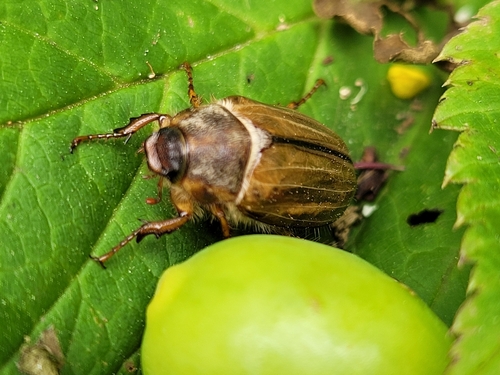
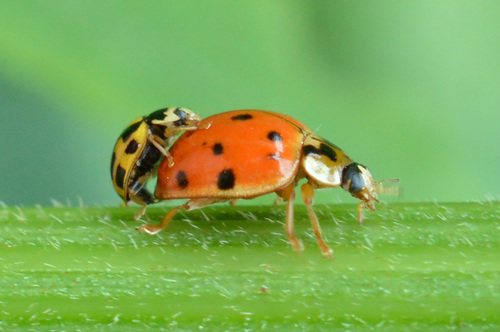
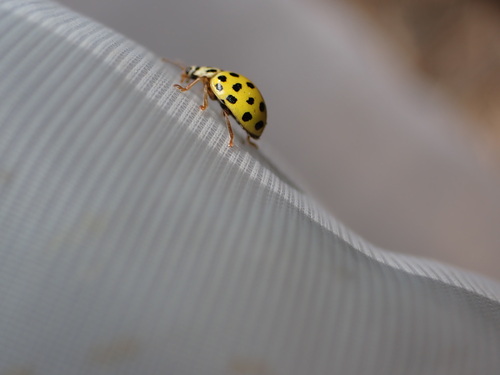
The closest relatives of the Rough-Haired Lagria Beetle that you can see in Copenhagen (order Coleoptera, Beetles) are Asian Lady Beetle (about 40%), Seven-Spotted Lady Beetle (about 30%) and Summer Chafer (about 20%), with each one's daily chance of a sighting.

Where does the Rough-Haired Lagria Beetle sighting chance come from?

GBIF citizen-science records

It is estimated from how often the Rough-Haired Lagria Beetle is recorded against all the insects logged in Copenhagen (16 verified sightings), calibrated against known sighting rates. Figures are rounded to the nearest 10% because citizen-science data supports honest approximations, not decimals, and months with records from fewer than five people show "—". How it works.

← Back to Copenhagen