Coconut Rhinoceros Beetle

Coconut Rhinoceros Beetle

Oryctes rhinoceros

Daily sighting probability ~40% · Likely
at Denpasar

In 3 days ~70% in a week >90%

42 Verified sightings at Denpasar
22 In all 3 parks From 2019 to 2026
March Best month
🌅 Crepuscular When it's spotted

About the Coconut Rhinoceros Beetle

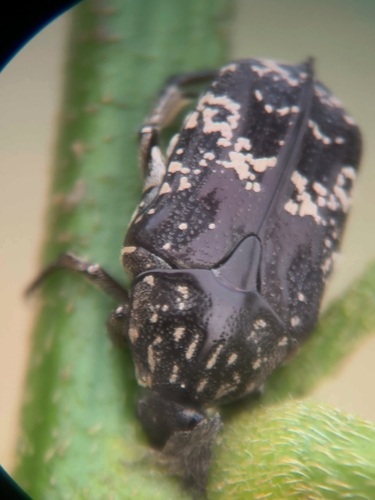
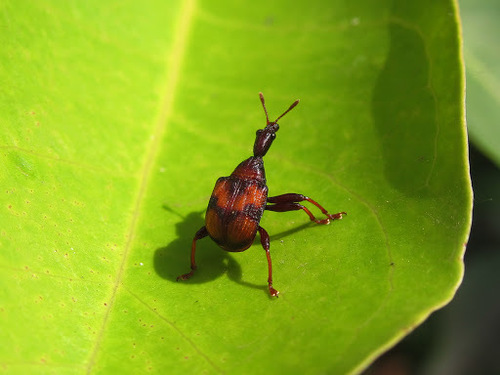
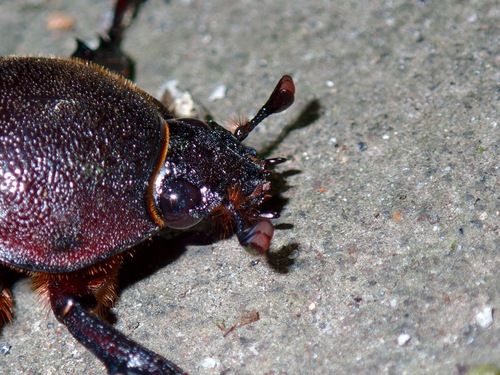
Oryctes rhinoceros, also known as coconut rhinoceros beetle, Asiatic rhinoceros beetle, and coconut palm rhinoceros beetle, is a large species of beetle (typically 4–5 cm long), belonging to the rhinoceros beetles subfamily Dynastinae. Oryctes rhinoceros attacks coconut palms and other palms such as the economically important oil palm. It can cause serious damage to the developing fronds (leaves) up to death of the palm. The beetle breeds in decaying palm trunks or other organic matter like sawdust or compost heaps.

The native distribution of this beetle covers most parts of tropical Asia, from India and the Maldives in the west to countries like Myanmar, Thailand, Malaysia, Vietnam, most parts of Indonesia, the Philippines, Taiwan and southern China in the east. Through human activity, it has been accidentally introduced into a larger number of tropical islands in the Pacific starting with Samoa where larvae arrived in 1909 with the soil of rubber seedlings from Ceylon (Sri Lanka). From Samoa, the coconut rhinoceros beetle spread to many others parts of the Pacific. Its distribution range also expanded to several islands in the Indian Ocean, in the Western Pacific... Wikipedia →

Global Distribution

Parks Where Found

# Park Country Daily sighting probability
1 Sepilok 🇲🇾 Malaysia
~10%
2 Gunung Leuser National Park 🇮🇩 Indonesia
~10%
3 Kaeng Krachan National Park 🇹🇭 Thailand
~10%

Cities Where Found

# City Country Daily sighting probability
1 Denpasar 🇮🇩 Indonesia
~40%
2 Cebu City 🇵🇭 Philippines
~30%
3 Davao City 🇵🇭 Philippines
~30%
4 Đà Nẵng 🇻🇳 Vietnam
~30%
5 Surabaya 🇮🇩 Indonesia
~20%
6 Surakarta 🇮🇩 Indonesia
~20%
7 Manila 🇵🇭 Philippines
~20%
8 Ho Chi Minh City 🇻🇳 Vietnam
~20%
9 Kozhikode 🇮🇳 India
~20%
10 Yogyakarta 🇮🇩 Indonesia
~20%

Before you go

What are the chances of seeing a Coconut Rhinoceros Beetle in Denpasar?

Likely

About 40% of wildlife watchers report a Coconut Rhinoceros Beetle sighting in Denpasar on a given day, based on 42 verified sightings from GBIF citizen-science data. It is the 4th most-seen of the 90 insects we can rate there. Over three days the chance rises to about 70%, and over a week to over 90%, if each day is a fresh chance.

When is the best time to see a Coconut Rhinoceros Beetle in Denpasar?

March–April, June–September and December

In those months about 40% of wildlife watchers report a Coconut Rhinoceros Beetle in Denpasar on a given day, against about 20% in May and October–November, the lowest months.

What time of day is best to see a Coconut Rhinoceros Beetle?

Between 7 and 10 pm

Across all the parks we cover, that three-hour window holds the most Coconut Rhinoceros Beetle sightings with a recorded time, and about 6 in 10 of them come between 6 pm and 6 am: it is most active around dawn and dusk.

Is Denpasar the best place to see a Coconut Rhinoceros Beetle?

Yes

Of the 25 cities where we can rate Coconut Rhinoceros Beetle sightings, Denpasar has the highest daily chance: about 40%. Next come Cebu City (Philippines, about 30%) and Davao City (Philippines, about 30%).

Which relatives of the Coconut Rhinoceros Beetle live in Denpasar?

Same family: Scarabaeidae

The closest relatives of the Coconut Rhinoceros Beetle that you can see in Denpasar (family Scarabaeidae, Scarabs) are Siamese Rhinoceros Beetle (about 20%) and Acuminate Flower-beetle (about 10%), with each one's daily chance of a sighting.

Where does the Coconut Rhinoceros Beetle sighting chance come from?

GBIF citizen-science records

It is estimated from how often the Coconut Rhinoceros Beetle is recorded against all the insects logged in Denpasar (42 verified sightings), calibrated against known sighting rates. Figures are rounded to the nearest 10% because citizen-science data supports honest approximations, not decimals, and months with records from fewer than five people show "—". How it works.

← Back to Denpasar