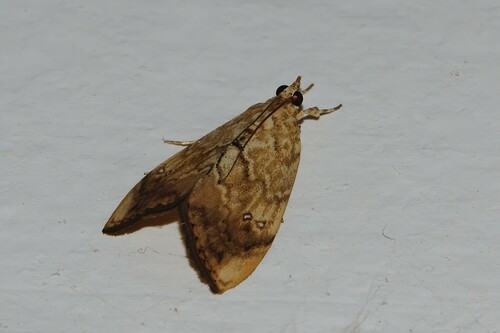
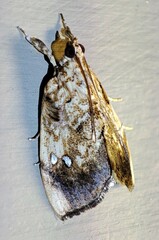
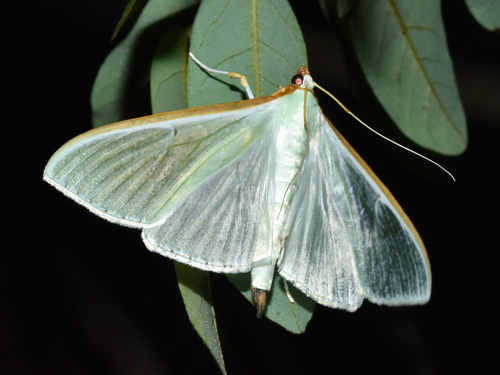
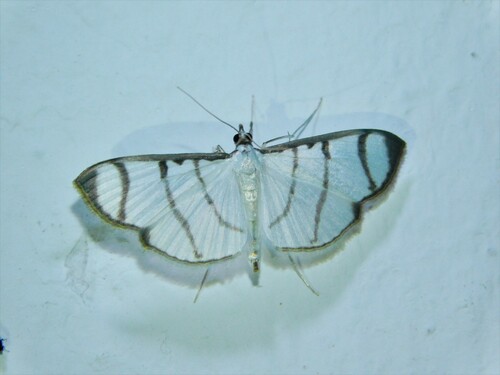
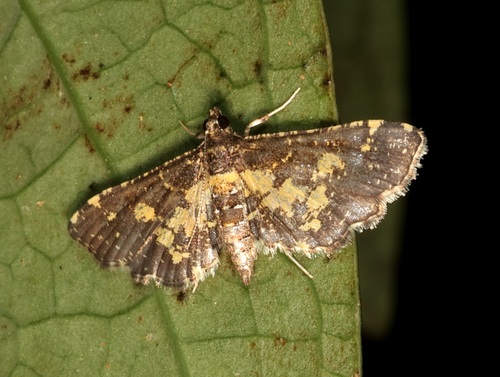
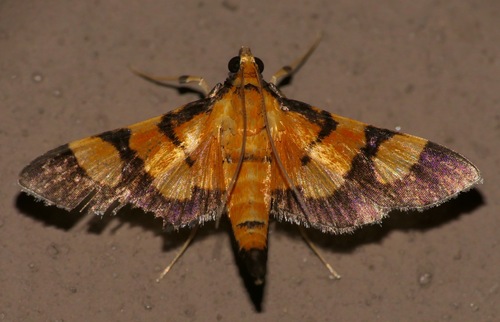
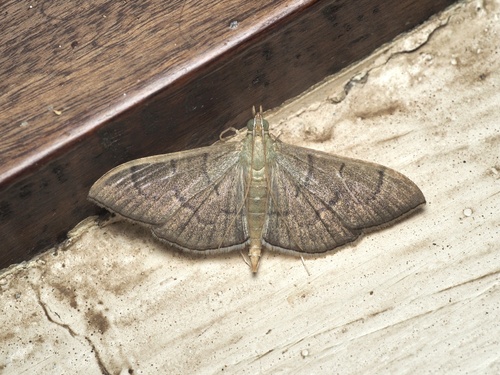
Cabbage Cluster Caterpillar

Cabbage Cluster Caterpillar

Crocidolomia pavonana

Daily sighting probability <5% · Rare
at Durban

In 3 days ~10% in a week ~20%

6 Verified sightings at Durban
11 In all 2 parks From 2019 to 2026
November Best month
🌅 Crepuscular When it's spotted

About the Cabbage Cluster Caterpillar

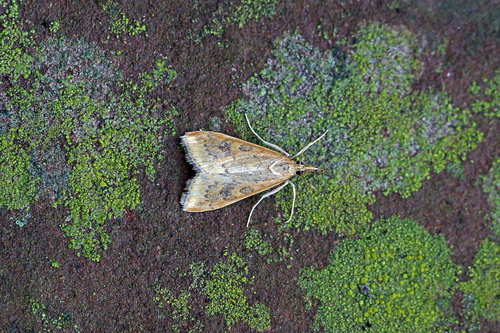
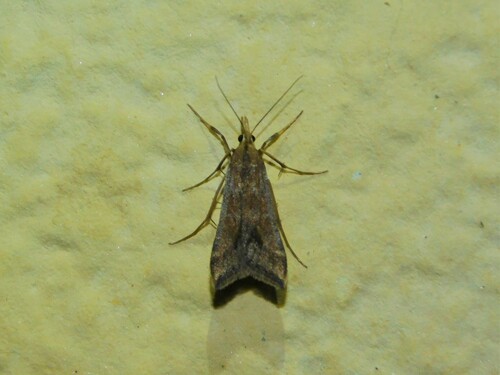
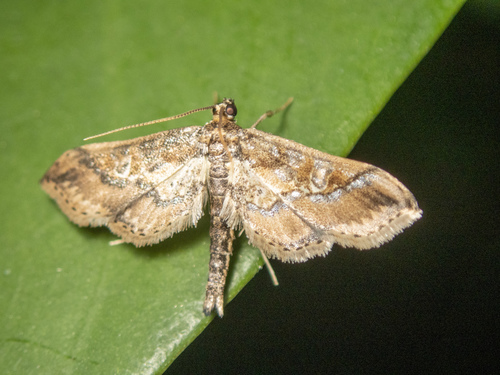
Crocidolomia pavonana is a moth of the family Crambidae. Its caterpillar is a crop pest and is known as the croci or the cabbage cluster caterpillar. This moth is found in Africa and Asia, its range extending from South Africa through India to the Pacific Ocean, including Australia. The wingspan is about 25 mm (1 in). The larvae feed on Brassicaceae species and are considered an agricultural pest on cabbages. The species was first described by Johan Christian Fabricius in 1794.

The adult male is between 11 and 14 mm (0.43 and 0.55 in) long with a wingspan of 20 to 25 mm (0.8 to 1.0 in), and the female is slightly smaller. Both are rather variable in colouring but have brownish markings on a cream background. The male can be distinguished by the tufts of dark-coloured hairs at the front of the forewings.

The eggs are pale green and up to three hundred are laid in an overlapping pile that may be 5 mm (0.2 in) in diameter. The larvae are grey with dark heads when they hatch and later become green with dark heads and five fine pale yellow longitudinal stripes. The pupa is cylindrical, olive green to light brown, becoming darker shortly before emergence. It is surrounded... Wikipedia →

Global Distribution

Parks Where Found

# Park Country Daily sighting probability
1 Blue Mountains National Park 🇦🇺 Australia
<5%
2 Kruger National Park 🇿🇦 South Africa
<5%

Cities Where Found

# City Country Daily sighting probability
1 Harare 🇿🇼 Zimbabwe
~10%
2 Tuen Mun 🇨🇳 China
<5%
3 Durban 🇿🇦 South Africa
<5%
4 Brisbane 🇦🇺 Australia
<5%

Before you go

What are the chances of seeing a Cabbage Cluster Caterpillar in Durban?

Rare

Under 5% of wildlife watchers report a Cabbage Cluster Caterpillar sighting in Durban on a given day, based on 6 verified sightings from GBIF citizen-science data. It is the 310th most-seen of the 401 insects we can rate there. Over three days the chance rises to about 10%, and over a week to about 20%, if each day is a fresh chance.

When is the best time to see a Cabbage Cluster Caterpillar in Durban?

February, August and October–December

In those months about 10% of wildlife watchers report a Cabbage Cluster Caterpillar in Durban on a given day, against under 5% in January, March–July and September, the lowest months.

What time of day is best to see a Cabbage Cluster Caterpillar?

Between 10 am and 1 pm

Across all the parks we cover, that three-hour window holds the most Cabbage Cluster Caterpillar sightings with a recorded time, and about half of them come between 6 am and 6 pm: it is most active around dawn and dusk.

Is Durban the best place to see a Cabbage Cluster Caterpillar?

3rd of 4

Of the 4 cities where we can rate Cabbage Cluster Caterpillar sightings, Durban ranks 3rd at under 5%. The best odds are in Harare (Zimbabwe, about 10%) and Tuen Mun (China, under 5%).

Which relatives of the Cabbage Cluster Caterpillar live in Durban?

Same family: Crambidae

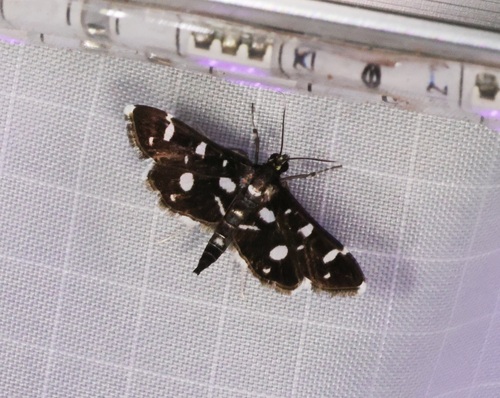
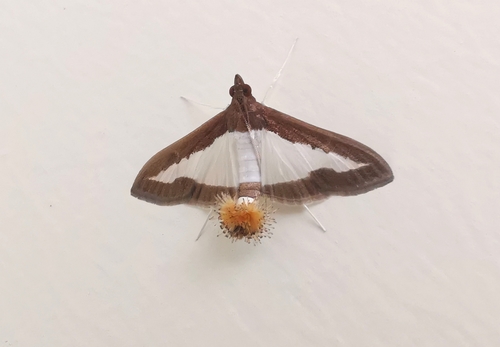
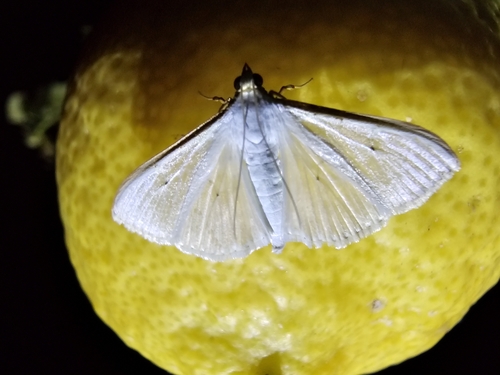
The closest relatives of the Cabbage Cluster Caterpillar that you can see in Durban (family Crambidae, Crambid Snout Moths) are Dotted Sable (about 10%), Hawaiian Beet Webworm Moth (about 10%) and Cucumber Moth (about 10%), with each one's daily chance of a sighting.

Where does the Cabbage Cluster Caterpillar sighting chance come from?

GBIF citizen-science records

It is estimated from how often the Cabbage Cluster Caterpillar is recorded against all the insects logged in Durban (6 verified sightings), calibrated against known sighting rates. Figures are rounded to the nearest 10% because citizen-science data supports honest approximations, not decimals, and months with records from fewer than five people show "—". How it works.

← Back to Durban