Silvery Blue

Silvery Blue

Glaucopsyche lygdamus

Daily sighting probability ~20% · Possible
at Edmonton

In 3 days ~40% in a week ~70%

282 Verified sightings at Edmonton
398 In all 17 parks From 2019 to 2026
June Best month
☀️ Diurnal When it's spotted

About the Silvery Blue

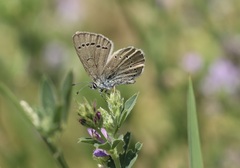
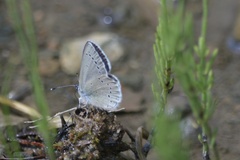
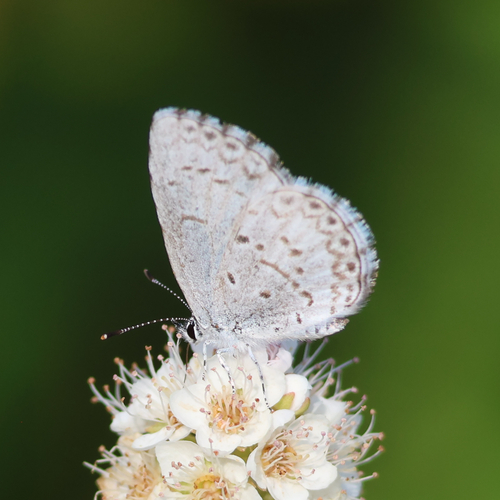
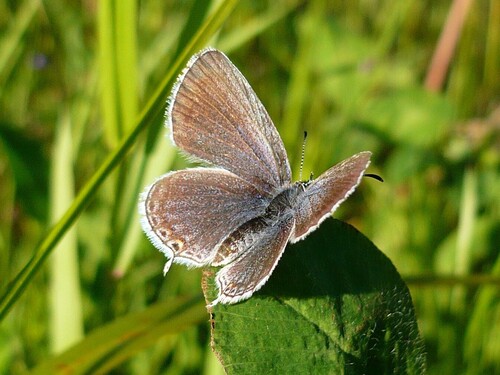
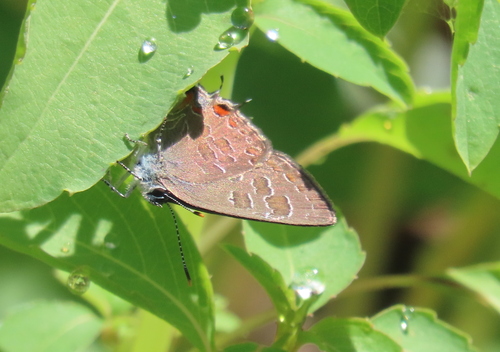
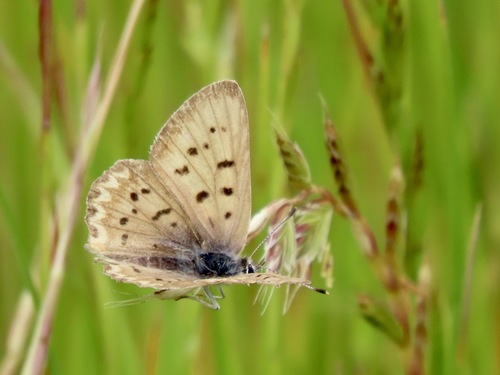
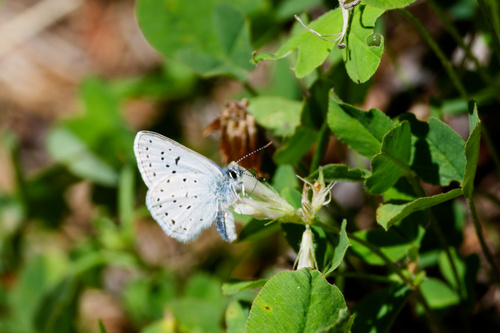
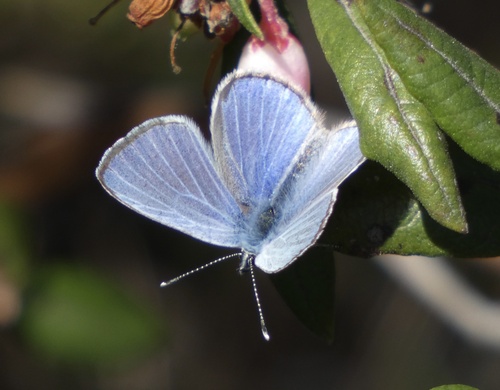
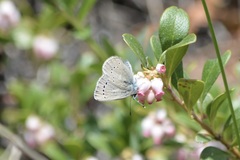
Glaucopsyche lygdamus, the silvery blue, is a small butterfly native to North America. Its upperside is a light blue in males and a dull grayish blue in females. The underside is gray with a single row of round spots of differing sizes depending upon the region.

G. lygdamus is found over much of the western United States and most of Canada extending north excepting most of Nunavut and the high Arctic islands. Wingspan is from 18 to 28 mm. It occurs in a variety of habitats including alpine meadows, shale barrens, dunes, and wooded areas. It feeds on Lupinus plants.

The extinct Xerces blue (Glaucopsyche xerces) was once thought to be a subspecies of the silvery blue. Wikipedia →

Global Distribution

Parks Where Found

# Park Country Daily sighting probability
1 Elk Island National Park 🇨🇦 Canada
~20%
2 Kluane National Park 🇨🇦 Canada
~20%
3 Riding Mountain National Park 🇨🇦 Canada
~20%
4 Jasper National Park 🇨🇦 Canada
~10%
5 Gros Morne National Park 🇨🇦 Canada
~10%
6 Banff National Park 🇨🇦 Canada
~10%
7 Grand Teton National Park 🇺🇸 United States
~10%
8 Redwood National Park 🇺🇸 United States
~10%
9 Channel Islands National Park 🇺🇸 United States
~10%
10 Yellowstone National Park 🇺🇸 United States
~10%
11 Olympic National Park 🇺🇸 United States
~10%
12 Zion National Park 🇺🇸 United States
~10%
13 Rocky Mountain National Park 🇺🇸 United States
~10%
14 Joshua Tree National Park 🇺🇸 United States
~10%
15 Glacier National Park 🇺🇸 United States
~10%
16 Acadia National Park 🇺🇸 United States
~10%
17 Yosemite National Park 🇺🇸 United States
<5%

Cities Where Found

# City Country Daily sighting probability
1 Edmonton 🇨🇦 Canada
~20%
2 Calgary 🇨🇦 Canada
~10%
3 Toronto 🇨🇦 Canada
~10%
4 Sacramento 🇺🇸 United States
<5%
5 San Diego 🇺🇸 United States
<5%
6 Portland 🇺🇸 United States
<5%
7 Montreal 🇨🇦 Canada
<5%
8 Los Angeles 🇺🇸 United States
<5%
9 San Francisco 🇺🇸 United States
<5%

Before you go

What are the chances of seeing a Silvery Blue in Edmonton?

Possible

About 20% of wildlife watchers report a Silvery Blue sighting in Edmonton on a given day, based on 282 verified sightings from GBIF citizen-science data. It is the 9th most-seen of the 390 insects we can rate there. Over three days the chance rises to about 40%, and over a week to about 70%, if each day is a fresh chance.

When is the best time to see a Silvery Blue in Edmonton?

June

In that month about 40% of wildlife watchers report a Silvery Blue in Edmonton on a given day, against under 5% in August to April, the lowest months. That is one of Edmonton's wettest months, with about 85 mm of rain against 20 mm in February.

What time of day is best to see a Silvery Blue?

Between 11 am and 2 pm

Across all the parks we cover, that three-hour window holds the most Silvery Blue sightings with a recorded time, and about 9 in 10 of them come between 6 am and 6 pm: it is a daytime animal.

Is Edmonton the best place to see a Silvery Blue?

Yes

Of the 9 cities where we can rate Silvery Blue sightings, Edmonton has the highest daily chance: about 20%. Next come Calgary (Canada, about 10%) and Toronto (Canada, about 10%).

Which relatives of the Silvery Blue live in Edmonton?

Same family: Lycaenidae

The closest relatives of the Silvery Blue that you can see in Edmonton (family Lycaenidae, Gossamer-winged Butterflies) are Northern Azure (about 20%), Elkalyce amyntula (about 10%) and Striped Hairstreak (about 10%), with each one's daily chance of a sighting.

Where does the Silvery Blue sighting chance come from?

GBIF citizen-science records

It is estimated from how often the Silvery Blue is recorded against all the insects logged in Edmonton (282 verified sightings), calibrated against known sighting rates. Figures are rounded to the nearest 10% because citizen-science data supports honest approximations, not decimals, and months with records from fewer than five people show "—". How it works.
← Back to Edmonton