

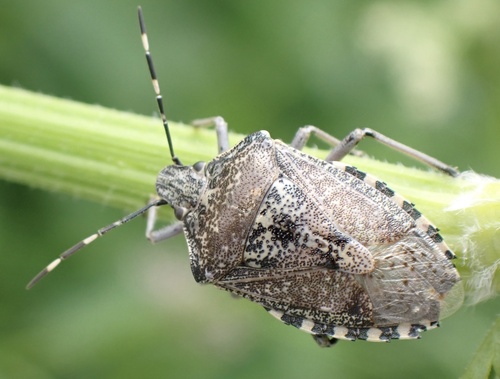
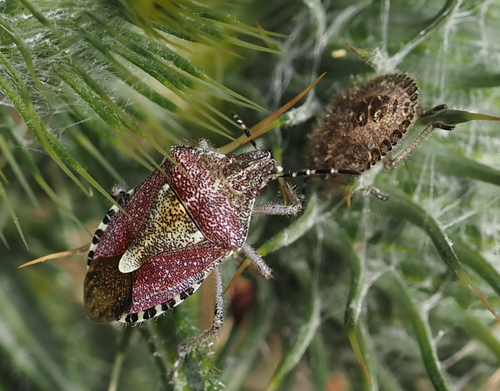
Buffalo Treehopper

Buffalo Treehopper

Stictocephala bisonia

Daily sighting probability <5% · Rare
at Essen

In 3 days ~10% in a week ~20%

5 Verified sightings at Essen
34 In all 3 parks From 2019 to 2026
September Best month
☀️ Diurnal When it's spotted

About the Buffalo Treehopper

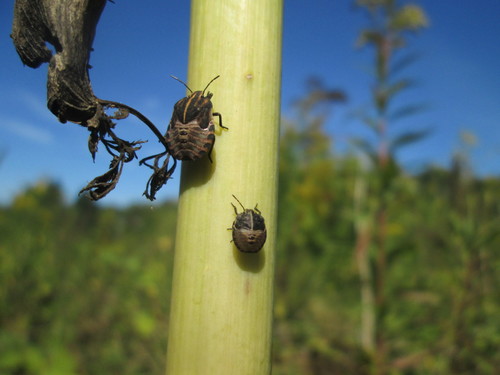
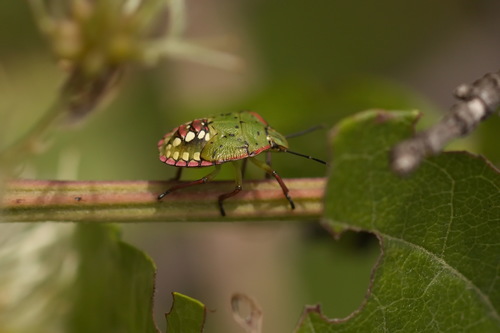
The buffalo treehopper (Stictocephala bisonia) is a species of treehopper belonging to the subfamily Smiliinae. It is sometimes classified as Ceresa bisonia. This species is native to North America, but now it is widespread throughout southern Europe and it is also present in the Near East and in North Africa. Also recently reported from vineyards of Kashmir, India

Buffalo treehoppers are a bright green color and have a somewhat triangular shape that helps camouflage them so as to resemble thorns or a twiggy protuberance. It gets its name from the vague resemblance of its profile to that of an American bison. They grow to 6 to 8 millimeters (0.24 to 0.31 in) long and have transparent wings.

S. bisonia mates during the summer months. Males attract females with a song that, unlike similar songs used by cicada and crickets, is perceived by the female not as sound waves but as vibrations through the host plant. Females lay eggs from July to October using a blade-like ovipositor. Up to a dozen eggs are laid in each slit made by the female.

Nymphs emerge from the eggs the following May or June. The nymphs, which resemble wingless adults... Wikipedia →

Global Distribution

Parks Where Found

# Park Country Daily sighting probability
1 Cévennes National Park 🇫🇷 France
~10%
2 Bavarian Forest National Park 🇩🇪 Germany
~10%
3 Pyrénées National Park 🇫🇷 France
~10%

Cities Where Found

# City Country Daily sighting probability
1 Warsaw 🇵🇱 Poland
~10%
2 Berlin 🇩🇪 Germany
~10%
3 Kharkiv 🇺🇦 Ukraine
~10%
4 Kyiv 🇺🇦 Ukraine
~10%
5 Paris 🇫🇷 France
~10%
6 Budapest 🇭🇺 Hungary
~10%
7 Vienna 🇦🇹 Austria
~10%
8 Lyon 🇫🇷 France
~10%
9 Nizhny Novgorod 🇷🇺 Russia
~10%
10 Kazan 🇷🇺 Russia
<5%

Before you go

What are the chances of seeing a Buffalo Treehopper in Essen?

Rare

Under 5% of wildlife watchers report a Buffalo Treehopper sighting in Essen on a given day, based on 5 verified sightings from GBIF citizen-science data. It is the 381st most-seen of the 434 insects we can rate there. Over three days the chance rises to about 10%, and over a week to about 20%, if each day is a fresh chance.

When is the best time to see a Buffalo Treehopper in Essen?

August to October

In those months about 10% of wildlife watchers report a Buffalo Treehopper in Essen on a given day, against under 5% in November to July, the lowest months.

What time of day is best to see a Buffalo Treehopper?

Between 2 and 5 pm

Across all the parks we cover, that three-hour window holds the most Buffalo Treehopper sightings with a recorded time, and about 8 in 10 of them come between 6 am and 6 pm: it is a daytime animal.

Is Essen the best place to see a Buffalo Treehopper?

17th of 22

Of the 22 cities where we can rate Buffalo Treehopper sightings, Essen ranks 17th at under 5%. The best odds are in Warsaw (Poland, about 10%), Berlin (Germany, about 10%) and Kharkiv (Ukraine, about 10%).

Which relatives of the Buffalo Treehopper live in Essen?

Same order: Hemiptera

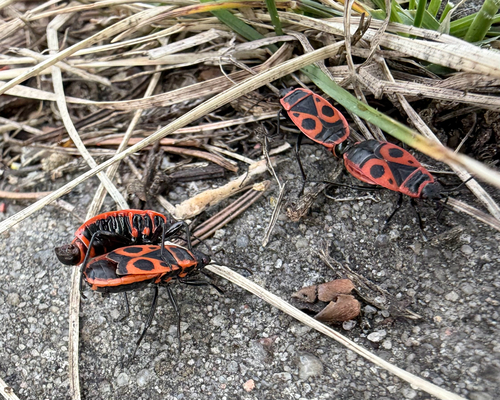
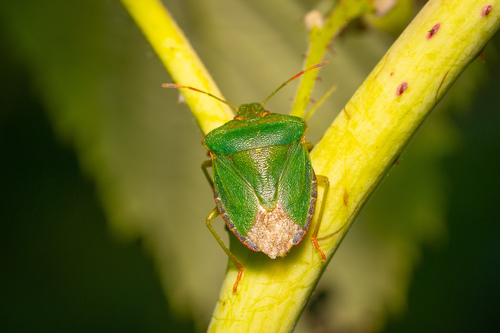
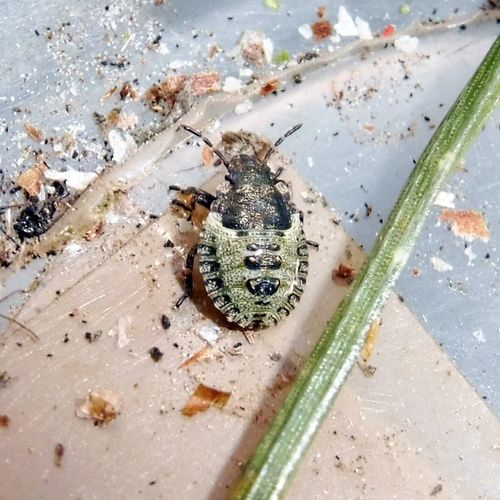
The closest relatives of the Buffalo Treehopper that you can see in Essen (order Hemiptera, True Bugs, Hoppers, Aphids, and allies) are European Firebug (about 30%), Brown Marmorated Stink Bug (about 30%) and Green Shield Bug (about 20%), with each one's daily chance of a sighting.

Where does the Buffalo Treehopper sighting chance come from?

GBIF citizen-science records

It is estimated from how often the Buffalo Treehopper is recorded against all the insects logged in Essen (5 verified sightings), calibrated against known sighting rates. Figures are rounded to the nearest 10% because citizen-science data supports honest approximations, not decimals, and months with records from fewer than five people show "—". How it works.

← Back to Essen