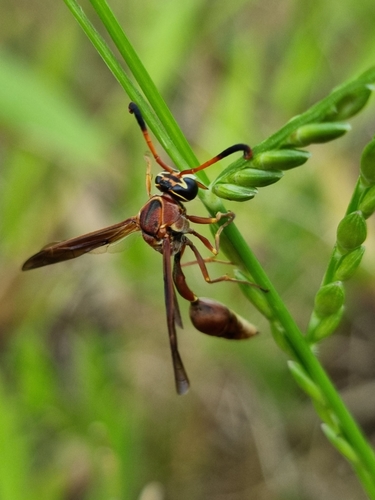
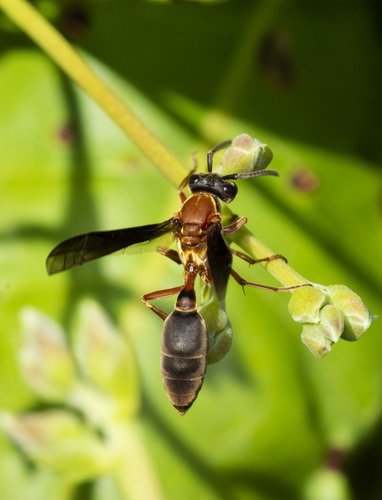
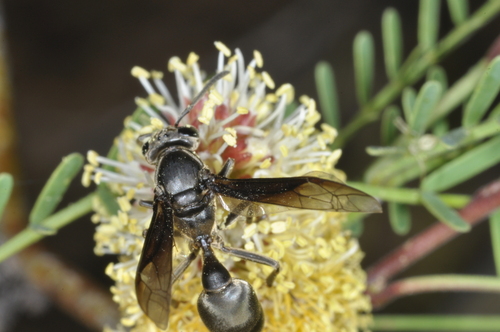
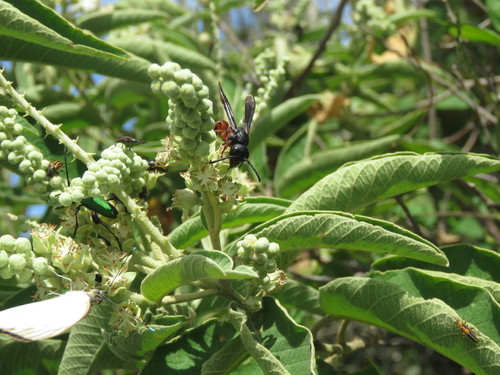
Neotropical Red Paper Wasp

Neotropical Red Paper Wasp

Polistes canadensis

Daily sighting probability ~20% · Possible
at Fortaleza

In 3 days ~40% in a week ~70%

16 Verified sightings at Fortaleza
71 In all 3 parks From 2019 to 2026
June Best month
☀️ Diurnal When it's spotted

About the Neotropical Red Paper Wasp

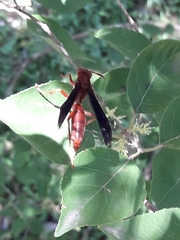
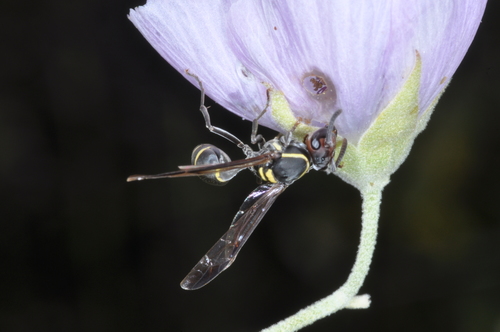
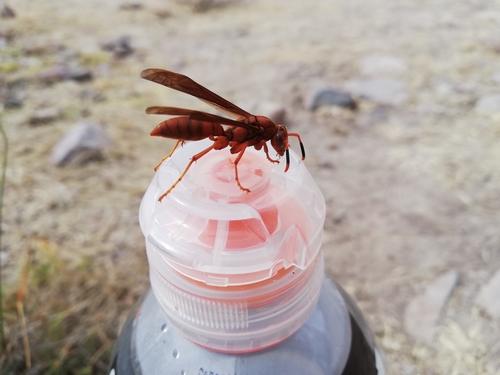
Polistes canadensis is a species of red paper wasp found in the Neotropical realm. It is a primitively eusocial wasp as a member of the subfamily Polistinae. A largely predatory species, it hunts for caterpillar meat to supply its colony, often supplementing its developing larvae with nectar. The most widely distributed American species of the genus Polistes, it colonizes multiple combs, which it rears year-round.

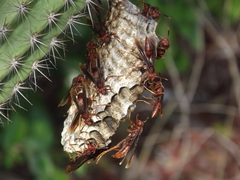
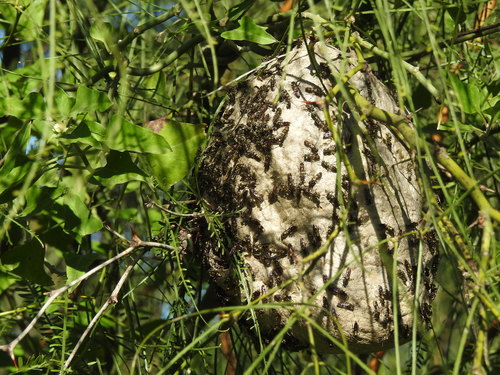
Emerging from hibernation in the spring, the females found nests built from plant material such as dry grass and dead wood. These nests are not covered with an envelope and feature hexagonal cells in which eggs are laid and larvae develop. The Polistes canadensis colony divides its colony among several combs and does not reuse these combs as a defense mechanism against parasites such as the tineid moth. On average, a single female queen with 9.1 foundresses usually initiates the construction of new combs and cells to form nests. The more foundresses in a colony, the more combs produced. On average, combs grow for 15.4 days and achieve a size of 30.8 cells. One female queen exercises absolute dominance over all other females, often using lateral abdominal vibrations and stroking to suppress the aggressive behavior of her nestmates.

While the queen handles all the nest reproduction, the subordinates work to care for, defend, and feed the nest instead. The divisions of labor within the nest correlate with the ages of Polistes canadensis. Aside from the female division of labor, male Polistes canadensis engage in two alternative mating tactics: the role of the territorial male (who chases away intruding patrollers) and the role of the patroller (who flies from tree to tree and does not chase other males). The study of the dominance relations within the Polistes canadensis has provided insight into the social organization that characterizes many social invertebrates. Wikipedia →
Global Distribution

Parks Where Found

# Park Country Daily sighting probability
1 Cumbres de Monterrey National Park 🇲🇽 Mexico
~10%
2 Iguazú National Park 🇦🇷 Argentina
~10%
3 Iguaçu National Park 🇧🇷 Brazil
~10%

Cities Where Found

# City Country Daily sighting probability
1 León 🇲🇽 México
~20%
2 Fortaleza 🇧🇷 Brazil
~20%
3 Recife 🇧🇷 Brazil
~10%
4 São Luís 🇧🇷 Brazil
~10%
5 Monterrey 🇲🇽 México
~10%
6 São Paulo 🇧🇷 Brazil
<5%

Before you go

What are the chances of seeing a Neotropical Red Paper Wasp in Fortaleza?

Possible

About 20% of wildlife watchers report a Neotropical Red Paper Wasp sighting in Fortaleza on a given day, based on 16 verified sightings from GBIF citizen-science data. It is the 22nd most-seen of the 112 insects we can rate there. Over three days the chance rises to about 40%, and over a week to about 70%, if each day is a fresh chance.

When is the best time to see a Neotropical Red Paper Wasp in Fortaleza?

June

In that month about 40% of wildlife watchers report a Neotropical Red Paper Wasp in Fortaleza on a given day, against under 5% in January, March–May and September, the lowest months.

What time of day is best to see a Neotropical Red Paper Wasp?

Between 9 am and noon

Across all the parks we cover, that three-hour window holds the most Neotropical Red Paper Wasp sightings with a recorded time, and about 9 in 10 of them come between 6 am and 6 pm: it is a daytime animal.

Is Fortaleza the best place to see a Neotropical Red Paper Wasp?

Among the best

Of the 6 cities where we can rate Neotropical Red Paper Wasp sightings, Fortaleza ranks 2nd at about 20%, level with the leaders once rounded. The best odds are in León (México, about 20%).

Where does the Neotropical Red Paper Wasp sighting chance come from?

GBIF citizen-science records

It is estimated from how often the Neotropical Red Paper Wasp is recorded against all the insects logged in Fortaleza (16 verified sightings), calibrated against known sighting rates. Figures are rounded to the nearest 10% because citizen-science data supports honest approximations, not decimals, and months with records from fewer than five people show "—". How it works.

← Back to Fortaleza