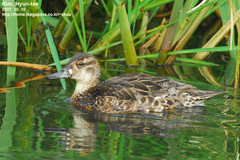
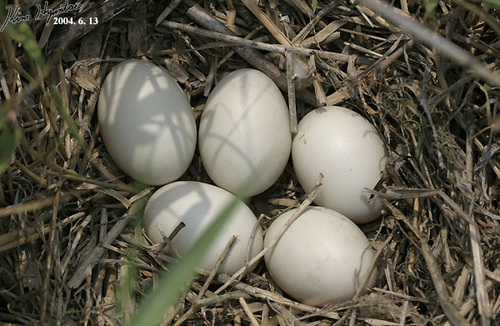
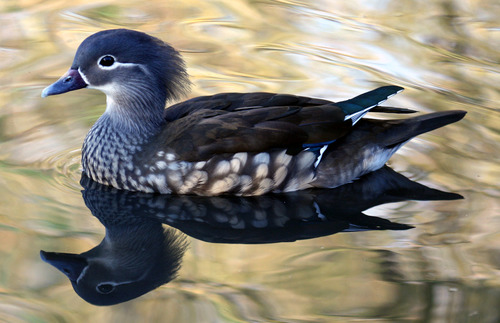
Baikal Teal

Baikal Teal

Sibirionetta formosa

Silhouette: Sheatherius · PhyloPic

LCLeast ConcernNTVUENCR
Daily sighting probability <5% · Rare
at Fukuoka

In 3 days ~10% in a week ~20%

7 Verified sightings at Fukuoka
7 In 1 park From 2019 to 2026
January Best month
☀️ Diurnal When it's spotted

About the Baikal Teal

The Baikal teal (Sibirionetta formosa), also called the bimaculate duck or squawk duck, is a dabbling duck that breeds in eastern Russia and winters in East Asia. The first formal description of the Baikal teal was by the German naturalist Johann Gottlieb Georgi in 1775 under the binomial name Anas formosa. A molecular phylogentic study published in 2009 found that the genus Anas as then defined was non-monophyletic. Based on this analysis the genus was split into four proposed genera with the Baikal teal placed in the resurrected genus Sibirionetta that had been introduced by the German zoologist Hans von Boetticher in 1929. The name Sibirionetta is derived from the Latin sibiricus for Siberia and the Ancient Greek nētta for a duck. The specific epithet formosa is from the Latin formosus for "beautiful".

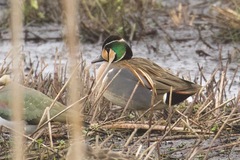
The Baikal teal has a height of 30–40 cm (11.75–15.75 in), and a weighs an average of 500 g (1 lb). At a length between 39–43 cm (15–17 in), this duck is slightly larger and longer-tailed than the common teal. The breeding male is unmistakable, with a striking green nape, yellow and black auriculars, neck, and throat. It has a dark crown, and its breast... Wikipedia →

Sounds

Song0:25

Russian Federation · 2021

© Albert Lastukhin · XC674861 · CC BY-NC-ND 4.0

Call0:55

Russian Federation · 2017

© Andrew Spencer · XC380277 · CC BY-NC-ND 4.0

Global Distribution

Parks Where Found

# Park Country Daily sighting probability
1 Chitwan National Park 🇳🇵 Nepal
<5%

More parks will be added in future updates.

Cities Where Found

# City Country Daily sighting probability
1 Beijing 🇨🇳 China
<5%
2 Fukuoka 🇯🇵 Japan
<5%
3 Seoul 🇰🇷 South Korea
<5%
4 Nagoya 🇯🇵 Japan
<5%
5 Osaka 🇯🇵 Japan
<5%
6 Tokyo 🇯🇵 Japan
<5%
7 Hangzhou 🇨🇳 China
<5%
8 Taipei 🇹🇼 Taiwan
<5%
9 Shanghai 🇨🇳 China
<5%

Zoos & Centres Where Found

# Zoo / Centre Country
1 Disney's Animal Kingdom 🇺🇸 United States In captivity
2 Walsrode World Bird Park 🇩🇪 Germany In captivity
3 San Diego Zoo Safari Park 🇺🇸 United States In captivity
4 Sedgwick County Zoo 🇺🇸 United States In captivity
5 Milwaukee County Zoo 🇺🇸 United States In captivity
6 Berlin Zoological Garden 🇩🇪 Germany In captivity
7 Woodland Park Zoo 🇺🇸 United States In captivity
8 Moody Gardens 🇺🇸 United States In captivity
9 Franklin Park Zoo 🇺🇸 United States In captivity
10 Fort Worth Zoo 🇺🇸 United States In captivity
11 Memphis Zoo 🇺🇸 United States In captivity
12 Wilhelma 🇩🇪 Germany In captivity
13 Centro Cicogne e Anatidi 🇮🇹 Italy In captivity
14 Cologne Zoological Garden 🇩🇪 Germany In captivity
15 Akron Zoo 🇺🇸 United States In captivity
16 Van Blanckendaell Park 🇳🇱 Netherlands In captivity
17 Inokashira Park Zoo 🇯🇵 Japan In captivity
18 Bois de la Bâtie 🇨🇭 Switzerland In captivity
19 Avifauna 🇪🇸 Spain In captivity
20 Aquarium Berlin 🇩🇪 Germany In captivity
21 Cologne Zoo Aquarium 🇩🇪 Germany In captivity

Before you go

What are the chances of seeing a Baikal Teal in Fukuoka?

Rare

Under 5% of wildlife watchers report a Baikal Teal sighting in Fukuoka on a given day, based on 7 verified sightings from GBIF citizen-science data. It is the 79th most-seen of the 92 birds we can rate there. Over three days the chance rises to about 10%, and over a week to about 20%, if each day is a fresh chance.

When is the best time to see a Baikal Teal in Fukuoka?

January and February

In those months about 10% of wildlife watchers report a Baikal Teal in Fukuoka on a given day, against under 5% in March to December, the lowest months. Those are among Fukuoka's driest months, with about 80 mm of rain a month against 360 mm in July.

What time of day is best to see a Baikal Teal?

Between 7 and 10 am

Across all the parks we cover, that three-hour window holds the most Baikal Teal sightings with a recorded time, and about 9 in 10 of them come between 6 am and 6 pm: it is a daytime animal.

Is Fukuoka the best place to see a Baikal Teal?

Among the best

Of the 9 cities where we can rate Baikal Teal sightings, Fukuoka ranks 2nd at under 5%, level with the leaders once rounded. The best odds are in Beijing (China, under 5%).

Which relatives of the Baikal Teal live in Fukuoka?

Same family: Anatidae

The closest relatives of the Baikal Teal that you can see in Fukuoka (family Anatidae, Ducks, Geese, and Swans) are Mallard (about 70%), Common Pochard (about 50%) and Eurasian Wigeon (about 50%), with each one's daily chance of a sighting.

Where does the Baikal Teal sighting chance come from?

GBIF citizen-science records

It is estimated from how often the Baikal Teal is recorded against all the birds logged in Fukuoka (7 verified sightings), calibrated against known sighting rates. Figures are rounded to the nearest 10% because citizen-science data supports honest approximations, not decimals, and months with records from fewer than five people show "—". How it works.

← Back to Fukuoka