Pebble Hook-Tip

Pebble Hook-Tip

Drepana falcataria

Daily sighting probability <5% · Rare
at Helsinki

In 3 days ~10% in a week ~30%

13 Verified sightings at Helsinki
68 In all 4 parks From 2019 to 2026
August Best month
☀️🌙 Day & Night When it's spotted

About the Pebble Hook-Tip

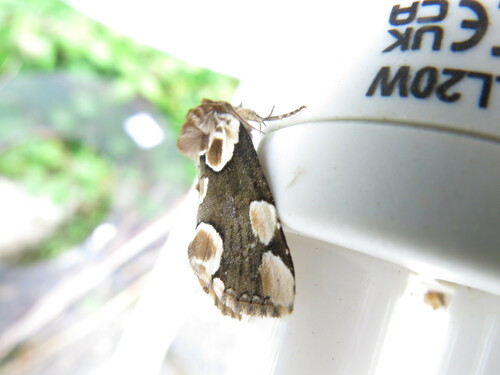
Drepana falcataria, the pebble hook-tip, is a moth of the family Drepanidae. The species was first described by Carl Linnaeus in his 1758 10th edition of Systema Naturae. It is found in Europe, through Siberia to the eastern Palearctic.

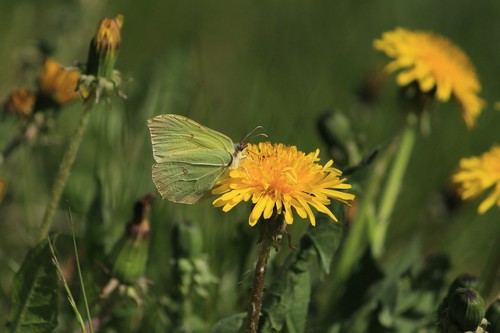
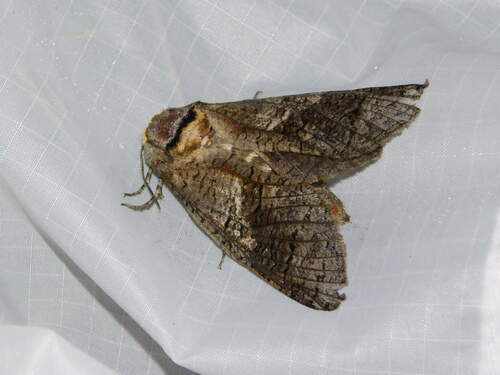
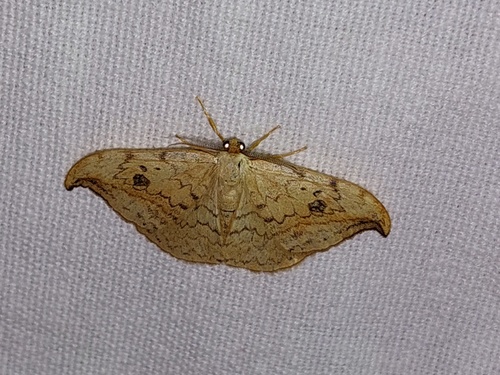
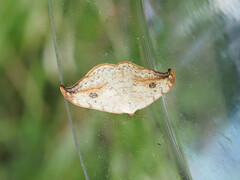
The wingspan is 27–35 mm. The ground colour is light brown or white brown to reddish brown. The forewings, which exhibit a fine regular pattern of dark, finely serrated lines have a dark patch in the middle. Under the sickle, or on the outer part of the outer edge of the wing, there is a purple stain. From the wing tip, a clearly curved, dark brown band runs under the stain up to the edge of the wing. The hindwings are also light brown, but brighter than the forewings. Their pattern is similar to but not so strong as that of the forewings. In the females the hindwings are white with the same dark patterning.

The egg is yellow marked with orange at one end. The last instar caterpillar is green, the dorsum reddish brown, except towards the black-marked yellowish head. There are two conspicuous warts on rings two and five, and less obvious raised spots on the other rings, all bearing hairs. In the younger stages it is blackish, with white marks on the fourth and seventh rings; later it becomes greenish below, and the markings on the back of rings four, seven, eight, and ten are whitish or creamy.

They prefer riparian forest and carr but are also found on the edge of moors and in parks and gardens. They are widespread and common. The moth flies from April to August depending on the location. The larvae feed on birch and sometimes alder. Wikipedia →
Global Distribution

Parks Where Found

# Park Country Daily sighting probability
1 Snowdonia National Park 🇬🇧 United Kingdom
~10%
2 Bavarian Forest National Park 🇩🇪 Germany
~10%
3 Cairngorms National Park 🇬🇧 United Kingdom
~10%
4 Wadden Sea National Park 🇩🇪 Germany
~10%

Cities Where Found

# City Country Daily sighting probability
1 Liverpool 🇬🇧 United Kingdom
~10%
2 Essen 🇩🇪 Germany
<5%
3 Birmingham 🇬🇧 United Kingdom
<5%
4 Helsinki 🇫🇮 Finland
<5%
5 Manchester 🇬🇧 United Kingdom
<5%
6 Berlin 🇩🇪 Germany
<5%
7 London 🇬🇧 United Kingdom
<5%
8 Moscow 🇷🇺 Russia
<5%

Before you go

What are the chances of seeing a Pebble Hook-Tip in Helsinki?

Rare

Under 5% of wildlife watchers report a Pebble Hook-Tip sighting in Helsinki on a given day, based on 13 verified sightings from GBIF citizen-science data. It is the 413th most-seen of the 838 insects we can rate there. Over three days the chance rises to about 10%, and over a week to about 30%, if each day is a fresh chance.

When is the best time to see a Pebble Hook-Tip in Helsinki?

July and August

In those months about 10% of wildlife watchers report a Pebble Hook-Tip in Helsinki on a given day, against under 5% in September to June, the lowest months.

What time of day is best to see a Pebble Hook-Tip?

Between 11 pm and 2 am

Across all the parks we cover, that three-hour window holds the most Pebble Hook-Tip sightings with a recorded time, and about 6 in 10 of them come between 6 pm and 6 am: it is seen both by day and at night.

Is Helsinki the best place to see a Pebble Hook-Tip?

4th of 8

Of the 8 cities where we can rate Pebble Hook-Tip sightings, Helsinki ranks 4th at under 5%. The best odds are in Liverpool (United Kingdom, about 10%), Essen (Germany, under 5%) and Birmingham (United Kingdom, under 5%).

Where does the Pebble Hook-Tip sighting chance come from?

GBIF citizen-science records

It is estimated from how often the Pebble Hook-Tip is recorded against all the insects logged in Helsinki (13 verified sightings), calibrated against known sighting rates. Figures are rounded to the nearest 10% because citizen-science data supports honest approximations, not decimals, and months with records from fewer than five people show "—". How it works.

← Back to Helsinki