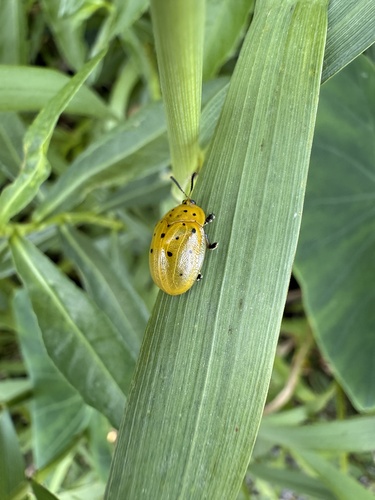
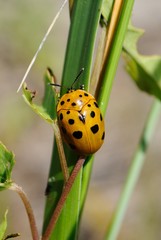
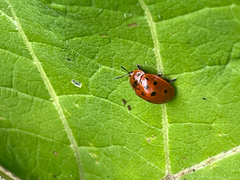
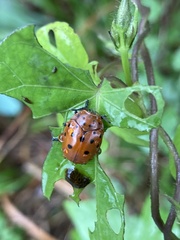
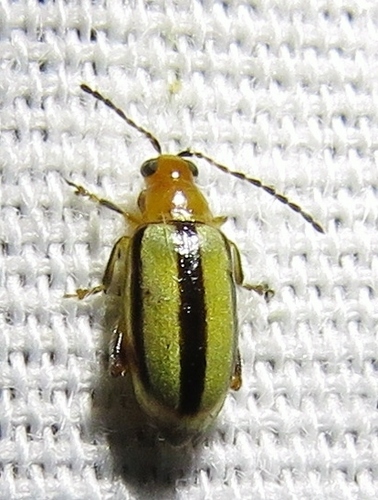
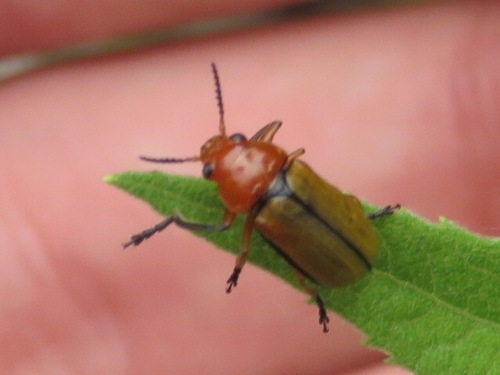
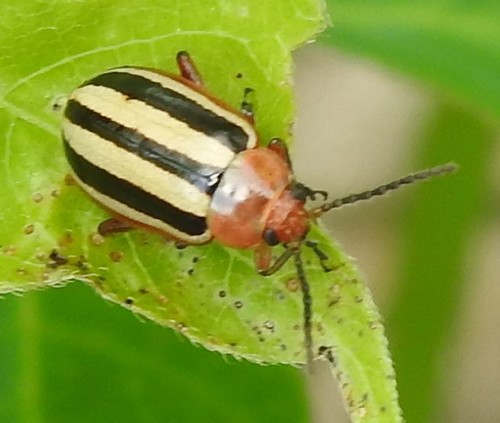
Argus Tortoise Beetle

Argus Tortoise Beetle

Chelymorpha cassidea

Daily sighting probability <5% · Rare
at Houston

In 3 days ~10% in a week ~30%

69 Verified sightings at Houston
14 In all 2 parks From 2019 to 2026
August Best month
☀️ Diurnal When it's spotted

About the Argus Tortoise Beetle

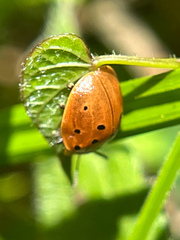
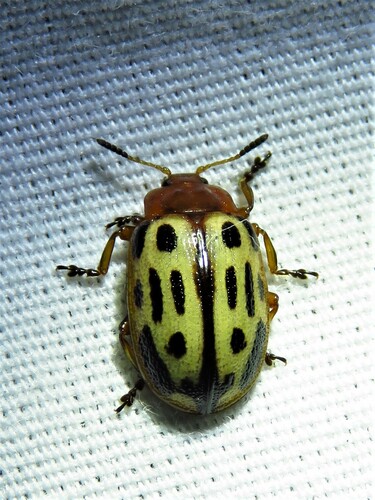
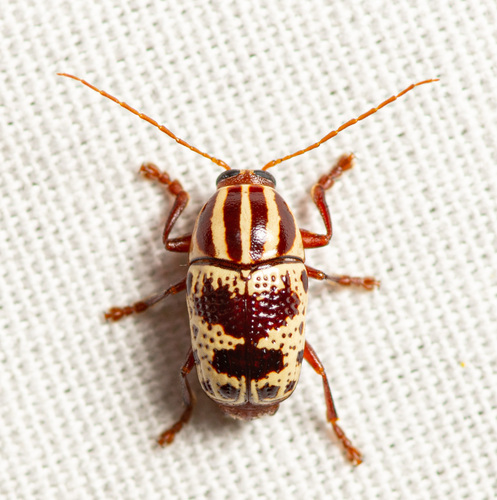
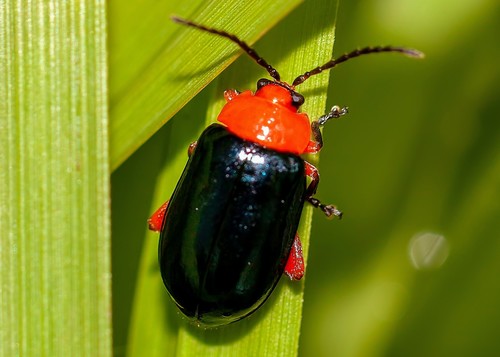
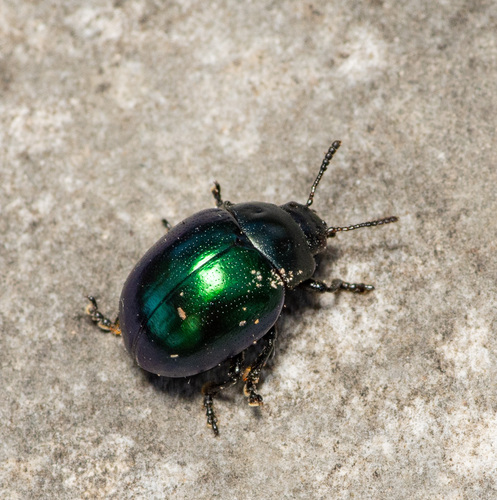
Chelymorpha cassidea, known generally as the Argus tortoise beetle or milkweed tortoise beetle, is a species of leaf beetle in the family Chrysomelidae. It is found in the Caribbean and North America. The beetle is 9 to 12 mm (0.35 to 0.47 in) long and is yellow to bright red with black spots. It is one of the largest leaf beetles native to North America. The name Argus comes from the mythical Greek giant Argus Panoptes, who was sometimes depicted with 100 eyes, because the beetle is able to stretch out its red head beyond its pronotum, as if it were a single red eye. The species resembles a small turtle and is similar to a ladybug.

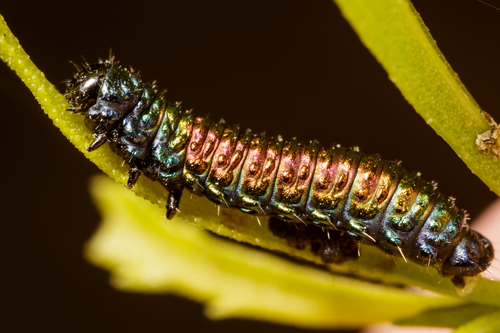
The Argus tortoise beetle lays eggs on leaves, in clusters of 15 to 30. The eggs hatch within 10 days. Its larvae are yellowish-green or orange-yellow. The larvae feed on leaves until they are fully grown, then they drop to the soil to pupate, overwintering as pupae before emerging as adults in the middle of summer. It takes them almost three weeks to become pupae.

The beetle can be found throughout North America in meadows and roadsides. It can also be found in the Caribbean. It feeds... Wikipedia →

Global Distribution

Parks Where Found

# Park Country Daily sighting probability
1 Badlands National Park 🇺🇸 United States
~10%
2 Big Cypress National Preserve 🇺🇸 United States
~10%

Cities Where Found

# City Country Daily sighting probability
1 Houston 🇺🇸 United States
<5%
2 Denver 🇺🇸 United States
<5%
3 Chicago 🇺🇸 United States
<5%
4 Minneapolis [Saint Paul] 🇺🇸 United States
<5%
5 Washington 🇺🇸 United States
<5%
6 New York City 🇺🇸 United States
<5%

Before you go

What are the chances of seeing an Argus Tortoise Beetle in Houston?

Rare

Under 5% of wildlife watchers report an Argus Tortoise Beetle sighting in Houston on a given day, based on 69 verified sightings from GBIF citizen-science data. It is the 203rd most-seen of the 1057 insects we can rate there. Over three days the chance rises to about 10%, and over a week to about 30%, if each day is a fresh chance.

When is the best time to see an Argus Tortoise Beetle in Houston?

March–April and August–October

In those months about 10% of wildlife watchers report an Argus Tortoise Beetle in Houston on a given day, against under 5% in May–July and November–February, the lowest months.

What time of day is best to see an Argus Tortoise Beetle?

Between 10 am and 1 pm

Across all the parks we cover, that three-hour window holds the most Argus Tortoise Beetle sightings with a recorded time, and about 9 in 10 of them come between 6 am and 6 pm: it is a daytime animal.

Is Houston the best place to see an Argus Tortoise Beetle?

Yes

Of the 6 cities where we can rate Argus Tortoise Beetle sightings, Houston has the highest daily chance: under 5%. Next come Denver (United States, under 5%) and Chicago (United States, under 5%).

Which relatives of the Argus Tortoise Beetle live in Houston?

Same family: Chrysomelidae

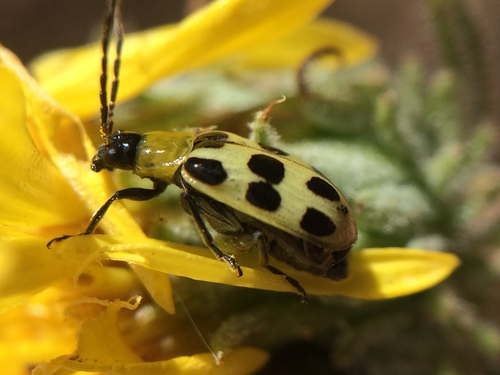
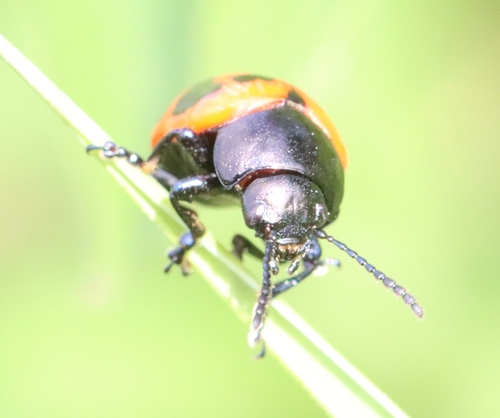
The closest relatives of the Argus Tortoise Beetle that you can see in Houston (family Chrysomelidae, Leaf Beetles) are Spotted Cucumber Beetle (about 10%) and Swamp Milkweed Leaf Beetle (about 10%), with each one's daily chance of a sighting.

Where does the Argus Tortoise Beetle sighting chance come from?

GBIF citizen-science records

It is estimated from how often the Argus Tortoise Beetle is recorded against all the insects logged in Houston (69 verified sightings), calibrated against known sighting rates. Figures are rounded to the nearest 10% because citizen-science data supports honest approximations, not decimals, and months with records from fewer than five people show "—". How it works.

← Back to Houston