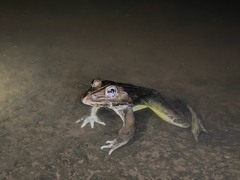
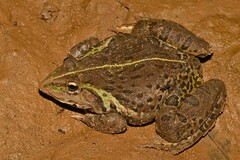
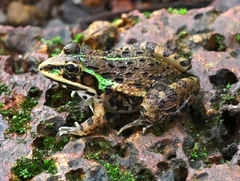
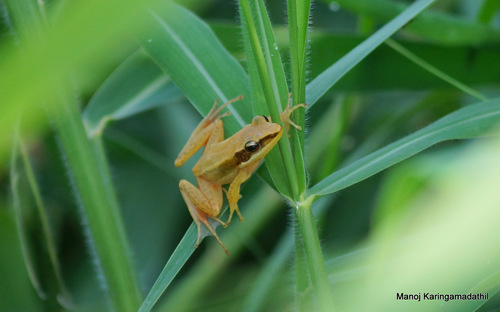
About the Indus Valley Bullfrog
Hoplobatrachus tigerinus, commonly known as the Indian bullfrog, is a large species of fork-tongued frog found in South and Southeast Asia. A relatively large frog, it is normally green in color, although physiological traits vary between populations. Sexual dimorphism exists between males and females. Outside of its native range, H. tigerinus is a rapidly-spreading invasive species. Both adults and tadpoles can severely damage the populations of other frog species. Typically, Indian bullfrogs dwell in wetland environments. Research has been conducted on their ability to control mosquitos.
The Indian bulfrog was first described by François-Marie Daudin in 1802, as Rana tigerina. The type locality was given as "Bengale, India". In 1992, it was transferred to the genus Hoplobatrachus by Alain Dubois, as Hoplobatrachus tigerinus. In addition to various other renditions and misspellings of R. tigerina, other synonyms include Rana picta, Dicroglossus tigrinus, and Euphlyctis tigerina.
The Indian bullfrog is a large species of frog. They can grow to be 170 millimetres (6.7 in), with heads generally longer than they are wide, although older individuals tend... Wikipedia →