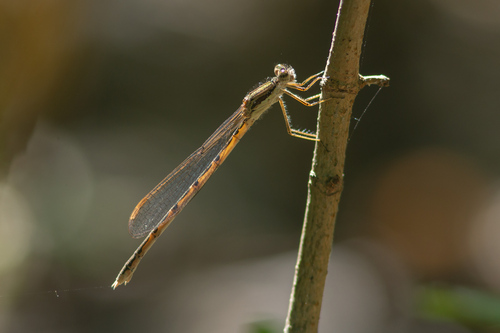
Blue Featherleg

Blue Featherleg

Platycnemis pennipes

Daily sighting probability ~20% · Possible
at Kyiv

In 3 days ~40% in a week ~70%

136 Verified sightings at Kyiv
295 In all 8 parks From 2019 to 2026
June Best month
☀️ Diurnal When it's spotted

About the Blue Featherleg

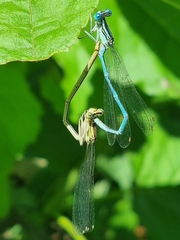
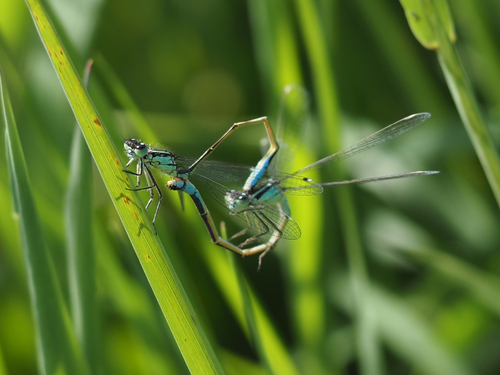
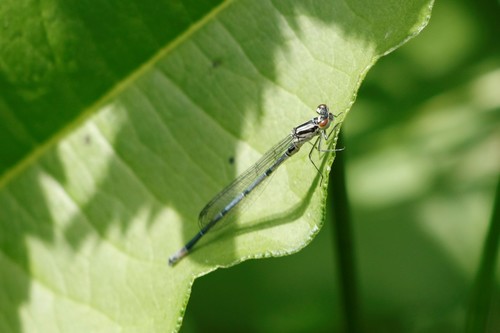
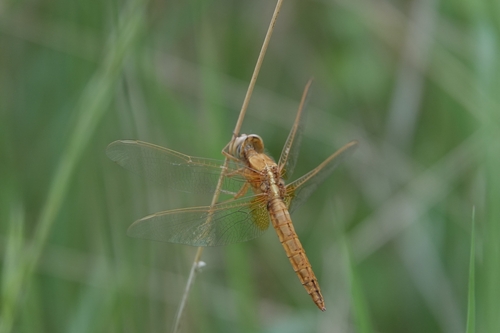
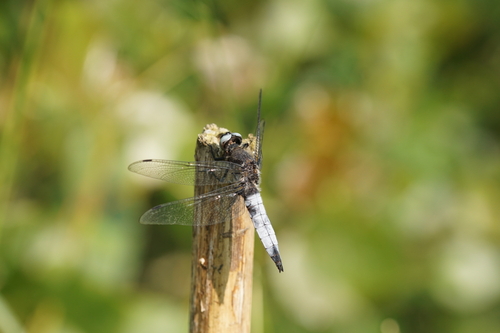
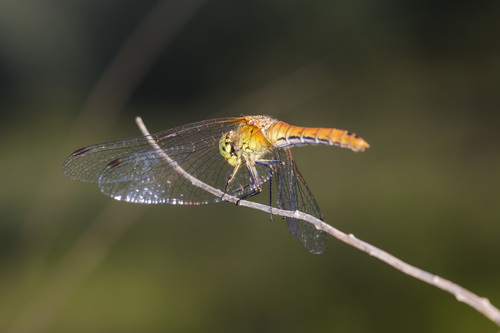
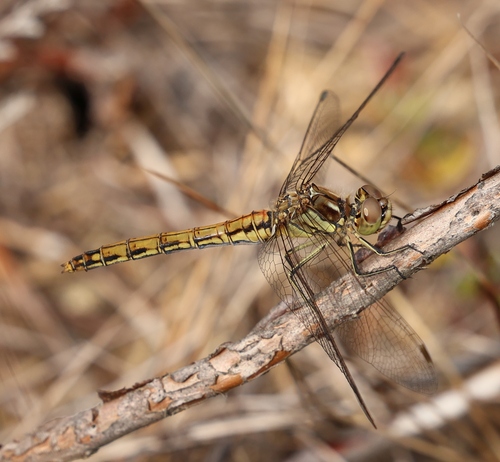
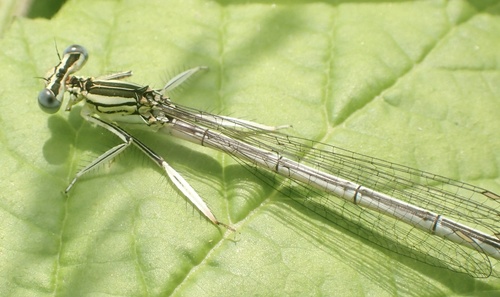
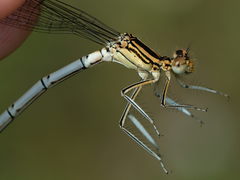
The white-legged damselfly or blue featherleg (Platycnemis pennipes) is a damselfly of slow-flowing, muddy waters. It occurs from the Atlantic to Siberia and is often abundant throughout its range. Platycnemis pennipes is about 32 millimetres (1.3 in) long. Mature adults differ from most other blue damselflies in having expanded white edges to the tibiae, paired black markings down most of the abdomen, broad pale brown double antehumeral stripes, wider head and a pale brown pterostigmata.

The male has a blue abdomen that is often pale and usually has a greenish thorax. The female is a very pale yellow-green colour with black markings. This species favours unshaded slow-flowing sections of muddy rivers with abundant floating vegetation. it has been recorded in tidal rivers and the larvae seem well able to tolerate brackish water. It also occurs in muddy streams but is rare in lakes or ponds of any sort. In north-west Europe, it is mostly confined to flowing waters.

The males are very territorial and use their enlarged legs to impress other individuals. Elongated eggs are laid whilst in tandem, into emergent stems and especially the underside of floating... Wikipedia →

Global Distribution

Parks Where Found

# Park Country Daily sighting probability
1 Kiskunság National Park 🇭🇺 Hungary
~30%
2 Plitvice Lakes National Park 🇭🇷 Croatia
~30%
3 Biebrza National Park 🇵🇱 Poland
~30%
4 Bavarian Forest National Park 🇩🇪 Germany
~20%
5 Triglav National Park 🇸🇮 Slovenia
~20%
6 Fertő-Hanság National Park 🇭🇺 Hungary
~20%
7 Białowieża National Park 🇵🇱 Poland
~20%
8 Pyrénées National Park 🇫🇷 France
~10%

Cities Where Found

# City Country Daily sighting probability
1 Kharkiv 🇺🇦 Ukraine
~20%
2 Turin 🇮🇹 Italy
~20%
3 Kyiv 🇺🇦 Ukraine
~20%
4 Lyon 🇫🇷 France
~20%
5 Budapest 🇭🇺 Hungary
~20%
6 Brussels 🇧🇪 Belgium
~10%
7 Rostov-on-Don 🇷🇺 Russia
~10%
8 Milan 🇮🇹 Italy
~10%
9 Paris 🇫🇷 France
~10%
10 Vienna 🇦🇹 Austria
~10%

Before you go

What are the chances of seeing a Blue Featherleg in Kyiv?

Possible

About 20% of wildlife watchers report a Blue Featherleg sighting in Kyiv on a given day, based on 136 verified sightings from GBIF citizen-science data. It is the 28th most-seen of the 753 insects we can rate there. Over three days the chance rises to about 40%, and over a week to about 70%, if each day is a fresh chance.

When is the best time to see a Blue Featherleg in Kyiv?

June and July

In those months about 30% of wildlife watchers report a Blue Featherleg in Kyiv on a given day, against under 5% in October to April, the lowest months.

What time of day is best to see a Blue Featherleg?

Between 2 and 5 pm

Across all the parks we cover, that three-hour window holds the most Blue Featherleg sightings with a recorded time, and about 9 in 10 of them come between 6 am and 6 pm: it is a daytime animal.

Is Kyiv the best place to see a Blue Featherleg?

Among the best

Of the 23 cities where we can rate Blue Featherleg sightings, Kyiv ranks 3rd at about 20%, level with the leaders once rounded. The best odds are in Kharkiv (Ukraine, about 20%) and Turin (Italy, about 20%).

Which relatives of the Blue Featherleg live in Kyiv?

Same order: Odonata

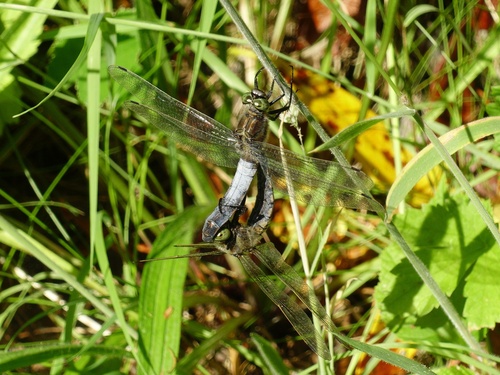
The closest relatives of the Blue Featherleg that you can see in Kyiv (order Odonata, Dragonflies and Damselflies) are Black-Tailed Skimmer (about 20%), Blue-Tailed Damselfly (about 20%) and Ruddy Darter (about 20%), with each one's daily chance of a sighting.

Where does the Blue Featherleg sighting chance come from?

GBIF citizen-science records

It is estimated from how often the Blue Featherleg is recorded against all the insects logged in Kyiv (136 verified sightings), calibrated against known sighting rates. Figures are rounded to the nearest 10% because citizen-science data supports honest approximations, not decimals, and months with records from fewer than five people show "—". How it works.
← Back to Kyiv