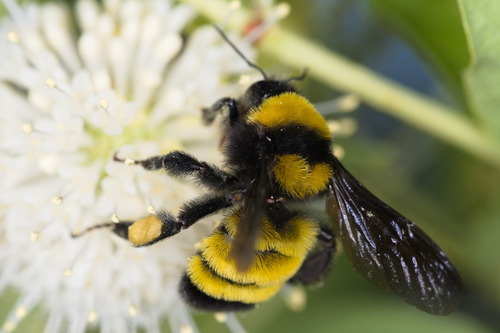
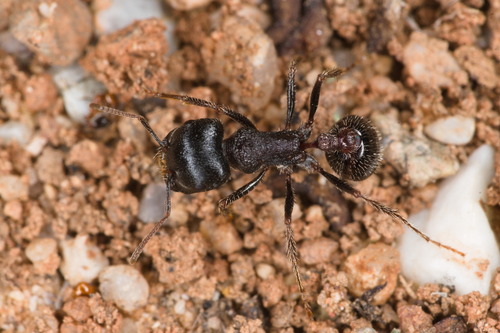
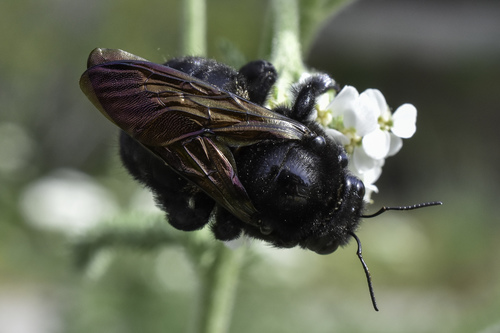
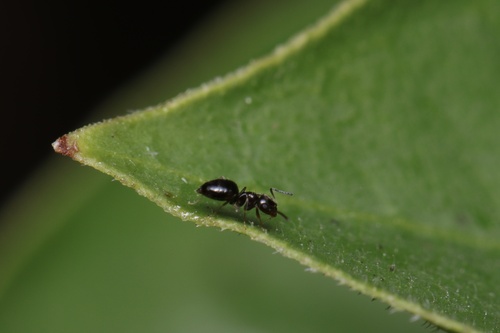
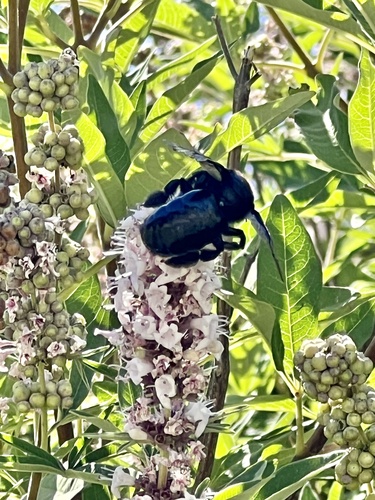
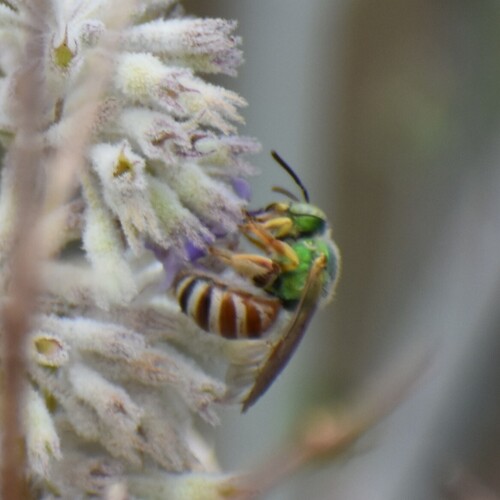
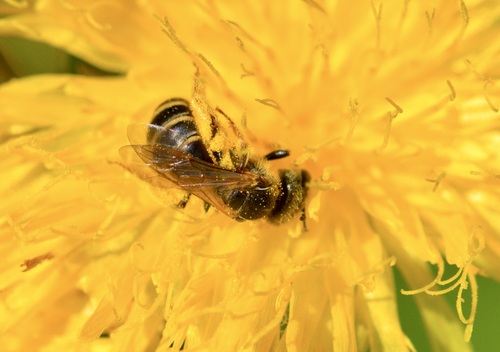
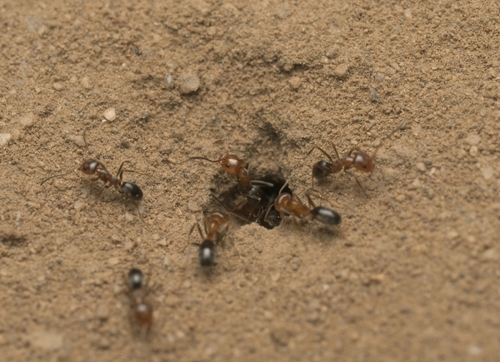
Golden Paper Wasp

Golden Paper Wasp

Polistes aurifer

Daily sighting probability ~10% · With luck
at Las Vegas

In 3 days ~20% in a week ~50%

22 Verified sightings at Las Vegas
86 In all 6 parks From 2019 to 2026
March Best month
☀️ Diurnal When it's spotted

About the Golden Paper Wasp

Polistes aurifer, the golden paper wasp, is a species of paper wasp in the genus Polistes of the family Vespidae. It occurs in the western part of North America, from southern Canada through the United States to northern Mexico.

It was first described as a new species by Henri Louis Frédéric de Saussure in 1853. Roy Snelling synonymised a number of taxa to this species in 1954. Owain Richards treated this taxon as a subspecies of P. fuscatus in his 1978 work, which was followed in subsequent works.

The etymology of the specific epithet aurifex is from the Latin language, where it means a 'goldsmith' or 'one who works with gold'. This word is derived from the Latin word aurum, meaning 'gold', combined with the suffix -fer, derived from the word facio and meaning '-bearing', '-carrying' or '-bringing', together giving 'gold-bearer'.

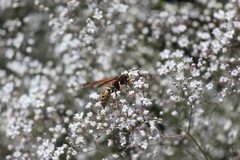
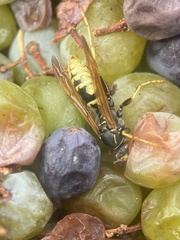
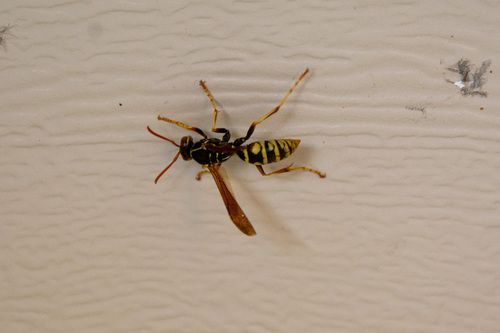
The morphology of the male genitals are very diagnostic for the species. The species has different inter-grading colour patterns depending on geography. Northern specimens are often mostly black, with ample yellow markings but with the ferruginous (rusty red) colour being very restricted. In populations from... Wikipedia →
Global Distribution

Parks Where Found

# Park Country Daily sighting probability
1 Badlands National Park 🇺🇸 United States
~20%
2 Big Bend National Park 🇺🇸 United States
~10%
3 Death Valley National Park 🇺🇸 United States
~10%
4 Saguaro National Park 🇺🇸 United States
~10%
5 Joshua Tree National Park 🇺🇸 United States
<5%
6 Yosemite National Park 🇺🇸 United States
<5%

Cities Where Found

# City Country Daily sighting probability
1 Mesa 🇺🇸 United States
~10%
2 Las Vegas 🇺🇸 United States
~10%
3 Phoenix 🇺🇸 United States
~10%
4 Vancouver 🇨🇦 Canada
<5%
5 Sacramento 🇺🇸 United States
<5%
6 Denver 🇺🇸 United States
<5%
7 Salt Lake City 🇺🇸 United States
<5%
8 Los Angeles 🇺🇸 United States
<5%
9 San Diego 🇺🇸 United States
<5%
10 Portland 🇺🇸 United States
<5%

Before you go

What are the chances of seeing a Golden Paper Wasp in Las Vegas?

With luck

About 10% of wildlife watchers report a Golden Paper Wasp sighting in Las Vegas on a given day, based on 22 verified sightings from GBIF citizen-science data. It is the 35th most-seen of the 111 insects we can rate there. Over three days the chance rises to about 20%, and over a week to about 50%, if each day is a fresh chance.

When is the best time to see a Golden Paper Wasp in Las Vegas?

March

In that month about 20% of wildlife watchers report a Golden Paper Wasp in Las Vegas on a given day, against under 5% in September and December–January, the lowest months.

What time of day is best to see a Golden Paper Wasp?

Between 9 am and noon

Across all the parks we cover, that three-hour window holds the most Golden Paper Wasp sightings with a recorded time, and about 9 in 10 of them come between 6 am and 6 pm: it is a daytime animal.

Is Las Vegas the best place to see a Golden Paper Wasp?

Among the best

Of the 12 cities where we can rate Golden Paper Wasp sightings, Las Vegas ranks 2nd at about 10%, level with the leaders once rounded. The best odds are in Mesa (United States, about 10%).

Which relatives of the Golden Paper Wasp live in Las Vegas?

Same order: Hymenoptera

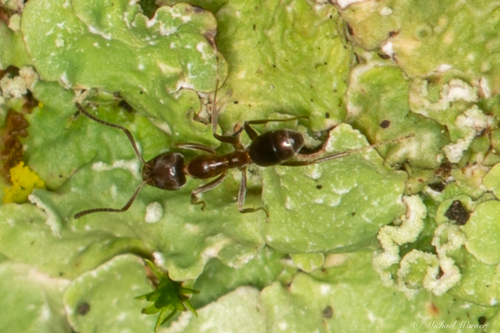
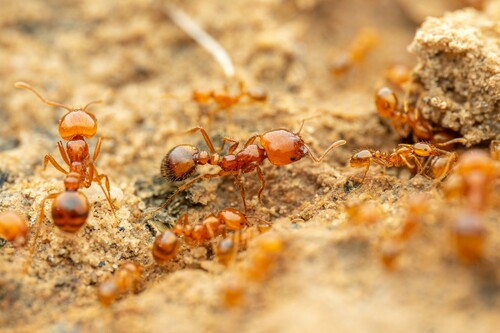
The closest relatives of the Golden Paper Wasp that you can see in Las Vegas (order Hymenoptera, Ants, Bees, Wasps, and Sawflies) are Argentine Ant (about 20%), Southern Fire Ant (about 20%) and Sonoran Bumble Bee (about 20%), with each one's daily chance of a sighting.

Where does the Golden Paper Wasp sighting chance come from?

GBIF citizen-science records

It is estimated from how often the Golden Paper Wasp is recorded against all the insects logged in Las Vegas (22 verified sightings), calibrated against known sighting rates. Figures are rounded to the nearest 10% because citizen-science data supports honest approximations, not decimals, and months with records from fewer than five people show "—". How it works.

← Back to Las Vegas